Temporary teeth after All-on-4 are a planned stage, not a smaller copy of the finished bridge. When immediate placement is appropriate, Advanced Cosmetic and Implant Dentistry attaches a temporary bridge after implant surgery so you leave with teeth. The practice describes healing over the next three to six months, then a permanent bridge once Dr. Avinash S. Bidra confirms the jaw has healed. Acrylic resin, including PMMA, may be used for that provisional. Zirconia is one possible final material, including the monolithic zirconia bridges shown in the practice gallery. Your exam decides the sequence.
Call (860) 659-8660 to discuss your All-on-4 plan
All-on-4 replaces a full arch with a fixed bridge on dental implants. The practice is a Nobel Biocare All-on-4 Center of Excellence in Glastonbury, and Dr. Bidra plans implant number and position from bone volume, bite forces, and jaw anatomy. Digital x-rays and 3D imaging support that plan. "All-on-4" is a treatment concept, not a promise of exactly four implants for every person.
On the practice site, a temporary bridge is placed right after implant surgery in the Teeth-in-a-Day sequence, in most cases. That bridge is worn while the jaw heals. It is not the permanent bridge. Follow-up is where fit, bite, cleaning access, and comfort are reviewed. An adjustment may be appropriate. It is never guaranteed.
One published case shows the kind of result this planning can lead to: upper and lower All-on-4 bridges with monolithic zirconia. That page describes extractions, implants, All-on-4, Teeth in a Day, no bone grafting, and full-mouth reconstruction. It is one patient's record, not a template for yours. Read the practice overview of All-on-4 dental implant treatment before your visit so your questions match the steps the office actually describes.
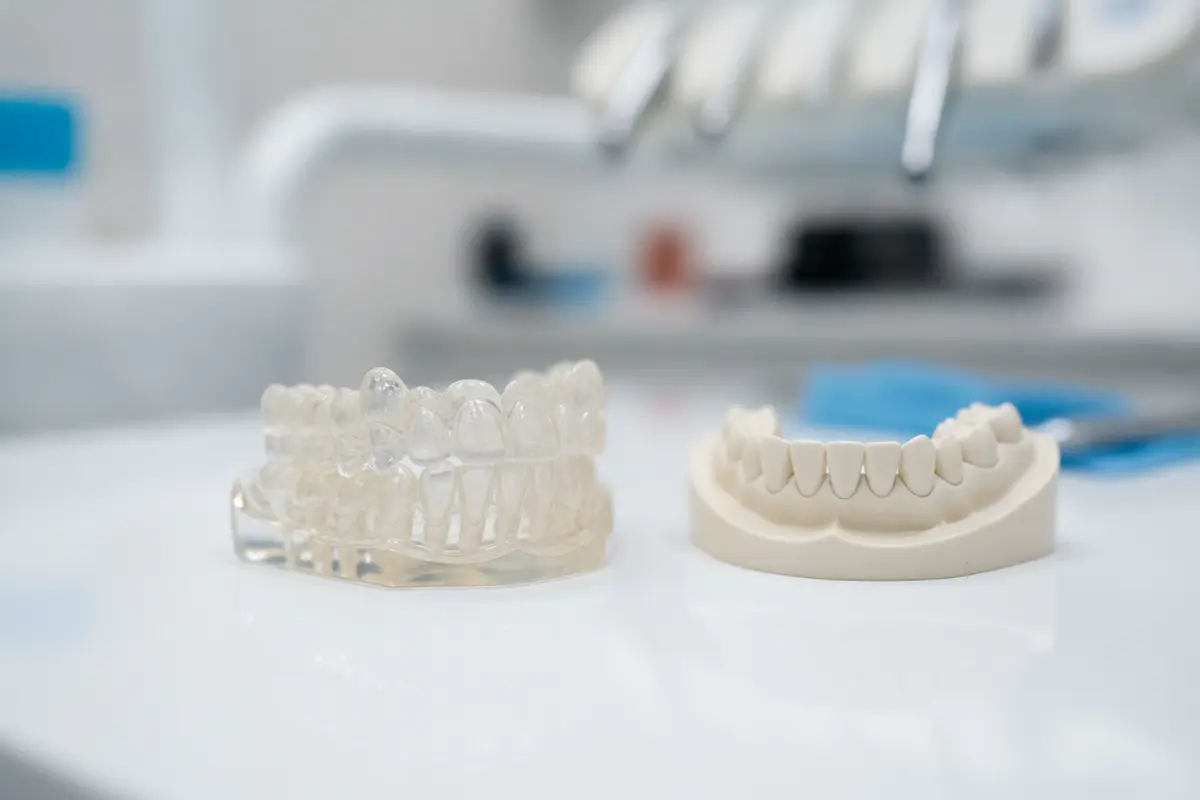
A provisional gives the team a restoration to watch while the implants fuse to the jaw. Acrylic does not cause that fusion, and it does not guarantee it. The useful part is time. Speech, bite, cleaning, and appearance can be discussed before the definitive bridge is made. Preferences can be considered. They do not replace the exam, and not every feature of the temporary is copied into the final.
Dr. Bidra has published on this stage. In a 2025 Journal of Prosthodontics study, he and colleagues reviewed immediately loaded acrylic resin complete-arch fixed implant prostheses made with a denture conversion protocol. Across 153 prostheses and 768 implants, followed at least four months, implant survival was 98 percent during that observation. Nine conversion prostheses cracked or fractured in the first four months. The paper supports a monitored acrylic provisional. It does not promise a fracture-free temporary or the same result in every mouth. See the study on PubMed.
Takeaway: Ask what the provisional is meant to do for you, what can be adjusted, and which choices wait until healing is reviewed.
The All-on-4 page states that over the next three to six months, the implants fuse to the jawbone. Treat that as the practice's published planning range, not your personal deadline. Dr. Bidra replaces the temporary with the permanent bridge when he confirms the jaw has healed. Your visits may be more or less frequent than another patient's. The exam sets the next step.
While the jaw heals, the same page says to eat only soft foods so you do not strain the site. Follow the food list you are given. Do not borrow a timeline from a website or from a friend. If the bridge feels loose, cracks, or you are unsure what to do, call the office. Do not try to repair it at home.
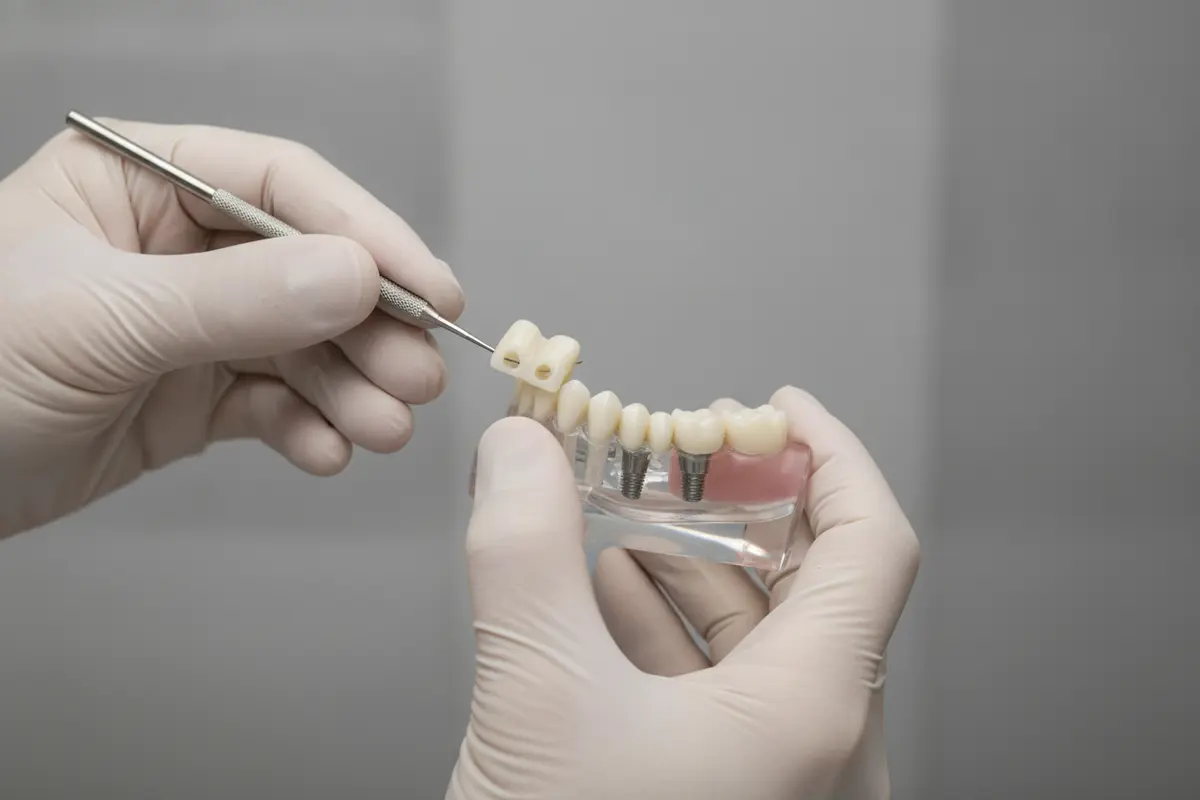
Before a visit, write down what you noticed and when. A short note is enough: the day, the situation, and the question. "Brushing the back area felt awkward. Can you show me the angle?" is more useful than trying to remember every meal. The note is not a diagnosis. It helps the team decide whether to look more closely.
Hygiene instruction is part of care after treatment. If cleaning feels difficult, describe the spot and ask for a demonstration. Do not force a tool under the bridge. General reading on traditional and implant-supported dentures can show how removable teeth differ from a fixed bridge. It cannot replace the instructions written for you.
Takeaway: Soft foods, the written cleaning steps, and a call for a loose or broken bridge are the day-to-day rules. Timing of the permanent bridge waits on the exam.
Acrylic resin and zirconia can do different jobs. The provisional, when one is used, is the bridge you wear during healing and review. The definitive bridge is planned after that review. Zirconia is one final option, not an automatic choice. The gallery case linked above used monolithic zirconia bridges. Ask whether that material is being considered for you, and what else could fit.
| Stage | Possible role | What the team reviews |
|---|---|---|
| Temporary acrylic bridge. | Teeth during healing, when immediate placement is appropriate. | Healing, fit, bite, tissues, hygiene, and what you notice. |
| Transition. | Decision to move from the temporary to a permanent bridge. | Whether the jaw has healed and what the exam shows. |
| Definitive bridge, potentially zirconia. | The permanent bridge secured to the implants. | Fit, bite, cleaning access, and your individual needs. |
Dr. Bidra maintains an in-house lab so he can oversee the design of custom restorations. That coordination is a reason to ask how the clinical plan and the lab work connect. It is not a promise that a named material will feel a certain way. For a closer look at bridge materials and fit, read All on 4 bridge materials, fit, and treatment. This article stays on the temporary stage rather than repeating that guide.
Cost questions belong in the same conversation. The All-on-4 service page lists treatment starting at $25,000 per arch for premium implants and biomaterials. That published starting point is not your fee. An estimate is individual. The office is out of network with most dental plans and can help with reimbursement claims. Check your own numbers with the practice and your insurer. Background on dental implant cost and insurance and financing is a starting point, not a quote.
Takeaway: Acrylic can serve while you heal. A definitive material, zirconia included, is chosen after the exam, not on day one.
Full-arch implant care is a large clinical and financial commitment. A temporary-to-final sequence creates time to watch healing before the permanent bridge is made. That can protect the plan from being locked in before the jaw has been checked. It does not insure you against complications, extra care, or a change in cost. No material can promise an outcome.
Ask for a written plan that lists the stages, what is included, which materials are being considered, and what could change the timing or the fee. Compare plans by those details, not by a headline price or a material name alone. If one plan says the final material depends on later review, keep that condition visible when you compare it with another proposal.
Also ask which findings guide the switch from temporary to permanent, and what happens if healing changes the schedule. Appearance and cleaning access can be part of that talk. The clinician's assessment still leads. Broader context sits on the services overview and the smile gallery. Photos are examples. They are not a prediction.
A consultation should cover risks, benefits, alternatives, and the steps in the proposed care. Bring a short list:
Say what matters most to you: speech, appearance, cleaning, or eating within the food rules. Those points guide the talk. They do not replace the exam. If you are weighing this path against rebuilding teeth another way, full-mouth reconstruction and smile makeover planning describe other services the office offers. They are not substitutes for an All-on-4 evaluation.
Takeaway: Leave with a written sequence, a food and cleaning plan, and a clear statement of what is still undecided.
At planning, the clinician explains whether a same-day temporary is suitable and what the alternative would be. Ask which imaging and exam findings drive that advice. A clear plan says what is known now and what will be decided later.
After the temporary is attached, your job is practical. Follow the food and cleaning instructions, keep the review visits, and call if something seems wrong. At those visits, ask what changed and whether the current plan still fits. The team may keep the plan, adjust the bridge, or wait longer. Those are clinical decisions.
When a permanent bridge is being considered, ask what still has to be checked and how the new bridge will be attached and cleaned. The site says the temporary is replaced with a permanent bridge secured to the implants, after healing is confirmed. After that visit, ask which instructions changed. Use the directions written for you, not another person's recovery.
The doctor profiles introduce the clinicians. Dr. Bidra is a board-certified prosthodontist and a sub-specialist in maxillofacial prosthodontics. Training is a reason to ask how surgical and restorative choices are handled in one plan. It is not a guarantee of a result.
The provisional months are for learning the bridge you actually have, not for testing every food or every cleaning trick you read about. Keep the written instructions where you can see them. If a family member helps with rides or meals, share that one current copy so nobody follows an older note.
Use visits to separate routine questions from problems that need a call. A cleaning angle, a food you are unsure about, or a speech sound that still feels odd can wait for the scheduled review if the office told you those are expected. A loose bridge, a crack, or pain you were told to report should not wait. The right response depends on the exam.
When you compare this office with another proposal, put the temporary stage in writing on both sides. Note whether a same-day bridge is included, what you are told to eat, how reviews are described, and when a permanent bridge would be considered. Leave a blank line for items the clinician says are still conditional. A label like "teeth in a day" can hide those differences.
You can also ask how the in-house lab fits this stage. Custom design does not mean the temporary is the final shape. It means there is a place to carry forward what the reviews showed, if the clinician agrees those points still apply. Preferences about shade or tooth shape belong in that conversation beside fit and cleaning access.
Takeaway: Treat the temporary as a monitored step. Write down what you notice, follow the food and cleaning rules you were given, and let the exam decide the permanent bridge.
Explore dental implant treatment options
No. The practice says a temporary bridge is placed right after surgery so you leave with teeth, and that most patients wear one while the jaw heals. Your clinician still has to decide that immediate placement is appropriate.
The All-on-4 page describes fusion of the implants to the jaw over the next three to six months. That is a planning range. The permanent bridge is placed when healing is confirmed, not on a fixed calendar date.
Not automatically. Zirconia, including monolithic zirconia, is one option the practice has used. Ask which materials fit your case and why one is recommended.
The team can examine a concern and decide whether an adjustment is appropriate. Call the office rather than changing the bridge yourself.
The practice says to eat only soft foods during healing so you do not strain the site. Use the list you are given, and ask before you guess about a specific food.
Temporary teeth after All-on-4, when they are part of your plan, give you a fixed bridge during healing. They also give the team time to review fit before a definitive restoration. Acrylic can serve that provisional role. A more definitive material, such as zirconia, comes later, after the jaw has been checked. An individualized consultation is the place to review timing, alternatives, and cost.
Call (860) 659-8660 to request a consultation
Or send a message on the contact page
Bring your questions so you and the dental team can decide the next step together.
Patients in Hartford, CT, can experience unmatched quality and value by choosing board-certified doctors Avinash Bidra and Xiao Chun Li.
We are affiliated with the following prestigious organizations: