Replacing a full arch with implants is a staged restorative process, not simply a matter of attaching a finished bridge on the day of surgery. Planning, healing, and follow-up all help guide the design of the final teeth.
An all on 4 bridge is a full-arch restoration supported by strategically placed dental implants. When clinically appropriate, an acrylic-resin provisional can serve during healing. This gives the care team a chance to assess fit, bite, appearance, and function before making the definitive bridge. The materials and timing depend on the individual treatment plan.
The provisional stage is intended to be part of the treatment design, not a sign that the restoration is unfinished by accident. Understanding how implants support the bridge makes the choices made during planning and later adjustments easier to follow.
Discuss your individual treatment options with the practice
An All-on-4 bridge is a fixed restoration designed to replace the teeth across an upper or lower arch. Rather than relying on individual implants for every tooth, the bridge is attached to a small number of dental implants placed in the jaw. The implants act as anchors; the bridge provides the visible row of replacement teeth as one connected restoration.
The phrase "All-on-4" describes a treatment concept, not a one-size-fits-all blueprint. Advanced Cosmetic and Implant Dentistry describes full-arch restorations as supported by four or more strategically placed implants, with the configuration planned for each patient. Jaw anatomy and the restorative plan help determine where implants are placed and how the bridge is designed. The treating team reviews the case with an examination and 3D imaging. The name should not be read as a promise that every patient receives exactly four implants; the clinical evaluation guides that decision.
The implant and the bridge are separate parts of treatment. An implant is placed in the jaw and supports the restoration. The bridge is the custom-made prosthesis that connects to those supports. Together, they replace a full arch, but the bridge must be designed to work with the implant positions and the patient's bite.
Because the restoration spans an entire arch, its shape, fit, and access for cleaning matter. The plan also accounts for the stages of care. A temporary bridge may be used after implant surgery when clinically appropriate. After healing, the team can proceed with a definitive restoration based on the patient's progress and treatment plan. The temporary and final bridges have different roles, so the first restoration is not necessarily the final design or material.
Learn more about the practice's All-on-4 treatment and its broader dental implant treatment options. An individual evaluation can clarify how many implants may be used and what type of bridge is appropriate.
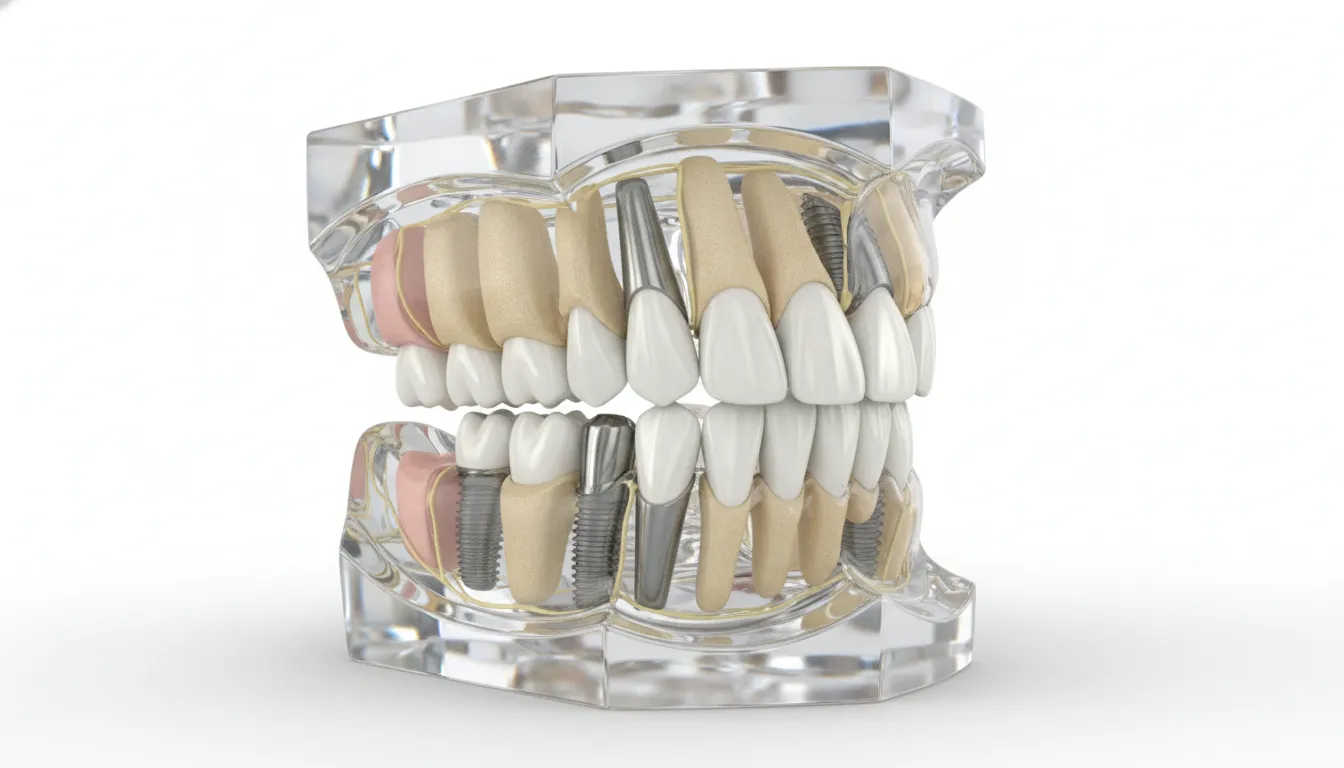
The transition from implant placement to a definitive bridge is planned around your anatomy, health, and how the implants are expected to heal. Some patients may receive a provisional bridge soon after surgery; others may need a different sequence. The dentist will explain which steps apply to your case and when it is appropriate to move forward.
A temporary full-arch bridge is not simply a lesser version of the final restoration. When a clinician recommends one during healing, it is a purpose-designed provisional prosthesis: it provides a planned restoration while the implants and surrounding tissues are monitored. Acrylic resin, including PMMA, is one material used for this stage. Whether and when a provisional bridge is appropriate depends on the individual treatment plan.
The provisional stage can also give the patient and care team a chance to assess how the restoration works in daily life before the definitive bridge is made. The clinician can evaluate the bridge's shape and support, how it relates to the soft tissues, and whether its appearance is working as intended. Patient feedback about speech, comfort, chewing, and appearance can help guide discussion and adjustments. These observations inform the next steps; they do not guarantee that every feature can be changed or that every case will follow the same sequence.
Acrylic resin can be adapted during treatment, which can make it useful for evaluating tooth and gum contours. In a clinical technique paper, prosthodontists Avinash Bidra and Xiao Chun Li describe improving gingival esthetics on a complete-arch implant-supported acrylic resin prototype. That paper supports the prototype's role in assessing and refining the appearance of the gum portion. It should not be read as a promise of a particular result in every patient. Read the study on gingival esthetics with an acrylic resin prototype.
Function also matters. A provisional bridge needs to be designed for the treatment stage, with attention to rigidity, strength, stability, and the bite. A clinical consensus on All-on-4 prosthetic protocols discusses the importance of provisional restoration design and occlusion, including limiting movement or fracture risk. The clinician can check the bite and make appropriate adjustments as healing progresses. If the bridge feels uneven, unstable, or uncomfortable, let the care team know rather than attempting to adjust it yourself.
This process is not a requirement for every patient, nor does the word "temporary" mean the bridge is automatically poorly made. The design and material serve a particular stage of care, and the patient's clinical circumstances guide the plan. If a provisional is used, its purpose is to support the planned transition and provide useful feedback before the final restoration is selected and completed.
The bridge used during healing and the one intended for longer-term service have different jobs. A provisional bridge is designed for the healing stage and can give the patient and clinical team an opportunity to assess appearance. Speech, bite, and comfort before the definitive restoration is made. The final material is selected after considering the implant positions, available restorative space, bite forces, hygiene needs, and the patient's clinical circumstances.
| Material or stage | Typical role | What to consider |
|---|---|---|
| Acrylic resin or PMMA provisional | A temporary bridge may be used during healing when appropriate. Its contours, appearance, or bite can be evaluated and adjusted as care progresses. | It is made for a provisional phase, not as a promise of a maintenance-free restoration. Design, bite, and follow-up matter, and the clinical team will advise how to care for it. |
| Definitive prosthesis, including zirconia when indicated | The final bridge is fabricated to the treatment plan after the team has assessed healing and the desired fit and function. | Zirconia is one possible option, not the right choice for every patient. The clinician considers the full design, implant positions, bite, cleanability, and individual needs when selecting materials. |
PMMA is a type of acrylic resin used for provisional restorations. During that stage, feedback can help guide refinements to the bridge's shape, tooth display, speech, and how the bite feels. An acrylic provisional is not inherently a sign of poor quality; it serves a different purpose from a definitive prosthesis. A well-planned design and appropriate monitoring are important at either stage.
Zirconia may be considered for a definitive full-arch bridge, while other designs and material combinations may also be appropriate. Research comparing implant-supported superstructure materials does not establish one universally superior choice for every patient; findings depend on the study and patient factors. The material decision should therefore follow an individualized assessment rather than a single-material rule (review of material outcomes for implant-supported prostheses).
At Advanced Cosmetic and Implant Dentistry, treatment planning includes clinical evaluation and imaging, followed by a restoration designed around the individual case. The team can explain why a provisional is recommended, which definitive options are suitable, and how each choice affects fit, cleaning, and follow-up. Ask how the proposed material and bridge design address your bite and hygiene needs, and what adjustments may be considered before the final restoration is completed.
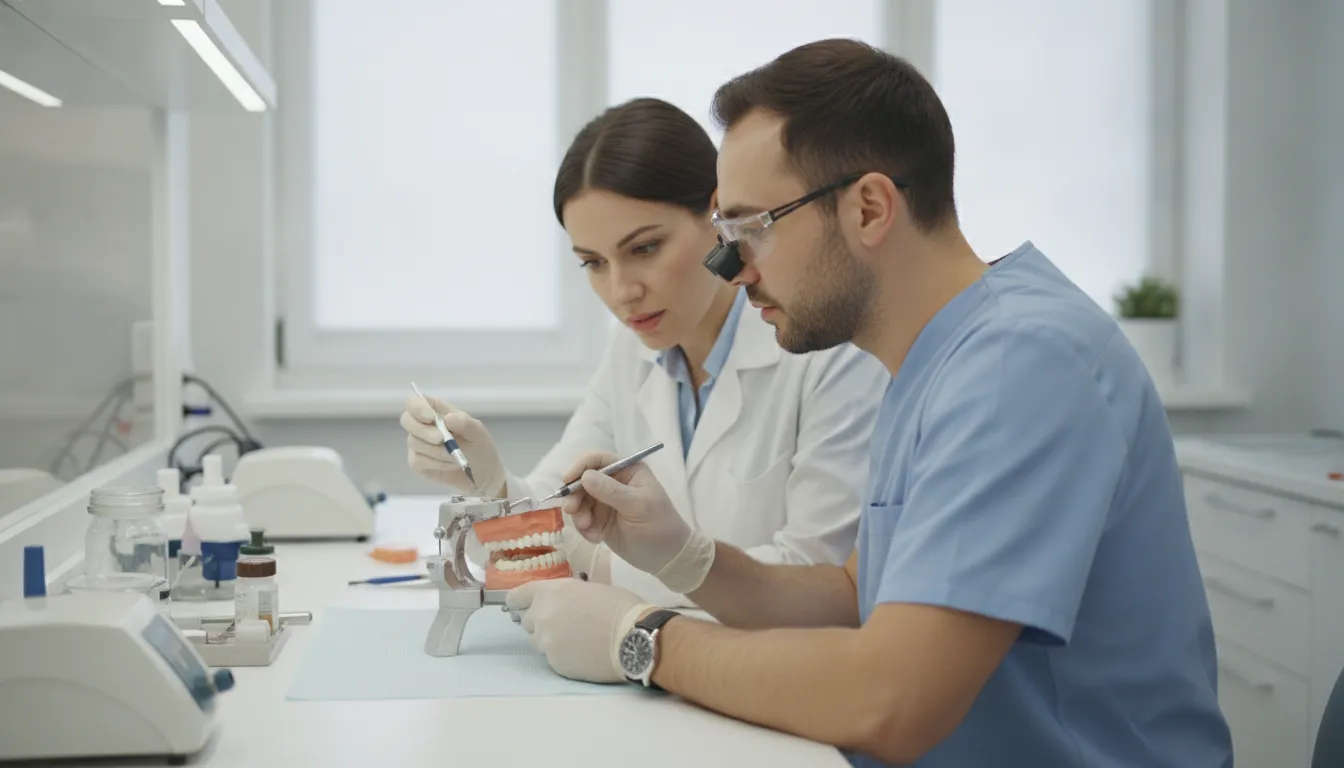
A well-planned bridge should be assessed as a complete restoration, not just as a set of teeth that looks right. The care team checks how the prosthesis sits, how it relates to the opposing teeth, and whether its contours suit the patient's mouth and planned implant positions. The exact steps depend on the treatment plan and the stage of treatment.
For a later bridge, impressions and a bite registration help guide its design. A bite registration records how the upper and lower teeth meet, giving the clinician and lab information to shape the restoration. During fitting, the clinician evaluates seating and contact, then checks the bite in motion as well as when the teeth come together. Small adjustments may be made so contacts are balanced and the bridge feels comfortable.
Contours matter as much as the visible teeth. The shape around the gums and the underside of the bridge should be designed with the individual anatomy and implant positions in mind. A thoughtfully shaped restoration can also make cleaning more practical. Fit, bite, and contour are considered together, rather than treating each as a separate cosmetic detail.
When a provisional bridge is part of the plan, feedback during that stage can help inform clinical refinements before the definitive bridge is made. The provisional is an intentional part of a staged process, not necessarily a sign that something is wrong. The consensus recommendations for All-on-4 care emphasize a provisional restoration that is sufficiently rigid and strong to limit movement or fracture. With design and occlusion considered in light of the patient's circumstances (All-on-4 prosthetic protocol consensus).
Tell your care team if the bridge feels uneven, loose, or uncomfortable, or if a change develops after an adjustment. These observations help the clinician assess whether a further check is appropriate; they do not identify the cause by themselves. Avoid trying to reshape or repair the bridge at home. Your clinician can evaluate the fit and decide whether an adjustment or another step is needed.
A fixed bridge does not come out for routine cleaning, so daily care needs to reach the surfaces you can access around the restoration and along the gumline. The exact approach depends on the bridge's shape, your tissues, and how much space is available beneath it. Ask your prosthodontist or dental team to demonstrate the technique for your specific restoration rather than relying on a one-size-fits-all routine.
At home, clean the bridge and surrounding areas consistently using the brush and any additional cleaning aids recommended for you. A team member can show you how to position the tool, where to direct it, and how to avoid irritating the gums. If a part of the bridge is difficult to reach, mention that at your next visit. Clinical consensus guidance for All-on-4 emphasizes designing the definitive prosthesis to be cleanable and adapted to the patient's implant positions and individual characteristics (Ticare consensus recommendations).
Professional follow-up is part of maintenance, not a substitute for daily home care. At planned visits, your team can assess the bridge, supporting tissues, hygiene access, and bite, then recommend care or adjustments based on what they observe. Keep the appointments advised for your treatment plan, and contact the practice if you notice a new change in fit, comfort, chewing, or cleaning access. These concerns do not point to one cause on their own, but they are useful information for your clinician.
Care instructions may change as your treatment progresses from a provisional bridge to a definitive restoration. Continue with the guidance given for the bridge you currently have, and ask before changing cleaning products or tools if you are unsure whether they are appropriate. A cleanable design, consistent home hygiene, and clinician-directed maintenance work together; none replaces an individualized assessment.
Learn more about All-on-4 implant treatment
Contact the practice to discuss your individual bridge-care plan
Yes. Follow-up visits give the clinician an opportunity to assess the bridge, bite, comfort, and how the surrounding tissue is developing. Adjustments or refinements may be appropriate as healing progresses. Tell your care team if the bridge feels uneven, rubs, or is difficult to clean rather than trying to alter it yourself.
A provisional acrylic-resin bridge serves during the healing phase and can help the team assess function, appearance, and fit before making the definitive restoration. The later bridge is planned around your clinical findings and preferences. Zirconia may be an option, but the appropriate material and design depend on the individual treatment plan.
Clean the bridge and the area beneath it every day, using the tools and technique recommended by your dental team. The bridge's contours should allow access for home care, and professional follow-up helps maintain the restoration and supporting tissues. Ask your clinician to demonstrate a cleaning routine suited to your bridge rather than relying on a one-size-fits-all method.
The practice describes about three to six months as a common healing interval before the final restoration, but this is not a guaranteed schedule. Timing depends on healing and clinical progress, and the team monitors the process before taking final impressions and completing the bridge. See the practice's All-on-4 recovery guide for more about the treatment timeline.
Understanding how a provisional bridge can inform adjustments before the definitive restoration may help you ask more focused questions about your own treatment. Explore the practice's All-on-4 approach and contact the team to discuss how an individualized full-arch plan may address your needs.
Patients in Hartford, CT, can experience unmatched quality and value by choosing board-certified doctors Avinash Bidra and Xiao Chun Li.
We are affiliated with the following prestigious organizations: