When comparing dental implants vs dental bridges, the right choice depends on the missing tooth, neighboring teeth, gums, jawbone, bite, and your priorities. A traditional bridge fills a gap with a replacement tooth supported by crowns on teeth beside it. An implant replaces a tooth root with a titanium fixture and supports a custom restoration. Both can be appropriate in some situations, but they use different support structures and involve different treatment steps.
Schedule a conversation about replacing a missing tooth
A traditional tooth-supported bridge includes a replacement tooth, called a pontic, attached to crowns on adjacent teeth. Those neighboring teeth are the abutments. To fit the crowns, the dentist removes enamel from the abutments. Once fitted, the bridge stays in place and is not removed for routine home cleaning.
A single-tooth implant uses a titanium implant placed in the jaw to support a custom restoration. An abutment connects the implant to the crown. The implant stands in for the missing root, so neighboring teeth do not need to be shaped to support that crown. An implant-supported bridge is another design: implants support a restoration that replaces multiple teeth. It is not the same as either a single implant crown or a traditional bridge.
These designs address a similar gap in different ways. The useful question is not simply which name sounds preferable. It is what will support a restoration in your mouth, what treatment that support requires, and how the choice fits the rest of your dental health.
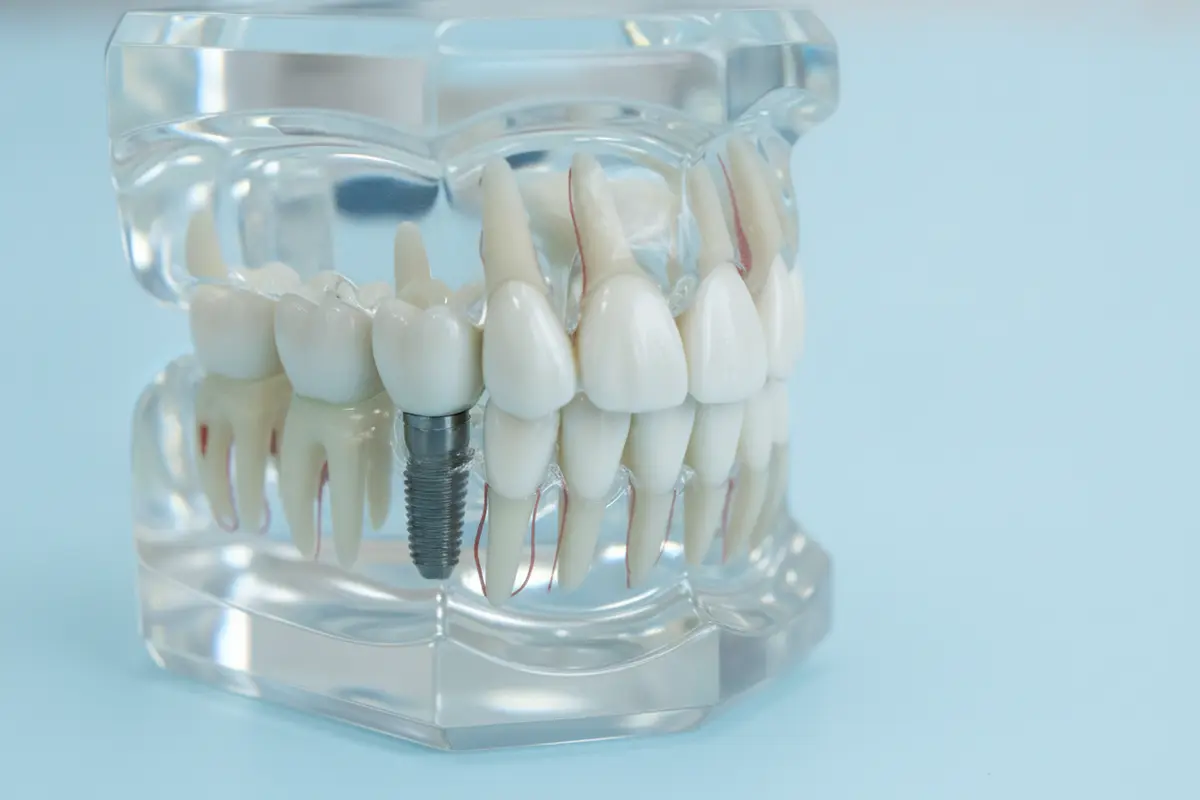
This overview describes general differences, not a prediction for an individual case. The details depend on the span being replaced, the health of the teeth and tissues, the bite, and the restoration planned.
| Consideration | Traditional tooth-supported bridge | Single implant and crown |
|---|---|---|
| Support | Crowns on adjacent teeth support a pontic. | A titanium implant in the jaw supports a custom restoration. |
| Neighboring teeth | Abutments need enamel removal to fit crowns. | Adjacent teeth are not shaped to support the crown. |
| Typical stages | Preparation, impressions, temporary bridge, fit and bite checks, adjustments, and bonding. | Imaging and planning, placement, healing, abutment placement, gum healing, and restoration attachment. |
| Cleaning | A fixed bridge can be harder to clean; its supporting teeth need ongoing care. | Brush twice daily, floss, and attend regular checkups as directed. |
| Root and bone | Does not replace the missing root with an implant. | An implant-supported restoration can stimulate the jawbone and help guard against deterioration. |
| Future care | May eventually need replacement; an individual lifespan cannot be assumed. | Requires ongoing maintenance and professional monitoring; an individual lifespan cannot be assumed. |
Read more about dental implant treatment, porcelain dental bridges, and dental crown treatment. These pages introduce the services; an examination is still needed to determine what can support a particular restoration.
Preparation is one of the most important distinctions to understand. With a traditional bridge, enamel is removed from the teeth on one or both sides of the gap so crowns can support the pontic. This is a lasting change to those teeth. If a supporting tooth already has a large restoration or needs a crown for a separate reason, that fact may influence the conversation, but it does not automatically make it a suitable abutment.
A single implant crown does not use neighboring teeth as its supports, so those teeth are not shaped for that purpose. Instead, treatment involves the implant site and the stages needed to place and restore the implant. This avoids one type of preparation, but it is not a way to skip clinical assessment or treatment planning. Bone, gums, bite, and the planned restoration all require attention.
For a gap involving several teeth, an implant-supported bridge can also be discussed. The implants support the bridge, rather than relying on crowns attached to the neighboring natural teeth. The design and number of implants are case-specific. Ask the dentist to identify exactly which teeth or implants will carry the restoration, rather than relying on the broad word “bridge.”
The dentist examines the gap and the teeth that might support the bridge. The listed process includes preparing the abutment teeth, taking impressions, placing a temporary bridge, and checking the final bridge’s fit and bite. Adjustments may be made before it is bonded. Treatment can take as little as two office visits, although additional appointments may be needed. Ask how many visits your plan involves and what each one is intended to accomplish.
It helps to understand what happens between appointments, too. Ask whether the temporary bridge will cover the prepared teeth, what to do if it becomes loose, and when the final fit will be reviewed. The temporary stage is not the final restoration, and the planned bite may require careful checking and adjustment. If the bridge includes more than one replacement tooth, ask how its span affects the design and cleaning routine.
Implant treatment begins with imaging and planning to assess placement and the intended restoration. After placement, the implant needs time to heal and integrate with the jaw. The usual healing stage described in the treatment plan is three to four months. Abutment placement, gum healing, and attachment of the restoration follow. Individual timing can vary, so ask what sequence and visits are expected in your case.
An implant avoids preparing adjacent teeth to support the crown, but it includes placement and healing stages of its own. The dentist can explain the imaging, follow-up, and any case-specific considerations. For more than one missing tooth, an implant-supported bridge may be considered rather than one implant for every space. You can review the practice’s implant treatment information before discussing the details of your plan.
Explore implant treatment and discuss your options
Both treatments are designed to restore a missing tooth, and appearance depends on more than the treatment label. The location of the gap, surrounding teeth and gums, restoration design, and selected materials all matter. A comparison based on generic promises cannot tell you how a particular restoration will look. Ask to discuss the proposed shape, color, and relationship to neighboring teeth.
Stability also depends on the actual design. A traditional bridge is fixed through crowns on supporting teeth. An implant crown is attached to an implant in the jaw. Fit, bite, support, and maintenance are relevant for either option. Rather than assuming one is always more stable, ask the dentist to explain what holds the restoration in place and how the bite will be checked after placement.
For visual context, see the porcelain bridge gallery and the implant-retained crown gallery. Gallery images show individual cases; they do not guarantee another person’s appearance or outcome. Use examples to frame questions, not as a substitute for a personal plan.
There is no single lifespan that can responsibly be applied to every bridge or implant restoration. A bridge may eventually need replacement, and implants and their restorations need continued care and monitoring. Oral hygiene, the health of supporting tissues, bite forces, restoration design, and professional assessment can all affect ongoing maintenance. Avoid choosing based on a guaranteed number of years without a case-specific explanation.
It is useful to separate the implant from the crown attached to it. They are distinct parts and should be discussed as such when reviewing maintenance or future treatment. For a bridge, the crowns, pontic, abutment teeth, and surrounding gums all matter. Ask what should prompt a checkup sooner than your usual schedule and how the office monitors the restoration over time.
A fixed traditional bridge cannot be removed for cleaning and can be harder to clean than natural teeth on their own. Its abutment teeth remain important to the restoration and need routine care. Ask the dental team to demonstrate how to clean under and around your particular bridge. The appropriate technique depends on its design, so a general instruction may not cover every surface.
For a single implant restoration, the practice’s general guidance is to brush twice daily, floss, and attend six-month checkups. These visits allow the dental team to check the implant, clean around restorations, and look for problems early. Follow the instructions given for your restoration and oral health; individual home-care needs can differ.
Routine dental cleanings and exams are part of ongoing oral care. If you have difficulty reaching an area, notice a change in your bite, or have a concern about the restoration, ask the practice what next step is appropriate rather than waiting for a routine visit.
The Cleveland Clinic’s overview explains that a dental bridge uses adjacent teeth for support and describes bridge types and who may need them. This supports the basic distinction between a tooth-supported bridge and a restoration supported by an implant; it does not determine which treatment is right for an individual patient. Review its dental bridge overview, then ask your dentist to relate general information to your teeth and treatment options.
There is no universal checklist that makes one treatment right for everyone. The dentist needs to assess the gap, neighboring teeth, gums, jawbone, bite, and your dental and medical history, along with your priorities. An examination can establish whether nearby teeth are appropriate bridge supports and whether implant treatment is suitable to consider.
A bridge may be discussed when a fixed replacement is desired and adjacent teeth can support crowns. An implant may be discussed when avoiding preparation of neighboring teeth is important and the clinical conditions allow implant treatment. These are considerations, not candidacy rules. The findings and treatment plan determine what is appropriate.
When several teeth or other restorative needs are involved, planning may extend beyond a single gap. The practice’s full-mouth reconstruction information describes care for multiple needs. You can read about the doctors and their expertise and review the range of dental services as you consider how a replacement fits with other care. A broader full-mouth rehabilitation gallery can offer visual context for more extensive restorative work.

General descriptions are useful for learning the vocabulary, but the plans themselves should be compared point by point. Consider writing down answers during a visit. If an explanation is unclear, ask the dentist to show the relevant teeth or structures on an image or model. These practical steps can make a broad comparison easier to use:
This approach turns a broad comparison into a practical conversation. It also makes it easier to see whether two proposed plans solve the same problem in the same way. If recommendations differ, ask what clinical finding or goal accounts for that difference. If you want to review how restorations are made, ask about the planned materials and the way the restoration will be checked for fit and bite.
Consider a hypothetical person missing one tooth with healthy-looking neighboring teeth. The conversation may focus on whether the adjacent teeth should be prepared for bridge crowns or whether an implant can be planned at the gap. The person’s preferences matter, but the dentist must first assess the teeth, gums, jawbone, and bite. It would be premature to declare one option better based only on the fact that a single tooth is missing.
Now consider a gap beside teeth that already need substantial restorative care. A traditional bridge might be part of a broader plan, but the condition and suitability of those teeth still need evaluation. The question is not merely whether crowns can be placed; it is whether those teeth can support the planned bridge and how the entire bite will function.
A third example is a span with more than one missing tooth. The discussion may include a traditional bridge, an implant-supported bridge, or other restorative possibilities. The choice depends on the span and available support, not on a one-size-fits-all rule about how many implants are needed. Bringing these distinctions to the appointment helps you compare actual proposals instead of comparing labels alone.
For broader restorative questions, the practice’s approach to care and restorative treatment gallery can help you prepare topics to discuss. Examples may prompt questions about shape, color, and function, but your own examination determines which approaches are reasonable.
If you are comparing written plans, ask whether each includes the same teeth, stages, and restoration type. A plan for a single implant crown is not directly equivalent to a plan for a bridge supported by two neighboring teeth, even if both replace one missing tooth. Ask what is included at each stage, what follow-up is expected, and which parts may require attention later. The bridge treatment overview and implant information can help you keep the terminology straight.
For another visual reference, you can browse bridge examples or implant-retained crown examples. Use images to describe what you like or want to understand, while leaving questions of suitability and expected results to a case-specific discussion.
Talk with the dental team about your tooth-replacement options
A single implant crown does not require neighboring teeth to be shaped as bridge supports. Whether implant treatment is suitable depends on examination findings and treatment planning.
A traditional bridge may take as little as two office visits, though additional visits can be needed. Implant care includes placement and a healing period commonly planned as three to four months before later restorative stages. Your schedule depends on your case.
Implants can support a bridge that replaces several teeth. The number and placement of implants depend on the proposed plan; a dentist can explain the options for a particular span.
No single lifespan applies to every restoration. Both require maintenance and monitoring, and a bridge may eventually need replacement. Ask what factors matter in your specific plan rather than relying on a universal estimate.
Dental implants and bridges replace missing teeth in different ways. Compare what supports each restoration, the treatment stages involved, and how you will care for it. A thoughtful evaluation can help you understand the trade-offs and choose a plan that fits your oral health and priorities.
Schedule a visit to discuss your options
A personal evaluation can clarify which restoration fits the gap, surrounding teeth, and your goals.
Patients in Hartford, CT, can experience unmatched quality and value by choosing board-certified doctors Avinash Bidra and Xiao Chun Li.
We are affiliated with the following prestigious organizations: