When multiple teeth, the bite, or existing restorations need attention, the order of treatment can matter as much as the individual procedures. Understanding how prosthodontists plan full mouth reconstruction can help you see why evaluation comes before a list of crowns, implants, or other treatments. A prosthodontist considers how the teeth work together, what may be preserved, and what sequence can address your needs.
Schedule a consultation to discuss your treatment needs
Full-mouth reconstruction is not one standard procedure. It is a coordinated plan for restoring function and, where appropriate, appearance across several teeth or areas of the mouth. The starting point is understanding your specific condition. A prosthodontist reviews your concerns and dental history, examines your teeth and gums, and evaluates how your upper and lower teeth meet.
The assessment may include a review of existing crowns, bridges, dentures, or implants; the condition of individual teeth; gum health; and signs that the bite or jaw is under strain. Depending on the case, a dentist may use photographs, impressions or digital scans, and imaging to help evaluate the mouth and plan care. The appropriate tools depend on the clinical question.
Bring a list of medications, relevant medical history, prior dental records if available, and questions about your goals. These details help provide context but do not replace an examination. Learn about the practice through the doctors' profiles and practice information.
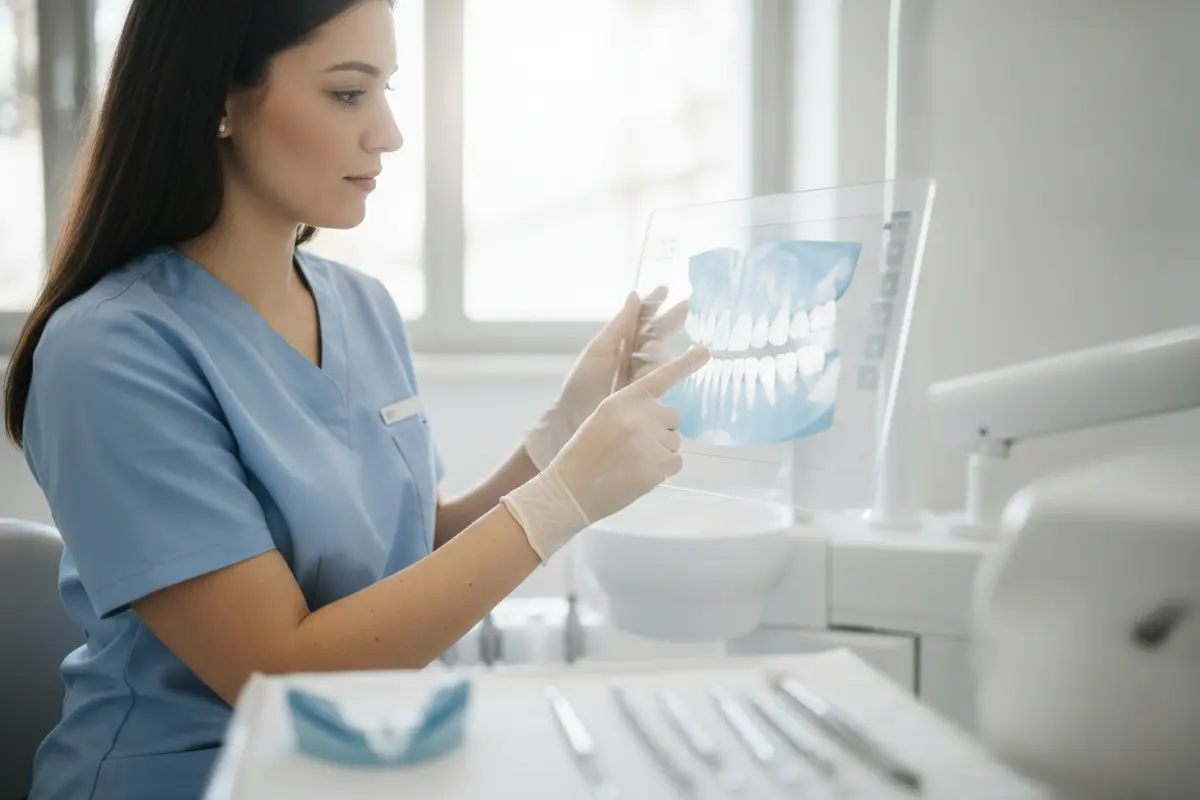
A plan usually starts by distinguishing urgent needs from treatment that can be considered later. For example, active disease or a failing restoration may need attention before elective appearance changes. The clinician also considers whether one step affects options for another tooth or changes how the bite will be restored.
Planning is not simply choosing a procedure for every tooth. A tooth may be preserved, restored, replaced, or monitored depending on its condition and the overall plan. Ask what problem a step addresses, what alternatives exist, and what could happen if you postpone it. The right answer depends on examination findings and health needs.
Some care may involve other dental professionals, depending on the condition being treated. A prosthodontist focuses on restoring and replacing teeth and coordinating restorations. If your plan includes implants, gum treatment, or another specialized need, ask who will provide each part and how the stages connect. The practice describes complex restorative and implant care as provided in-house. Its services overview gives context about treatment areas.
Teeth function as a system. Replacing or reshaping a tooth can affect contact with neighboring and opposing teeth. That is why the plan needs to consider the bite as well as individual restoration appearance. The clinician considers where teeth meet, how the jaw moves, and how planned crowns, bridges, dentures, or implant restorations can fit together.
This does not mean every patient needs the same bite treatment or a full set of restorations. The extent of care depends on the findings. Ask how the proposed work addresses your concerns and how the planned restorations are expected to function in relation to each other.
When a plan involves several teeth, models, photographs, scans, or a trial arrangement may help patients and clinicians discuss shape, position, or appearance before definitive restorations are made. The exact process varies. Review the proposed design and ask what can still be adjusted at each stage. If implant-supported treatment is considered, read about dental implants and All-on-4 treatment.
Sequence depends on diagnosis, the condition of teeth and gums, and the type of restoration planned. A written plan may separate care into phases so necessary preparation and healing happen before final restorations. Broadly, it may involve addressing active dental needs, preparing or removing teeth when indicated, placing implants if part of the plan, allowing appropriate healing, and fitting definitive restorations.
Not every patient follows that outline. Some teeth may be restored without implants; some patients may need a removable option; others may need broader reconstruction. Your clinician should tell you which stages apply and what must happen before moving forward. If implants are recommended, ask how temporary and final teeth fit into the timeline, what you can eat during healing, and who to contact if a restoration feels loose or uncomfortable.
| Planning stage | What may be reviewed or done | Useful question |
|---|---|---|
| Evaluation | Concerns, history, teeth, gums, bite, and appropriate records | What findings drive the recommendations? |
| Priority care | Needs to address before elective or definitive work | Which steps are time-sensitive, and why? |
| Preparation and interim care | Tooth preparation, provisional restorations, or other planned steps | What will I have in place during treatment? |
| Healing and review | Follow-up to assess progress before the next stage, when relevant | What signs should prompt a call? |
| Definitive restoration | Delivery and adjustment of long-term restorations | How will fit and bite be checked? |
| Maintenance | Home care and professional follow-up | What ongoing care should I plan for? |
This is a general framework, not a personal schedule. Steps may overlap or be unnecessary, and timing varies. The practice describes an in-house laboratory as part of its care model; ask whether that affects any stage in your case. Compare replacement options through its pages on dentures, dental crowns, and dental bridges.
A useful plan should identify the teeth or areas involved, proposed treatment, order of care, and alternatives considered. It should also describe expected follow-up and maintenance. If a step depends on what the clinician finds during treatment or healing, ask how uncertainty will be handled and when the recommendation would be revisited.
Cost and timing are practical parts of planning. Ask for an itemized estimate and clarify what each phase includes, what could change, and when payment is due. Coverage and out-of-pocket responsibility vary. The practice's insurance and financing information can help you prepare questions, but review your estimate and benefit details directly with the relevant offices.
Consider asking for the explanation in writing, especially if your plan includes multiple procedures. Take time to review it and ask follow-up questions. For general oral-health information, consult the American Dental Association; general information cannot determine the right treatment for your mouth.
Patients may have several goals at once: comfortable chewing, a stable bite, easier cleaning, and a smile they feel good about. These goals inform the plan, but they do not always point to the same procedure. The clinician weighs your priorities alongside tooth condition and the needs of the mouth as a whole. Be clear about what matters most and ask how recommended steps relate to those goals.
Separate what you notice from what you hope will change. You might explain that a tooth feels different when chewing, an older restoration has changed, or you are unhappy with several teeth's appearance. The clinician can explain what examination shows and which concerns restorative treatment may address. Do not assume one cosmetic or implant procedure is the only route; options depend on findings.
Ask how restorations will be shaped and positioned, how they will meet opposing teeth, and what the clinician checks before completing a phase. If the plan includes temporary teeth or trial arrangements, clarify what they help assess and what changes may be made before definitive work. A temporary restoration is not automatically the same as the final result. Discuss the purpose and limitations of each stage.
Practical needs matter, too. Tell the team about work, caregiving, travel, or other responsibilities that affect appointments or recovery. Ask what activities or foods may need to change during a particular stage, and whether you need help getting home if sedation is planned. The answers depend on treatment and your health circumstances. A realistic conversation about daily life helps you understand the plan, not just its clinical steps.
When weighing approaches, compare each option's purpose and trade-offs rather than focusing on a procedure name alone. Ask what it addresses, what it requires from you, whether it is removable or fixed, how it may affect neighboring teeth, and what future care it may involve. Ask what happens if you delay or decline a step. A second opinion may help if you remain uncertain about a complex plan.
For example, a missing tooth might be addressed with different replacement types, while nearby tooth condition and your preferences influence what is appropriate. Options are not interchangeable for everyone. If appearance is part of your concern, discuss how restorative planning relates to cosmetic treatment; the practice's pages about cosmetic dentistry and full-mouth reconstruction can frame the conversation.
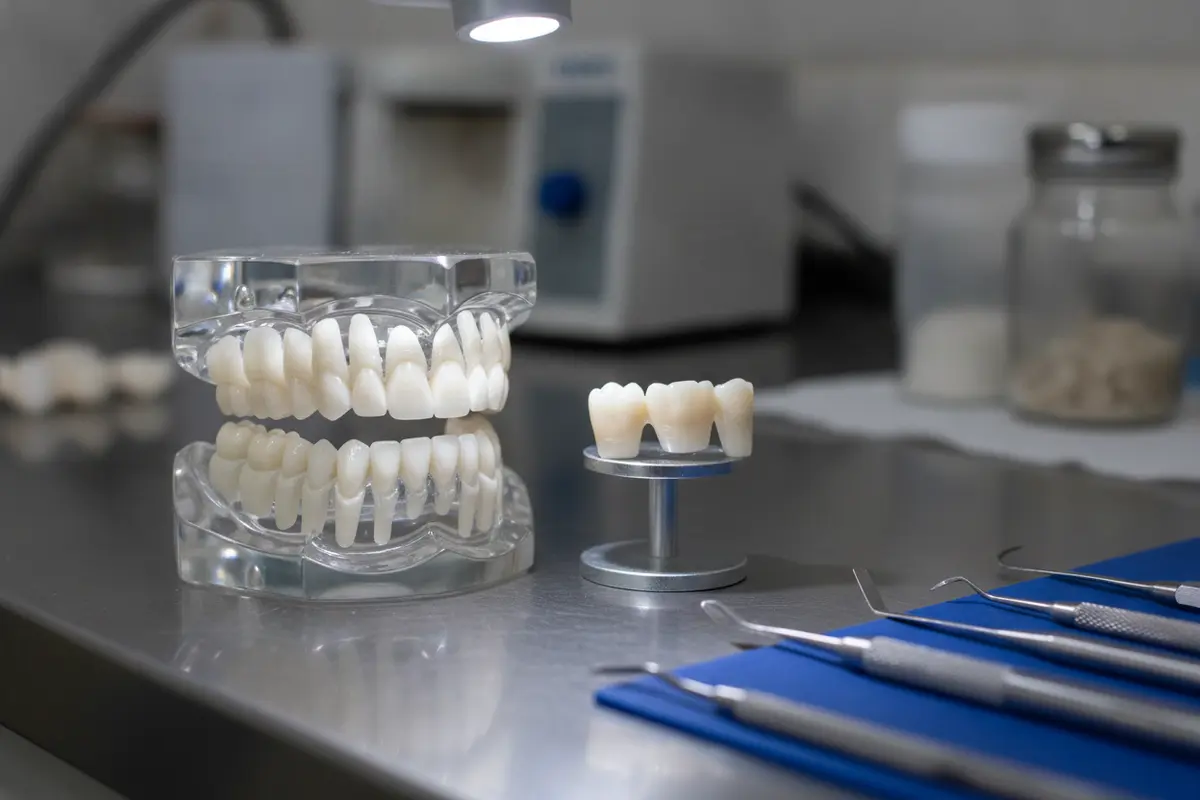
One practical way to compare alternatives is to make a short decision sheet after the visit. For each option, write down the problem it addresses, the main steps, what will be temporary, what is expected to be definitive, and what maintenance is involved. Keep questions separate from assumptions. For instance, “Will this affect the neighboring tooth?” is a useful question; “This must be the least invasive option” is an assumption to verify with the clinician.
Then compare the options against your own priorities. If eating comfortably is most urgent, ask which plan addresses function first. If appearance is a key goal, ask how much of the proposed care is needed for health or function and how much is elective. Ask whether a less extensive option is clinically reasonable, what it would leave untreated, and whether choosing it now could make later treatment harder. The clinician should explain the trade-offs without implying that every option produces the same result.
Write down your concerns in priority order. Note changes in comfort, chewing, or the way your teeth meet, and when you first noticed them. Bring a medication list and information about relevant medical conditions. If you have recent dental images or records from another office, ask whether they can be sent in advance or brought with you.
During the visit, take notes or ask whether a written summary is available. You can group questions into diagnosis, choices, sequence, logistics, and cost. This makes it easier to revisit the plan later instead of trying to remember every detail from a long conversation.
If dental visits make you anxious, mention this when arranging care so the team can discuss your concerns. The practice provides information about IV sedation; suitability depends on individual circumstances and a clinical discussion.
Phasing can make a complex plan easier to understand, but the phases should connect logically. Ask the clinician to describe the purpose of each one and what decision or finding allows the next one to begin. A plan might address a health concern first, reassess after treatment, then move toward restorative work. In another case, an interim restoration may be used while the clinician evaluates comfort, appearance, or bite before finalizing a design.
When reviewing a sequence, look for dependencies. A definitive restoration may rely on healing or on the stability of supporting structures. A change to one tooth may influence how other teeth meet. If a stage is postponed, the consequences may differ: some care can be delayed with monitoring, while another issue may need timely attention. Ask the clinician to distinguish these situations rather than treating every item as equally urgent.
It also helps to identify decision points. Before a procedure, confirm what is planned and what alternatives remain. After a healing interval, ask what will be assessed and how the findings affect the next step. If the plan changes, request an explanation of the new information, its effect on the sequence, and any implications for your estimate or expected recovery. This keeps a long treatment process understandable and gives you a chance to ask questions at the right time.
Explore dental implant treatment information
No. The plan depends on which teeth are present and their condition, your goals, and clinical findings. Some plans may use restorations on natural teeth, bridges, or dentures; implants are one possible component when appropriate.
There is no single timeline. The time needed depends on the complexity of the examination, records or imaging needed, and how many options require discussion. Ask what information is still needed before the plan can be finalized.
Some plans are divided into stages, but suitability depends on clinical priorities and how procedures relate to one another. Ask which steps can be separated, which should happen first, and what could happen if you postpone a phase.
A plan reflects information available at evaluation. New findings or changes in healing may lead the clinician to discuss an adjustment. Ask how a proposed change will be explained and whether it affects timing, cost, or alternatives.
A careful plan connects diagnosis, priorities, bite, restorative choices, timing, and maintenance. Bring your questions and ask the prosthodontist to explain how each recommended step addresses your needs and what alternatives may be appropriate.
Contact Advanced Cosmetic and Implant Dentistry to discuss a consultation
Only an evaluation can determine which approach fits your individual dental and health circumstances.
Patients in Hartford, CT, can experience unmatched quality and value by choosing board-certified doctors Avinash Bidra and Xiao Chun Li.
We are affiliated with the following prestigious organizations: