Choosing a dentist in Glastonbury, CT is easier when you start with the care you need, then compare each office’s training, planning process, and ability to manage the full treatment. A routine checkup and a complex implant or full-mouth reconstruction plan call for different questions. This guide offers a practical way to evaluate your options and prepare for a conversation with a dental team.
Contact the Glastonbury dental team to discuss your goals
Before comparing offices, write down what you want help with. Are you looking for preventive care, a specific tooth replacement, a change to your smile, or a plan that addresses several concerns at once? Your answer helps you decide which qualifications and services are relevant. It also helps keep a consultation focused on your priorities rather than on a list of procedures.
For example, someone considering a chipped front tooth may want to ask about conservative cosmetic options, while someone with several missing or damaged teeth may need a broader restorative evaluation. A patient exploring cosmetic dentistry can ask how appearance, tooth structure, and function will be considered together. If the concern involves a number of teeth or a bite that needs attention, ask whether full-mouth reconstruction is within the practice’s scope.
Make a short list of symptoms, past dental work, goals, and questions. Include what matters most to you: preserving natural teeth where possible, replacing missing teeth, improving appearance, understanding treatment stages, or discussing comfort options. You do not need to know the name of a procedure before you meet a dentist. Describing what is bothering you is a useful place to begin.
Dentists have different education, experience, and areas of focus. When a case involves multiple restorations, dental implants, or a combination of surgery and prosthetic work, ask who will plan the treatment and what training they have for that type of care. A prosthodontist is a dental specialist whose work centers on restoring and replacing teeth. Board certification can be one part of your evaluation; ask what it means and how the provider’s experience relates to your specific situation.
Advanced Cosmetic and Implant Dentistry is a family-owned specialty practice in Glastonbury. Dr. Avinash S. Bidra is a board-certified prosthodontist and oral and maxillofacial prosthodontist. Dr. Xiao Chun Li is a board-certified prosthodontist. The practice focuses on complex restorative, implant, and cosmetic care. You can review the doctors’ backgrounds on the doctors page, including Glastonbury dental specialists.
When you meet a provider, ask how their training applies to the proposed care. Some useful questions are:
Look for clear answers that connect the provider’s qualifications to your needs. A credential alone does not tell you whether a particular plan is right for you. The dentist should explain what the examination shows, what options may be appropriate, and what additional information is needed before making a recommendation.
A thoughtful treatment discussion should begin with understanding your oral health and goals, not with a one-size-fits-all procedure. Ask what information the dentist needs before recommending care. Depending on your situation, an evaluation may include reviewing your dental history, examining your teeth and gums, and using appropriate imaging or scans. The team should explain what each step is intended to assess.
Pay attention to whether the conversation covers both function and appearance. A treatment plan involving several teeth may need to consider how restorations fit together, how you bite, and how the result can be maintained. If you are considering dental implants, ask how the provider will assess your individual needs and discuss the proposed restoration as well as implant placement.
You should be able to understand the reasoning behind a recommendation. Ask the dentist to separate what is known from what remains uncertain, and to explain whether there are reasonable alternatives. If the plan has several stages, ask what each stage is for and what findings could change the next step. A useful consultation leaves you with a clearer picture of the choices, not pressure to decide before your questions are answered.

Different treatment needs call for different kinds of care. The table below is a starting point for deciding what to ask; it is not a diagnosis or a substitute for an examination. One patient may need more than one type of service, and only a dentist who evaluates you can discuss which options fit your case.
| Your concern | What to ask the dentist | Relevant care to discuss |
|---|---|---|
| Smile appearance or a damaged visible tooth | What options address my concern, and what tooth preparation or maintenance could each involve? | Porcelain veneers or other cosmetic care |
| One or more missing teeth | Which replacement options could fit my health, goals, and the location of the missing tooth? | Dental implants or other restorations |
| Many failing or missing teeth | Will the plan address function, appearance, and the relationship among restorations? | Full-mouth reconstruction |
| Most or all teeth in an arch need replacement | What full-arch approaches are appropriate, and what are their stages and maintenance needs? | All-on-4 dental implants or other full-arch options |
If the dentist recommends more than one possible path, ask for a side-by-side explanation. You can request that the team describe the expected sequence, what each option is designed to do, and what trade-offs matter. For a broader visual reference, the practice’s before-and-after gallery shows examples of treatment outcomes. Individual results and treatment plans differ, so examples should prompt questions rather than serve as a promise about your own result.
Explore dental implant care and prepare your questions
Technology can help a dental team gather information and plan care, but it is not a substitute for clinical judgment or a clear explanation. Ask what tools the office uses for your type of treatment and how the results will inform decisions. Advanced Cosmetic and Implant Dentistry reports using digital treatment planning and cone beam CT imaging among its technologies. Your dentist can explain whether a particular tool is appropriate for your evaluation.
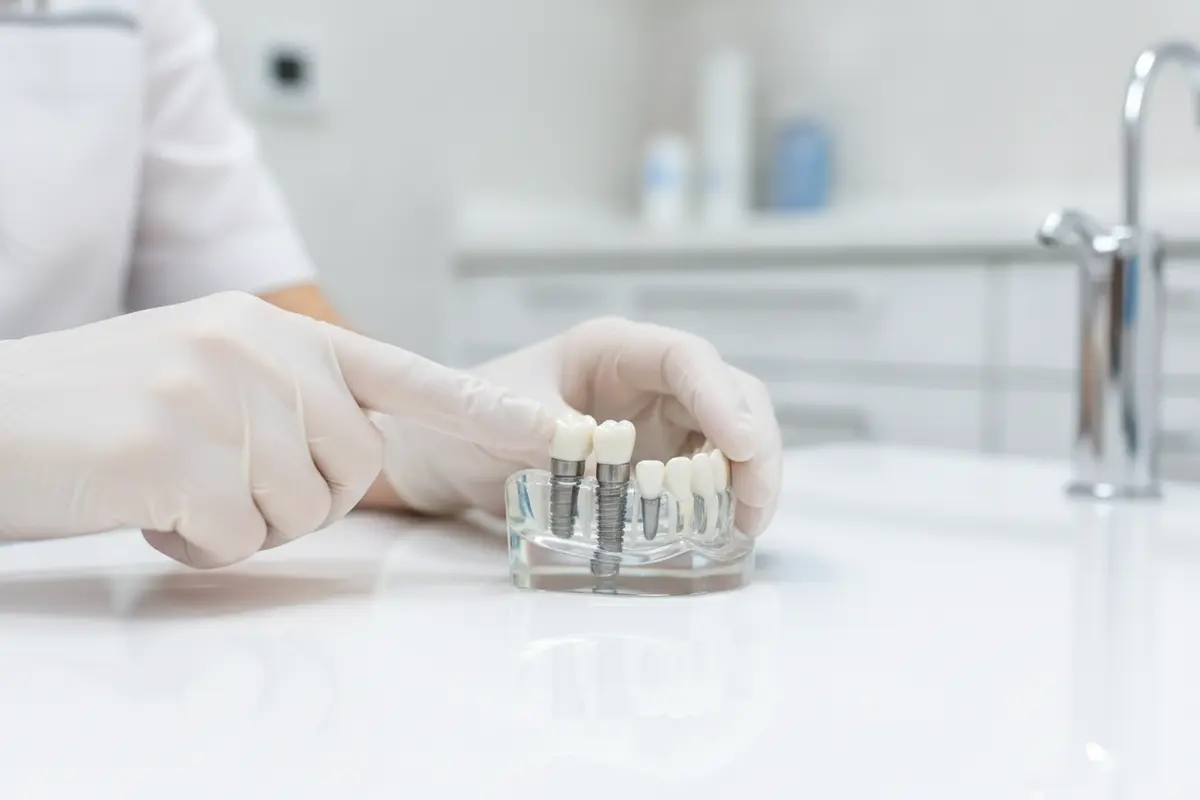
For care involving surgery and a restoration, it is helpful to understand who is responsible for each part and how the parts fit together. Ask whether the same team coordinates the treatment stages, how the proposed restoration is designed, and how questions are handled if your needs change during care. ACAID describes its model as complete in-house treatment, including an in-house laboratory. Ask the team what that means for the specific steps in your plan rather than assuming every case follows the same schedule.
Use these prompts to make the discussion concrete:
Good care also depends on whether you can talk openly with the team and understand what is happening. At a consultation, notice whether the dentist listens to your concerns, answers questions in plain language, and makes room for you to consider options. If you feel rushed or do not understand a recommendation, ask for clarification or request time to review it.
If anxiety or the length of a procedure is a concern, bring it up early. Ask what comfort approaches may be considered for your case, who provides them, and what assessment and instructions are involved. ACAID offers IV sedation administered by certified dental anesthesiologists for extensive procedures. Whether sedation is appropriate depends on an individual evaluation and treatment plan, so discuss your health history, concerns, and the proposed process with the dental team. The practice’s IV sedation information can help you prepare questions.
Logistics matter, too. Consider whether the location, appointment process, and communication methods work for you. For people coordinating several stages of treatment, it can help to know who to contact with questions between visits. You can review the practice’s practice information and video gallery before an appointment. For general oral-health information, the American Dental Association provides resources for patients.
Ask for a written estimate that identifies what is included, what may be billed separately, and which parts of the plan could depend on findings during treatment. A price is most useful when you understand the procedure or restoration it covers, the stages included, and any follow-up that is part of the proposal. Do not compare two totals until you know whether they describe the same scope of care.
At ACAID, All-on-4 full-arch dental implants start at $25,000 per arch, and a single dental implant with crown is listed at $6,000 all-inclusive. These figures are starting or listed amounts, not a personalized estimate. Ask the office how your evaluation, treatment needs, and chosen restoration affect the estimate. You can also review the practice’s dental implant cost information and insurance and financing details.
The practice is out-of-network with most dental insurance providers and helps with reimbursement claims. Ask how claims support works and what information you may need to submit to your plan. If you are comparing financing, make sure you understand the terms directly from the provider. A careful cost conversation should give you a realistic view of the proposed care without making assumptions about insurance reimbursement or approval.
Discuss implant options with the Glastonbury team
Save these questions and mark the ones that matter most. You do not have to cover every item in one visit. The goal is to leave understanding the recommendation, the alternatives, and the next decision.
After the visit, take a moment to summarize the plan in your own words. If you cannot explain what the next step is or why it was recommended, contact the office for clarification. For complex treatment, it can also be reasonable to ask how to obtain copies of relevant records and discuss the plan with another qualified provider.
Discuss your implant care questions with the Glastonbury team
It depends on the concern and the complexity of the proposed care. If your needs involve several restorations, tooth replacement, or a combination of surgical and restorative treatment, ask your dentist whether a specialist evaluation would be useful. A provider should explain the reason for a referral or specialist recommendation.
Bring a list of your concerns and goals, relevant dental and medical history, and questions about treatment, comfort, timing, and cost. If you have recent dental records or imaging, ask the office whether they would be useful and how to share them securely.
You can ask another qualified dentist to review your situation. To compare plans fairly, check that each one addresses the same concerns and that you understand the proposed procedures, stages, materials, and included costs. Ask questions if recommendations differ rather than assuming one is automatically right.
No single technology determines whether a treatment is appropriate. Ask what information the tool provides and how the dentist combines it with your examination, history, and goals. The provider should connect the findings to a clear explanation of your options.
Choosing a dentist is not only about comparing services. It is about finding a team that can evaluate your needs, explain relevant options, and help you understand the stages and practical details of care. Advanced Cosmetic and Implant Dentistry provides cosmetic, implant, and restorative care in Glastonbury, with board-certified prosthodontists on the team.
Call Advanced Cosmetic and Implant Dentistry at (860) 659-8660 to discuss an appointment
Bring your questions, share what matters to you, and use the conversation to decide whether the proposed approach feels clear and appropriate for your needs.
Patients in Hartford, CT, can experience unmatched quality and value by choosing board-certified doctors Avinash Bidra and Xiao Chun Li.
We are affiliated with the following prestigious organizations: