When comparing All-on-4 vs All-on-6 dental implants, the most useful question is not simply whether four or six implants are better. Both terms describe full-arch approaches that use a planned set of implants to support a fixed replacement bridge. The right plan depends on a person’s anatomy, oral health, restorative goals, and the design of the final teeth. Understanding what changes—and what does not—can help you have a more informed consultation.
Schedule a full-arch implant consultation
All-on-4 generally refers to a full-arch restoration supported by four implants. All-on-6 generally refers to a similar type of restoration supported by six implants. In either approach, the implants are placed in the jaw and a connected bridge is designed to replace many or all teeth in that arch. The bridge and implants work as a system; the implant count alone does not explain the full treatment plan.
These names are useful shorthand, not a complete description of how a case will be treated. Implant locations, angulation, available bone, bite forces, bridge material, and the shape of the gum-facing surface all matter. The treatment team also considers whether the goal is to restore one arch or both, what teeth remain, and what maintenance the patient can manage.
A consultation should therefore explain the reasoning behind a proposed configuration, not just offer a number. A plan with six implants is not automatically more suitable than one with four, and four implants are not automatically appropriate for every patient. The clinical findings and restorative goals guide the choice.
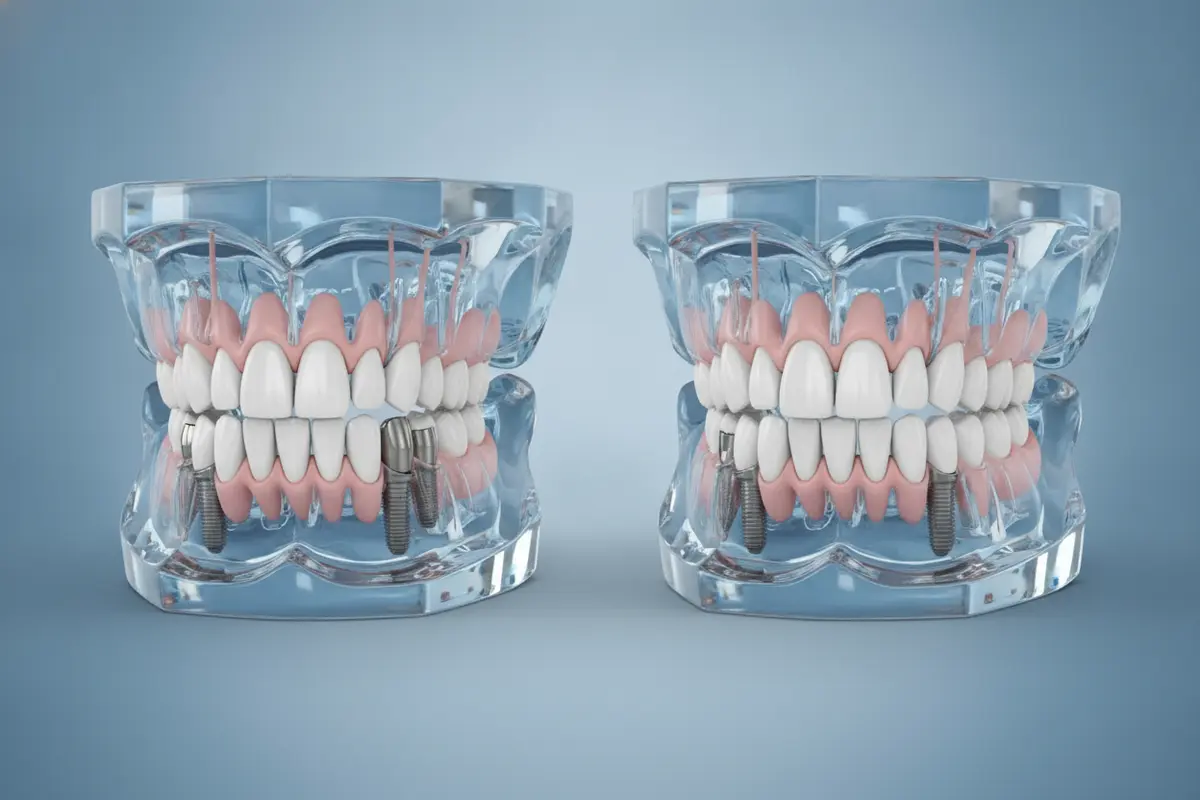
The count sets a framework for how the bridge may be supported, but it is only one part of the plan. A clinician evaluates where implants can be placed safely and how their positions can support a stable, cleanable restoration. Increasing the count can create additional possible support points, but it also means planning for additional implant sites and coordinating them with the bridge design.
Four implants may be considered when the anatomy and planned restoration allow a suitable distribution of support. A six-implant plan may be considered when the clinician determines that additional support points fit the anatomy and design. Neither description establishes a universal threshold for success. The team must evaluate each implant site and the way the connected bridge will function as a whole.
The number should also be considered alongside the restoration itself. A bridge must be designed around implant positions, bite relationships, access for cleaning, and the shape and appearance the patient wants. If the bridge design or bite is not adequately planned, simply adding implants does not answer those concerns.
Planning starts with an assessment of the mouth and jaw, not with a predetermined count. The clinician reviews the condition of remaining teeth and gums, the amount and shape of available bone, the relationship between the upper and lower jaws, and the space available for the restoration. Imaging and a clinical examination help the team understand the anatomy and identify questions that need to be addressed.
Health history matters, too. The care team will ask about conditions, medicines, and habits that may affect treatment or healing. A history of dental work, gum problems, tooth loss, or difficulty keeping a removable appliance stable may also be relevant. These details do not by themselves establish whether someone is a candidate. They are part of a full evaluation and discussion.
People sometimes assume that more implants can solve any concern about bone or stability. That is not a safe general rule. Implant position and available bone must be considered together, and some situations require a different plan or additional treatment. The clinician should explain what the images show, what limitations exist, and how those findings affect the options.
For an overview of how implant treatment typically involves evaluation, planning, placement, healing, and restoration, see the University of Illinois Chicago dental school’s guide to dental implants. The exact sequence and timing are individualized and may differ from one patient to another.
The implant-supported bridge is not an afterthought. It is the restoration the patient will use every day, so its size, position, contours, bite, and cleaning access should influence planning from the start. The clinician considers how the bridge will relate to the opposing teeth or restoration and how forces will be distributed during speaking and chewing.
Patients should ask whether the proposed teeth are fixed or removable, what material is planned for each stage, and how the bridge will be maintained. The answer can depend on the treatment plan. A temporary restoration used during healing may differ from the later, more definitive prosthesis. The expected transitions should be clearly explained before treatment begins.
Smile appearance is part of the design discussion, but so are practical details. The bridge should be shaped so the patient and care team can keep it clean. The amount of gum tissue shown when smiling, lip support, speech, and the patient’s preferred tooth appearance can all be relevant. The plan needs to balance these goals with the implant positions that the anatomy permits.
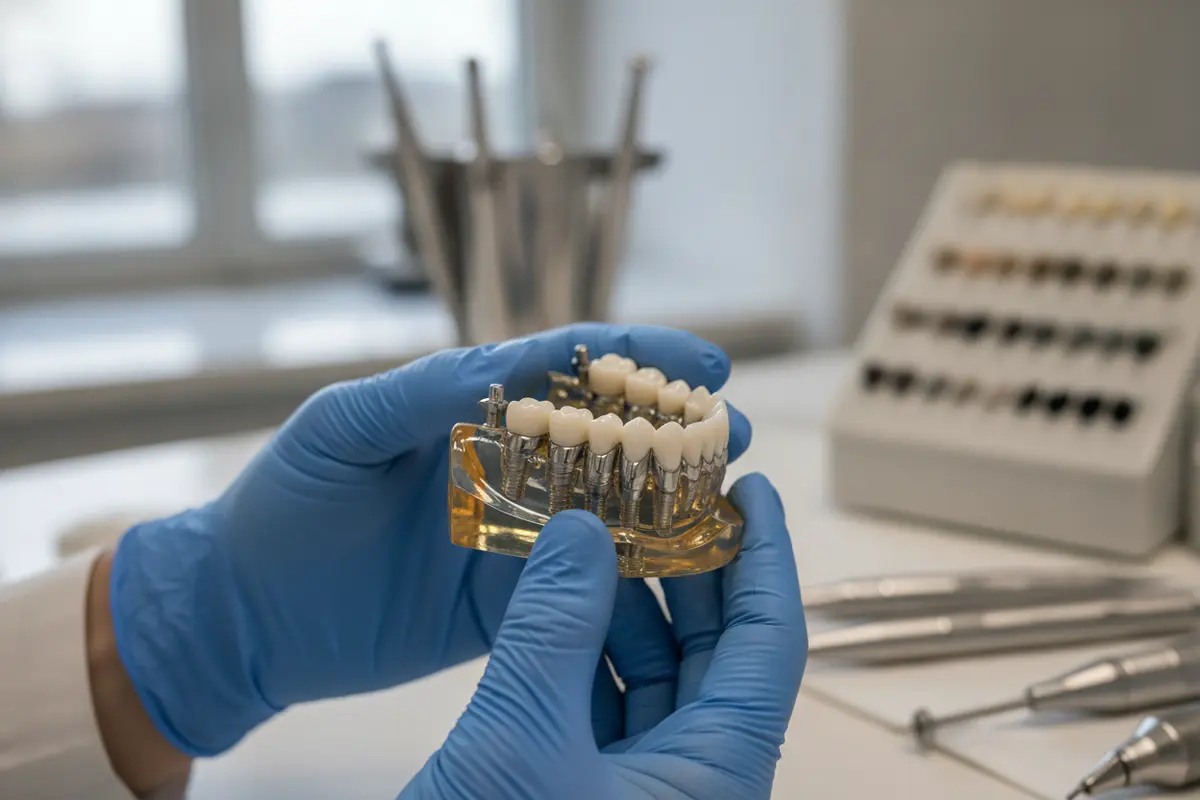
Not by itself. It is tempting to treat implant count as a simple score, but the number does not tell you whether the implants are placed in appropriate positions, whether the bridge fits the plan, or how the bite and cleaning needs are managed. A well-planned treatment considers all of these factors together.
Additional implants may be appropriate in some cases and may provide additional support points by design. That does not mean every patient needs them or that their presence guarantees a particular result. The individual anatomy, implant distribution, restorative design, healing, and ongoing care all matter. A clinician should be able to describe the reason for the proposed number in relation to the patient’s actual findings.
Similarly, a four-implant approach is not simply a shortcut or a lesser version of another plan. It is a treatment configuration that may be considered when it fits the clinical situation and restoration. The question to ask is whether the proposed configuration is appropriate for your mouth and goals, and how the team will monitor and maintain it.
The broad stages can be similar: evaluation and planning, implant placement, a healing period, and fitting or refining the planned restoration. The specific sequence depends on the individual case. Some patients may have a temporary restoration as part of the plan, while the team allows healing and evaluates when to proceed with a more definitive bridge. Do not assume that every case follows the same timeline or receives the same type of temporary teeth.
Before surgery, the team should explain what information is needed to plan the implants and bridge, what happens on the treatment day, and what the patient can expect afterward. Ask which restoration will be worn during healing and whether adjustments may be needed. Clarify how the team will assess fit, bite, speech, and comfort before moving to the next stage.
During healing and follow-up, keeping scheduled appointments helps the care team check the restoration and address concerns. If a bridge feels unstable, causes persistent soreness, or is difficult to clean, contact the treating office rather than trying to adjust it yourself. Instructions about eating, hygiene, and activity should come from the treating clinician, who knows the specifics of the plan.
The UIC guide above describes the general stages of dental implant care, but a full-arch treatment plan may have additional details. Ask for a written sequence that identifies the planned visits, what each stage accomplishes, and what clinical decisions must be made before the final bridge is delivered.
Both approaches need ongoing cleaning and professional follow-up. A fixed full-arch bridge is not maintained exactly like natural teeth, and cleaning access depends on the restoration’s shape and the patient’s dexterity. The care team should demonstrate how to clean beneath the bridge and around the implants with the tools recommended for that specific design.
Ask to practice the cleaning routine before leaving the office. Which areas need special attention? What tools fit beneath the bridge? How often should the patient return for professional evaluation? What should prompt a call between visits? A useful plan is one that can be followed consistently at home, not just one that sounds straightforward in a consultation.
Do not assume that six implants automatically make cleaning harder, or that four make it easier. The bridge contours, spaces beneath it, access points, and the patient’s needs are more informative than count alone. A provider can explain how the proposed design allows inspection and home care, and what maintenance may involve if the bridge needs repair or removal.
When you review options, compare the full plan rather than counting implants or looking at a single feature. The following table is a discussion guide; it does not determine which treatment is suitable for an individual.
| Planning factor | Questions for either approach | Why it matters |
|---|---|---|
| Implant number and position | Why are four or six proposed, and where can implants be placed? | Position and distribution must fit the anatomy and planned bridge. |
| Jaw anatomy | What do the examination and imaging show about available bone and spaces? | Findings help shape feasible implant positions and any additional steps. |
| Bridge design | What type of restoration is planned at each stage, and how will it fit the bite? | The restoration affects function, appearance, and access for care. |
| Healing and stages | What happens at each visit, and what must be assessed before the final bridge? | A clear sequence helps set expectations without promising a universal timeline. |
| Home cleaning | How will I clean under and around the bridge? | A practical routine supports ongoing maintenance. |
| Follow-up and repair | What follow-up is planned, and how are adjustments or repairs handled? | Patients should know how the restoration will be monitored over time. |
Ask for the reasoning in plain language, and request that the recommended plan and alternatives be explained together. If you are comparing opinions, make sure each provider is considering the same arch, goals, restoration stages, and included services. The practice’s dental implant service information and All-on-4 information can help you prepare for a discussion about full-arch care.
There is no reliable self-test based on the number of missing teeth or a preference for four versus six. A person with a full arch of failing or missing teeth may want to explore fixed full-arch options, but candidacy depends on clinical findings, health history, goals, and whether the patient can maintain the restoration. A consultation is necessary to determine which options are relevant.
The evaluation may also identify alternatives. Depending on the circumstances, these could include a different implant-supported design, a removable denture, treatment focused on remaining teeth, or a staged approach. These alternatives should not be dismissed just because a patient has heard of All-on-4 or All-on-6. The right comparison is between options that are actually feasible for that patient.
If removable teeth are among the options being considered, ask how they differ in support, daily use, and care. The practice’s information about dentures and implant dentures can be one starting point. For complex restorative needs, a clinician may also discuss whether full-mouth reconstruction planning is relevant.
Patients often benefit from knowing who will coordinate the surgical and restorative parts of care. Learn more about the practice’s doctors and the background of Dr. Avinash S. Bidra when preparing questions about specialist care. These pages are informational; they do not replace an individual assessment.
Bring a list of your priorities and questions. Include what you hope will change—such as being able to chew comfortably, replacing a removable appliance, or improving the appearance of your smile—and what concerns you most about treatment. Mention relevant health conditions, medicines, previous dental procedures, and any problems with current teeth or appliances.
It can also help to write down the answers or bring someone you trust to listen. Treatment discussions may include several decisions, and written notes make it easier to compare plans later. You can look at the practice’s full-arch treatment example as a visual reference, while remembering that another person’s case does not predict your result.
Explore full-arch dental implant care
No. Six implants are not automatically the best choice for every patient. The number and positions should be selected after assessing the anatomy, health history, and planned bridge. Ask the clinician to explain why the recommendation fits your specific findings.
You can share your preferences and ask about options, but the treatment team must determine which configurations are clinically appropriate. A plan should reflect examination and imaging findings as well as restorative goals, rather than a preference for a number alone.
No. Evaluation, implant placement, healing, and restoration are common elements of implant care, but the sequence and timing vary. Ask which steps apply to your case and what the team needs to assess before proceeding to a later stage.
That depends on the individual plan. Ask whether a temporary restoration is planned, how it will be used during healing, and what adjustments or care it may require. The temporary and definitive restorations may have different roles and designs.
An in-person evaluation is needed. The clinician will consider your mouth, jaw, health history, goals, and ability to maintain the restoration, then discuss suitable options and alternatives. Online information can help you prepare, but it cannot determine candidacy.
A useful comparison is not a contest between four and six. It is a review of how implant positions, anatomy, bridge design, treatment stages, cleaning, and long-term follow-up fit together in your case. A specialist can explain the clinical reasoning, alternatives, and questions that remain after an examination.
Contact Advanced Cosmetic and Implant Dentistry to discuss your treatment questions
With a clear explanation of the findings and options, you can make a more informed decision about the next step in your care.
Patients in Hartford, CT, can experience unmatched quality and value by choosing board-certified doctors Avinash Bidra and Xiao Chun Li.
We are affiliated with the following prestigious organizations: