When a tooth is damaged, discolored, or uneven, you may wonder whether a dental crown vs veneer is the better choice. The answer depends on more than the appearance you want: a dentist also considers how much healthy tooth remains, whether the tooth is cracked or weakened, how your teeth meet when you bite, and what kind of change is appropriate.
Schedule a consultation to discuss your options
A crown covers the visible portion of a tooth around its sides, much like a protective cap. It may be considered when a tooth needs more coverage or support, such as after substantial damage or when a large restoration leaves less natural structure to protect. The dentist prepares the tooth so the crown can fit over it.
A veneer is a thin restoration bonded to the front surface of a tooth. It is generally considered for selected cosmetic changes, such as changing the appearance of the front teeth, when the tooth has enough suitable enamel and structure for that approach. A veneer does not wrap around the entire tooth in the way a crown does.
Neither option is automatically stronger, more conservative, or more attractive for every person. The key difference is the amount and kind of coverage, and whether that coverage fits the tooth's condition and the forces it experiences. Learn more about the practice's dental crown treatment and porcelain veneer options.
A crown may be discussed for a tooth that is significantly weakened, broken, worn, or heavily restored. Depending on the examination, it may also be an option when a tooth needs coverage after certain procedures. The dentist's goal is to restore the tooth's shape and function while protecting the remaining structure as appropriate. A crown is not a universal solution for every crack or damaged tooth; the extent and position of the problem matter.
Veneers are usually considered for cosmetic concerns affecting the visible front of teeth. They may be used to alter the appearance of selected discoloration, small chips, shape, or spacing, when a veneer is clinically appropriate. They do not repair every underlying problem, and they are not a substitute for treating decay, gum disease, or a structurally compromised tooth.
Some people have a mixture of concerns. One tooth may need more substantial coverage while nearby teeth might be candidates for a more limited cosmetic change. A consultation can help separate the goals: restoring function, protecting a weakened tooth, changing color or shape, or coordinating the appearance of several teeth. Explore cosmetic dentistry options and, when several needs are involved, information about smile makeover planning.
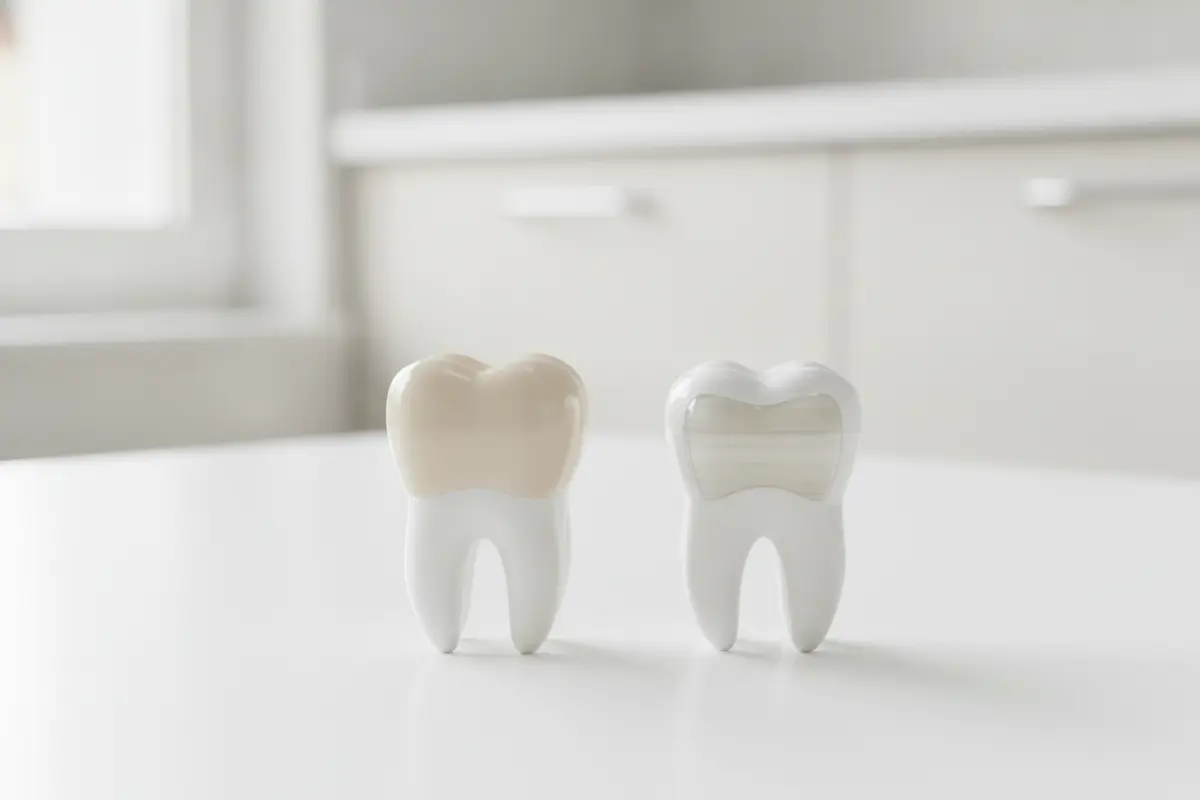
Both treatments require planning and preparation, but they involve different coverage. To make room for a crown, the dentist generally reshapes the tooth around its visible surfaces so the restoration can fit over it. How much preparation is appropriate depends on the tooth, its existing restorations, the material and design selected, and the clinical plan.
A veneer usually involves preparing the front surface of a tooth, with the amount varying by the tooth's starting position, shape, and the intended result. In suitable cases, a dentist may be able to preserve more natural tooth structure than with a crown. But “less preparation” should not be taken to mean that a veneer is always possible or that no preparation is needed. A veneer placed on an unsuitable tooth may not provide a durable or healthy result.
Ask the dentist to explain what preparation is planned for each tooth and why. You can also ask what alternatives exist, what the likely trade-offs are, and whether the plan can be adjusted to preserve healthy structure while meeting the clinical need. Avoid choosing a treatment based only on a general promise that one option is minimally invasive; the answer depends on your examination.
A crown covers more of the tooth, so it may be suitable when broader coverage is needed. A veneer is limited to the surface it covers and may be suitable when the concern is mainly cosmetic and the underlying tooth is appropriate for it. The location of a tooth, the extent of damage, and the forces from biting and chewing all affect how a restoration should be designed.
Appearance also depends on the starting tooth, the chosen material, the restoration's shape and shade, and how it relates to neighboring teeth. Both crowns and veneers can be designed to look natural, but neither can guarantee a particular cosmetic result. The dentist should discuss what can reasonably be changed, what may remain visible, and how the planned restoration will fit your smile.
Consider these differences as a starting point, not a self-diagnosis:
| Factor | Crown | Veneer |
|---|---|---|
| Coverage | Surrounds the visible portion of the tooth | Usually covers the front surface |
| Common purpose | May restore and protect a tooth needing broader coverage | May change the appearance of a suitable front tooth |
| Preparation | Typically reshapes more surfaces to make room for coverage | Typically focuses preparation on the front surface; amount varies |
| Key assessment | Remaining structure, damage, bite forces, and restoration design | Enamel and tooth condition, bite, position, and cosmetic goals |
| Limitations | Not necessary for every cosmetic concern or every damaged tooth | Not suited to every weakened tooth or every bite situation |
| Ongoing care | Daily oral hygiene and regular dental care remain important | Daily oral hygiene and regular dental care remain important |
Imagine a front tooth with a small chip and otherwise healthy structure. If the main goal is to change the visible edge or shape, a veneer may be one option to discuss, depending on the amount of enamel, the tooth's position, and the bite. The dentist may also discuss a less extensive approach if it can meet the goal. The important point is that a cosmetic concern does not automatically call for a crown.
Now consider a tooth with a large existing filling and a portion that has fractured. The tooth may need a restoration that covers more than the front surface. A crown could be part of the discussion, but the dentist still needs to examine the damage, determine whether the tooth can be restored, and consider the bite and surrounding tissues. A veneer alone may not be suited to a tooth that needs broader coverage.
A third situation is discoloration across several front teeth. A veneer plan might be considered for some teeth, but the underlying cause of discoloration, existing dental work, tooth position, and oral health all matter. The dentist should explain whether veneers are appropriate for each tooth or whether another approach better matches your goals. The right plan can differ from tooth to tooth, even within the same smile.
These examples are not treatment recommendations. They show why the same visible concern can have different causes and why the dentist's examination matters. A photo or online comparison can help you learn the terms, but it cannot show the condition of the tooth structure or how your bite loads it.
Explore when a dental crown may be considered
The dentist needs to know not only what a tooth looks like, but also how it functions. A tooth that takes heavy contact when you close your mouth may experience different forces from one that has little direct contact. Clenching, grinding, tooth position, and the way upper and lower teeth meet may all affect the treatment discussion. These factors do not automatically rule a crown or veneer in or out, but they can change the design, the risks to consider, or the recommendation.
Remaining tooth structure is another central factor. A tooth with substantial healthy structure may offer different options from a tooth that has lost a large amount to decay, fracture, or previous restorations. A veneer depends on suitable tooth structure for bonding and support. When a tooth is significantly weakened, a dentist may discuss broader coverage, but that judgment must follow an examination and diagnosis.
Gum health and the condition of nearby teeth matter too. If there is active decay or a gum concern, it may need attention before cosmetic treatment. The goal is to make a plan that considers health, function, and appearance together instead of treating color or shape in isolation. For a broader picture of care, see the practice's pages on dental exams and cleanings and crown treatment.
A crown or veneer is a restoration, not a reason to stop caring for the underlying tooth or surrounding gums. Brush and clean between teeth as advised by your dental team, and keep up with recommended examinations. A restored tooth can still develop problems, and the gums around it still need routine care.
Both restorations can be affected by heavy forces, accidents, wear, or changes in the tooth and surrounding tissues. A veneer may chip or debond; a crown can also become damaged or need attention over time. The likelihood and timing of any complication varies, so it would be misleading to promise that either option will last a fixed number of years for every patient. Ask what signs should prompt a call and what follow-up is recommended for your specific restoration.
If you clench or grind, tell the dentist. They can assess whether those habits affect the plan and whether protective measures should be discussed. Do not assume that choosing a crown means the tooth cannot be damaged, or that a veneer cannot be appropriate simply because you have a strong bite. These decisions depend on the full clinical picture.
There can also be a need to address a problem before selecting a restoration. For example, a dentist may recommend treating decay or evaluating a crack before discussing the final shape or appearance. If the tooth is sensitive, ask what may be causing it rather than assuming a crown or veneer will resolve the symptom. The sequence of care should follow the diagnosis.
Ask what the restoration can and cannot do. A crown or veneer can change the tooth's visible form, but neither is a promise that a tooth will never need further care. The dentist can explain how the proposed option fits your particular tooth, what concerns remain, and how you can monitor the result after treatment.
The decision starts with an evaluation, not a comparison chart alone. A dentist reviews your concerns and dental history, examines the tooth and surrounding tissues, and considers how your bite works. Imaging may be recommended when it is useful for assessing the tooth or planning care. The specific evaluation depends on what is found.
Then the dentist can explain which options are reasonable and why. For a tooth with enough healthy enamel and a primarily cosmetic concern, a veneer may be discussed. For a tooth that needs broader protection or has lost more structure, a crown may be considered. There may also be another option, or a need to address an underlying problem first. A treatment recommendation should account for the benefit and limitations of each approach rather than assume that one type of restoration is best for everyone.
When comparing recommendations, ask the same practical questions:
You can learn about the practice's approach to the doctors and their training, review its practice information, or read about full-mouth reconstruction when your needs extend beyond one tooth.
Start with what bothers you most. Is the priority reducing sensitivity or restoring a broken tooth, changing the visible color, improving shape, or making several teeth look more even? Share what you hope to change and what you want to preserve. If you have had previous dental work, a tooth injury, or sensitivity, mention that history.
It can help to bring a list of questions and describe any habits that may affect your teeth, such as clenching or grinding. If you are considering a larger cosmetic plan, ask how the dentist will sequence treatment and whether each tooth needs the same kind of restoration. The answer may be different for different teeth.
For patient education beyond a treatment discussion, the American Dental Association provides general oral-health information. Your own dentist can explain how general guidance applies to your examination and treatment choices.
If you receive more than one recommendation, compare the reasoning rather than just the treatment name. Ask each dentist to explain the diagnosis, the intended purpose of the restoration, and what examination findings support it. One plan may emphasize cosmetic change, while another may prioritize coverage of weakened structure. Understanding the goal helps you see whether the recommendations are addressing the same concern.
Next, discuss what each plan would involve. Ask which teeth would be treated, how much preparation is expected, what alternatives are available, and what limitations to anticipate. If several restorations are proposed, ask why each tooth needs its particular treatment. A plan should distinguish between teeth that need functional repair and those being considered mainly for appearance.
It is reasonable to ask about the care process and follow-up, too. Find out what happens if you have a concern after placement, what routine maintenance is recommended, and whether your bite or habits call for additional precautions. These questions are useful whether the plan includes a crown, veneer, or a combination.
Cost and timing are also practical considerations, but they do not establish which restoration is clinically appropriate. Ask for an explanation of what is included in the proposed care and whether there are staged alternatives. If you need financing information, review the practice's insurance and financing information and discuss details directly with the office. A plan should be understandable before you decide whether to proceed.
Not in every case. A crown provides broader coverage, while a veneer covers the front surface. The better fit depends on the tooth's health, remaining structure, bite, and treatment goal. A dentist can compare appropriate options after examining you.
A veneer may require less tooth preparation in some suitable cases, but the amount varies and some teeth are not good veneer candidates. The starting position and condition of the tooth, as well as the desired result, affect preparation. Ask your dentist to describe the planned changes for your tooth.
That depends on the type, location, and extent of the crack or weakness. A veneer is not a general-purpose repair for a tooth that needs broader protection. A dentist must assess the tooth and discuss which options are appropriate.
They still need routine brushing, cleaning between teeth, and dental follow-up. Your dentist may give additional instructions based on your restoration and bite. Contact the dental team if you notice damage, a change in fit, or a new symptom.
Appearance is an important part of planning, but it should be considered alongside tooth health and function. Ask what changes are achievable and what trade-offs each option involves. A consultation helps connect your cosmetic goals with what is appropriate for the tooth.
Learn more about dental crown treatment
A crown and a veneer serve different purposes, and appearance alone cannot determine which one fits. A careful assessment of the tooth, your bite, and your goals can clarify the reasonable options and their trade-offs. Contact Advanced Cosmetic and Implant Dentistry to arrange a consultation and discuss what may be appropriate for your needs.
Patients in Hartford, CT, can experience unmatched quality and value by choosing board-certified doctors Avinash Bidra and Xiao Chun Li.
We are affiliated with the following prestigious organizations: