Full mouth reconstruction is a coordinated plan to restore the health, function, and appearance of many or all teeth. It may involve several types of dental treatment, but it is not one standard package. The plan depends on what is damaged or missing, how the teeth fit together, gum and bone health, and what matters most to you.
Schedule a consultation to discuss your treatment goals
Full mouth reconstruction, sometimes called full mouth rehabilitation, brings multiple restorative needs into a coordinated treatment plan. The goal is to address the condition and relationship of the teeth, gums, jaw, and restorations as a whole rather than treating each concern in isolation. For example, a tooth that has worn down may affect the way the opposing teeth meet. A missing tooth can change how nearby teeth bear chewing forces. Planning considers these connections.
A plan may address extensive tooth decay, fractured or worn teeth, multiple missing teeth, failing restorations, bite problems, or a combination of these concerns. Gum health and the support around teeth also matter. Some people seek reconstruction because everyday chewing is difficult; others have concerns about damaged teeth or the appearance of their smile. Often, function and appearance overlap.
The term does not mean that every tooth must be replaced, or that every patient needs implants, crowns, or surgery. A dentist evaluates which teeth can be preserved and which areas need treatment. The treatment plan may involve a limited number of restorations or a broader sequence of care. Rutgers School of Dental Medicine describes full mouth reconstruction as care that can help restore oral health, appearance, and function. The specific approach still depends on an individual examination.
Learn more about the practice's full-mouth reconstruction services.
Planning begins with understanding the complete picture. The dentist asks about your concerns, dental history, past treatment, comfort, and priorities. A clinical evaluation may include the teeth, existing crowns or fillings, gums, bite, and jaw movement. Imaging and digital records may help assess areas that are difficult to see during a visual exam. The records needed vary with the case.
Function is more than whether a person can close their teeth together. The provider may assess how the upper and lower teeth contact, whether the bite is stable, how teeth guide movement, and whether wear or fractures suggest uneven loading. Gum condition, available bone, and the condition of remaining teeth can influence the options. These findings help the dentist identify what needs attention first and what should be monitored.
Appearance is also considered, but not in isolation. Tooth shape, size, color, and position can be discussed alongside facial features, lip movement, and the patient's preferences. A plan that focuses only on making teeth look uniform may not resolve a chewing or bite concern. Conversely, a functional plan can still account for a patient's desired smile appearance.
At the consultation, it can help to describe what you most want to change. Is your priority chewing comfortably, replacing missing teeth, addressing repeated breakage, or improving the appearance of your smile? Ask which findings are urgent, which choices are optional, and how each proposed procedure fits the larger goal. A clear plan should explain both the recommended treatment and the reasons for its sequence.
Useful records can include a medical and dental history, current medications, prior imaging or treatment records, and notes about symptoms. Mention when discomfort occurs, whether a tooth has chipped more than once, and whether you notice clenching, grinding, jaw soreness, or difficulty chewing particular foods. These details do not establish a diagnosis on their own, but they help the dentist understand what you experience outside the office.
The examination may combine several kinds of information. A visual assessment shows the condition of accessible tooth surfaces and existing restorations. Bite records and photographs can help document how teeth meet and how the smile looks. Imaging may help assess roots, bone, or other areas that are not visible directly. The dentist can explain why a particular record is recommended and what it can or cannot show. Not every person needs the same set of records.
It is also helpful to separate symptoms from goals. For example, you may report that a back tooth feels weak when chewing, while your longer-term goal is to replace a missing front tooth. Both matter, but they may have different priorities and treatment paths. Ask the dentist to summarize the findings in plain language and connect each finding to a proposed next step. That makes it easier to compare the plan with your goals before committing to treatment.
The building blocks of full mouth reconstruction depend on the diagnosis. Restorative treatment may include fillings, onlays, crowns, or bridges. Cosmetic treatments may be considered for selected teeth when appropriate. If teeth are missing or cannot be restored, tooth replacement options may include a conventional bridge, a removable denture, or an implant-supported restoration. These options differ in how they are supported, what care they require, and whether surgery is involved.
A crown can cover and restore a tooth that has lost substantial structure. A bridge replaces one or more missing teeth by connecting a replacement tooth to supporting teeth or implants, depending on the design. Removable dentures can replace multiple teeth and are taken out for cleaning. Dental implants are placed in the jaw to support a crown, bridge, or denture; suitability depends on individual oral health and treatment goals. Not every patient is a candidate for every option.
Cosmetic procedures may form part of a broader plan if appearance is a concern and the teeth and gums are suitable. For instance, veneers or bonding may be discussed for selected visible teeth. They are not substitutes for treating active disease or correcting every functional problem. Read about cosmetic dentistry options and dental crowns.
The American College of Prosthodontists notes that full mouth reconstruction can involve treatments such as onlays, crowns, bridges, veneers, dental implants, or dentures. The list describes possible components, not a checklist every patient should expect. Your dentist should connect each recommendation to a specific need and explain alternatives where they exist.
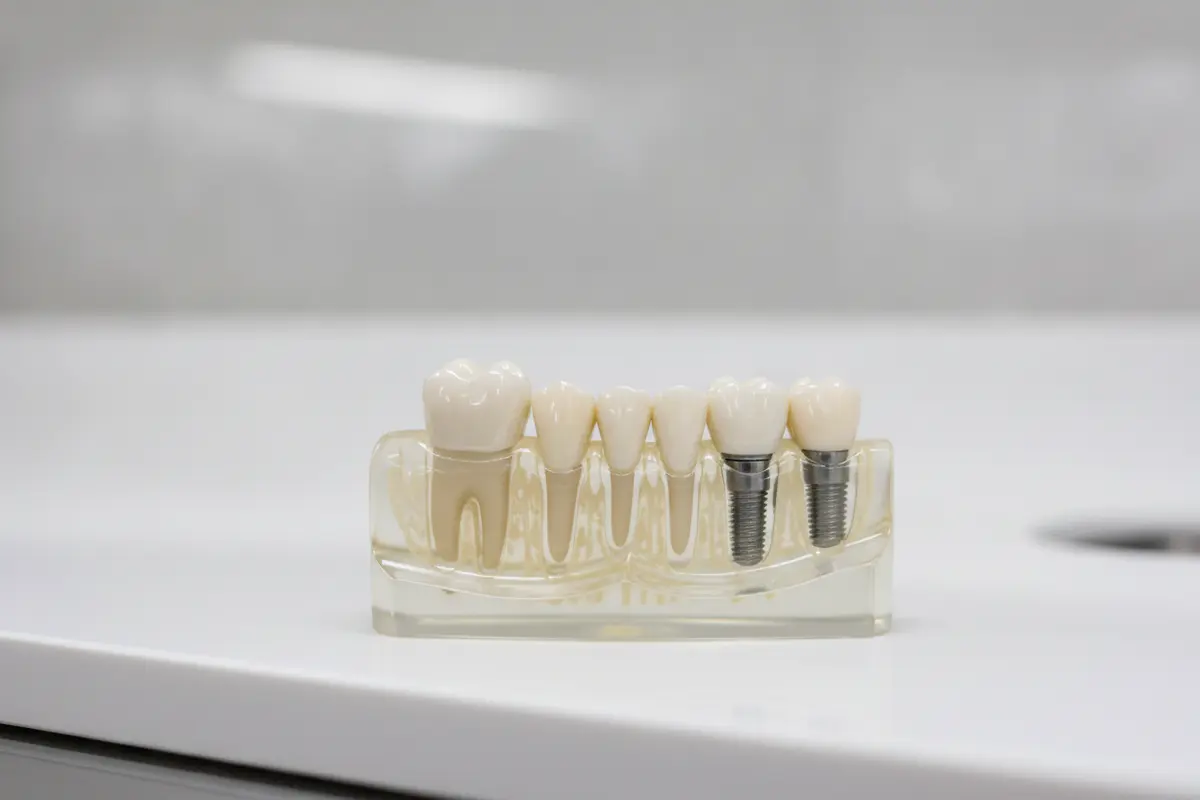
If implants are among the options under consideration, explore the practice's information about dental implants. If you are comparing removable tooth replacement, see denture options. Those pages can introduce treatment categories, while a clinical evaluation determines whether a particular option makes sense for you.
The table below is a starting point for conversation, not a recommendation. The right choice depends on the health of the teeth and gums, the amount and location of tooth loss, bite needs, and personal preferences.
| Option | How it is supported | What to discuss |
|---|---|---|
| Crown | Fits over a prepared natural tooth | Remaining tooth structure, bite, and expected maintenance |
| Bridge | Supported by teeth or implants, depending on design | Support needed, cleaning access, and effects on supporting teeth |
| Removable denture | Rests on oral tissues; some designs may use implant attachments | Stability, removal for cleaning, adjustments, and comfort |
| Implant-supported restoration | One or more implants support a crown, bridge, or denture | Surgical suitability, healing, maintenance, and alternatives |
| Veneer or bonding | Applied to selected tooth surfaces | Whether the tooth is appropriate for cosmetic treatment and whether function is addressed |
These categories can sometimes be combined. For example, one part of the mouth may need a crown while another requires tooth replacement. Ask how the proposed design distributes chewing forces, how you will clean it, what can be repaired, and how follow-up care is planned. Also ask what could change the plan if examination or treatment reveals new information.
Start with the problem each option is meant to solve. A crown restores a damaged natural tooth; it is not a replacement for a missing tooth. A bridge can replace a gap, but its design depends on suitable support. A removable denture is taken out for cleaning, while an implant-supported restoration involves implants and a treatment process that may include surgery and healing. Veneers and bonding address selected visible surfaces, but may not be suitable when a tooth needs more extensive restoration.
Ask what must be altered or treated to use each option, how the option fits your bite, and what home care it requires. It can also help to discuss reversibility and repair: What parts can be adjusted? If a supporting tooth later has a problem, how could that affect the bridge? If an implant is considered, what would the alternative be if placement is not suitable? These questions clarify the tradeoffs without assuming that one category is best for everyone.
When reviewing a treatment proposal, distinguish the required steps from possible choices. Some care may be needed to stabilize oral health before a final restoration is considered; other decisions may depend on your preferences about appearance, removability, or treatment sequence. Ask the dentist to identify where there is a genuine choice and where delaying care could affect the remaining teeth or existing restorations. This helps you make decisions in a sensible order.
When several teeth or oral structures need care, sequencing matters. The dentist may first address active problems that affect health or stability, then move to definitive restorations. The order depends on the individual's findings. A plan could include periodontal care, tooth treatment, extractions where needed, implant placement, provisional restorations, and final restorations, but many cases will not include all of these steps.
Some treatment plans use temporary or provisional restorations while the mouth heals or the final design is assessed. A provisional can help protect treated teeth and provide a temporary tooth replacement, depending on the procedure. It also gives the patient and dental team an opportunity to evaluate aspects such as comfort, appearance, and function before a more definitive restoration is made. Provisional does not mean that the same material or process is right for every case; ask what role it serves in your specific plan.
Healing needs, laboratory work, and adjustments can affect the time between stages. There is no single timeline for full mouth reconstruction. A plan involving several teeth and implants can differ substantially from a plan focused on restoring existing teeth. Your provider should explain the anticipated sequence, what may happen at each appointment, and which milestones depend on healing or review.
Before treatment begins, make sure you understand which work is planned first and why. Ask how long you may use a provisional restoration, what you can eat during each stage, whom to contact if something feels wrong, and what follow-up is expected. If priorities or circumstances change, discuss them before assuming a procedure can simply be moved earlier or later.
A staged plan can be easier to understand when it is written as a series of decision points rather than as a list of procedures. For example, a person with gum concerns, damaged teeth, and a missing tooth may first need the dentist to assess and address gum health. The team can then reassess the remaining teeth and identify which ones can be restored. Only after those questions are answered may the plan move to a final design for the missing tooth. This is an illustrative sequence, not a prediction of what any individual will need.
In another situation, a patient may have a few worn or fractured teeth but no missing teeth. The plan might focus on evaluating the bite and restoring the affected teeth, without implant surgery or a removable appliance. For a patient considering implant treatment, the sequence may include evaluating the proposed site, discussing surgical and restorative steps, and allowing for healing before the final restoration is completed. The precise order and timing depend on the clinical findings and treatment selected.
At each stage, ask what the purpose is and what information will determine whether you move to the next one. Confirm whether a provisional is protective, functional, or being used to assess the design. Ask what signs or changes should prompt a call to the office, and what you can do if an appointment needs to be rescheduled. Knowing the decision points makes a long plan feel more manageable and helps prevent assumptions about what comes next.
A personalized plan reflects both clinical findings and the patient's goals. Two people with several missing teeth may need different solutions because the pattern of tooth loss, remaining teeth, gum health, bone support, bite, and preferences differ. One person may prioritize a fixed restoration; another may prefer a removable option or want to understand less extensive alternatives.
A 2024 report available through PubMed Central describes a multidisciplinary approach to full mouth rehabilitation that considers occlusion, tooth wear, tooth loss, and periodontal health. That is a useful reminder that the plan should account for interacting concerns, rather than treating a restoration as an isolated cosmetic item. It does not prescribe the same treatment for every patient.
Depending on the case, a provider may discuss coordination among restorative care, gum treatment, oral surgery, or implant treatment. At Advanced Cosmetic and Implant Dentistry, care includes prosthodontic and implant services; the procedures recommended for an individual still depend on evaluation. You can learn about periodontal care and the practice's doctors.

Consider bringing a list of medications, relevant health conditions, prior dental records if available, and your questions. Tell the provider about discomfort, clenching or grinding, and any difficulty cleaning your teeth or restorations. These details help the clinical team understand your circumstances. Do not hesitate to ask for an explanation in plain language if a recommendation or term is unclear.
It is useful to rank what matters most to you. You may want to reduce discomfort, feel more secure chewing, replace a visible gap, avoid a removable appliance, or limit the number of procedures. These priorities can guide a discussion, but they do not replace clinical requirements. The dentist can explain which goals can be addressed together and where there may be a tradeoff.
For example, a fixed restoration and a removable option can differ in day-to-day handling and cleaning. An option that meets one preference may require a different treatment process or may not fit the condition of the supporting teeth and tissues. Ask what your preferred outcome would involve, what compromises to expect, and whether another option would address the same concern in a different way. Clear explanations help you weigh the practical impact alongside appearance.
Your plan should also account for your ability to maintain the result. Ask for a demonstration of cleaning methods for the proposed restoration and whether special tools are recommended. Discuss any limitations in hand movement, schedule, or comfort that could make home care difficult. Bringing these issues up early gives the dental team a chance to account for them while comparing designs, rather than after treatment is complete.
A thorough consultation should leave you with a clear understanding of the diagnosis, choices, and next steps. Useful questions include:
It is also reasonable to ask for a written treatment sequence and an explanation of what is urgent versus elective. If you want to compare options or take time to decide, say so. For payment questions, the practice provides information about insurance and financing; coverage and available arrangements depend on individual circumstances.
Before leaving the consultation, try summarizing the plan in your own words: what is being treated first, what will happen after that, and what choices remain open. If something is unclear, ask for the plan to be explained another way or written down. You can also ask what records or second opinions may be useful if you want more time before deciding. An informed decision depends on understanding both the proposed treatment and its alternatives.
Contact the practice to discuss a personalized treatment plan
No. The term describes coordinated treatment for multiple dental concerns. Depending on the examination, a plan may preserve many natural teeth and restore only the areas that need care. The dentist should explain which teeth can be kept and why any tooth replacement is being considered.
Not necessarily. A smile makeover usually emphasizes changes in appearance. Full mouth reconstruction addresses restorative needs and may also consider bite, chewing function, and oral health. A plan can include cosmetic treatment when appropriate, but appearance alone does not determine the procedures.
Not in every case. Implants are one possible way to support replacement teeth, but bridges and removable dentures may also be considered. The choice depends on factors such as which teeth are missing, the condition of nearby teeth and supporting structures, health considerations, and personal preferences.
There is no standard timeline. The number and type of procedures, healing, provisional stages, and adjustments all affect the sequence. Ask for a case-specific estimate and which parts of the schedule may depend on how healing progresses.
Start with a consultation and a comprehensive evaluation. Bring your questions and describe the changes you hope to make. The next step is to understand the findings, options, and sequence before deciding whether to proceed.
Full mouth reconstruction is individualized care, not a one-size-fits-all set of procedures. A careful evaluation can clarify what needs treatment, which options may fit your goals, and how the stages can be coordinated.
Contact Advanced Cosmetic and Implant Dentistry to arrange a consultation
Bring your questions and ask for a clear explanation of the options before choosing a treatment plan.
Patients in Hartford, CT, can experience unmatched quality and value by choosing board-certified doctors Avinash Bidra and Xiao Chun Li.
We are affiliated with the following prestigious organizations: