
If a conventional denture shifts when you speak or eat, an implant-retained option may offer a different kind of support. The phrase "snap on dental implants" can be confusing because the implants themselves do not snap in and out. Small implant posts remain in the jaw, while a removable overdenture connects to attachments on those posts.
In practical terms, snap on dental implants usually means a removable implant-supported denture that is designed to seat securely on implant attachments. You remove it for cleaning and typically overnight care. A fixed implant bridge is different: it stays in place and is removed only by a dental professional. The right choice depends on your oral health, anatomy, goals, and ability to maintain the restoration.
Understanding what stays in your mouth, what comes out, and how each option is maintained makes a consultation more productive. The following explanation starts with the attachment concept, then compares removable and fixed designs so you can ask focused questions about your own treatment plan.
Schedule a consultation to discuss your implant-supported options.
"Snap on dental implants" is a common, informal way to describe a removable implant-supported overdenture. Instead of relying primarily on suction or adhesive, the denture connects to attachment components supported by dental implants. The result is a removable denture designed to have more retention than a conventional denture, while still allowing you to take it out for cleaning and overnight care. The exact design depends on the arch being treated, your anatomy, and your treatment goals.
It helps to separate the phrase into the parts involved:
In practical terms, the implants and their attached components stay in place, while the overdenture comes out. You can remove it for daily brushing, rinsing after eating, and overnight storage. This is different from a fixed implant bridge, which is designed to remain in place and may require professional removal for certain cleaning or maintenance needs. Both fixed and removable implant-supported options exist, so the term "implant-supported" alone does not tell you whether a restoration is removable.
If you are comparing terminology or trying to understand your choices, read more about implant-supported denture options. An individual evaluation is needed to determine whether a removable overdenture, a fixed option, or another denture treatment approach fits your oral health and priorities.
The main difference is whether you can remove the teeth yourself. A removable snap-on overdenture is a denture that connects to implant attachments and comes out for cleaning. A fixed implant bridge is secured to implants and is intended to remain in place between professional visits. Traditional dentures rely on the fit of the denture, suction, and sometimes adhesive, while implant-supported options use implant retention instead. Each design involves different daily habits and priorities.
| Feature | Traditional dentures | Removable snap-on overdentures | Fixed implant bridges |
|---|---|---|---|
| Removability | Removed by the patient, including for routine overnight care. | Removed by the patient, typically including overnight. | Stays in place; removal for thorough cleaning is handled professionally when needed. |
| Retention | Depends on denture fit, suction, and possibly adhesive. | Connects to implant attachments, such as bar or ball-type designs. | Secured to dental implants as a fixed full-arch restoration. |
| Cleaning | Removed and cleaned outside the mouth. | Removed for direct cleaning of the denture, attachments, and surrounding areas. | Cleaned in place at home, with periodic professional care as recommended. |
| Feel and function | May feel less stable if the fit changes over time. | May provide more retention and less movement than a conventional denture, although it remains removable. | May feel more like a continuous set of teeth because it is not removed by the patient. |
| Who may value it | Patients seeking a conventional, removable tooth replacement. | Patients who want additional retention but also want to remove the denture for cleaning. | Patients who prefer a fixed option and do not want a removable denture. |
The phrase snap on dental implants can be confusing because the denture snaps onto the attachments, not because the implant itself is removable. The implant posts remain in the jaw, while the overdenture can be detached. Attachment design and the number and position of implants depend on the treatment plan, so a consultation is needed before choosing between options.
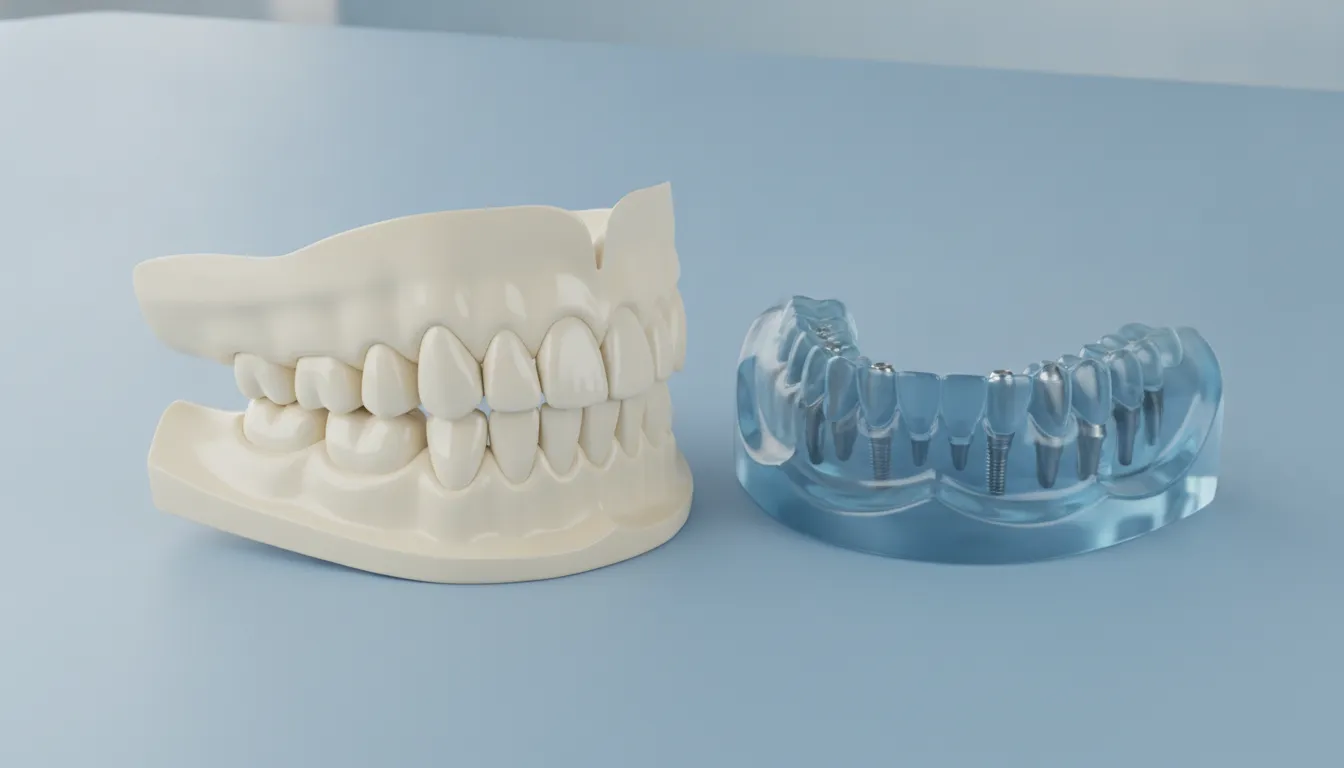
All-on-4 should not be used as another name for a snap-on overdenture. At ACAID, fixed All-on-4 implant teeth are presented as a fixed alternative for patients who do not want a removable denture. A clinician can review your goals, oral health, existing denture, and cleaning preferences to help identify which design may fit your needs.
There is no universal checklist that determines whether a person is suitable for a removable implant-supported overdenture. Candidacy for this type of treatment requires an individual clinical evaluation. Your dentist will consider how your mouth, overall health, existing denture, and treatment goals fit together before recommending snap-on dental implants.
The discussion may begin with the stability and comfort of your current denture. If it moves, rubs, or feels difficult to control, an implant-supported option may be worth exploring, but those concerns do not by themselves establish candidacy. Your clinician may also assess the condition of your jawbone and gums, along with any findings from imaging and an oral examination.
Your health history and medications are also important. Some medical conditions or medicines may affect healing, surgery, or ongoing care. Be prepared to share a complete and current list. The evaluation should also address your ability to clean the denture and implant attachments, your willingness to remove the denture for routine care. And what you want to improve, such as stability, comfort, speech, or confidence while eating.
These factors are discussion topics, not automatic pass-or-fail thresholds. A current conventional denture may sometimes be adapted or replaced as part of an implant-supported plan. For an overview of the available denture treatment options, ask how each approach would fit your anatomy, daily routine, and priorities.
A fixed implant bridge may be discussed if you prefer teeth that remain in place and your clinical situation supports that approach. A conventional denture may remain appropriate when surgery, maintenance, health considerations, or personal preferences make a removable non-implant option more suitable. The right choice depends on an examination and a conversation about alternatives, not on the treatment label alone.
Are snap-on dental implants right for everyone? No. Only an individualized evaluation can determine whether a removable overdenture, fixed bridge, conventional denture, or another plan best matches your needs.
Although the steps are planned in advance, treatment is tailored to your mouth, health history, goals, and the type of removable overdenture being designed. ACAID provides integrated care from consultation through restoration, with each stage reviewed before the next one begins. The general sequence is:
The process may take longer or require additional planning when healing needs, existing dental conditions, or prosthetic changes affect the sequence. A consultation is the best way to receive a timeline based on your anatomy and treatment goals.
Daily care helps keep a removable implant-supported denture clean and allows you to notice changes early. Follow the instructions provided for your specific denture, attachments, and oral tissues, because cleaning methods can vary by design.
Brush the denture every day using the products and technique recommended by your dental team. Rinse it after eating to help remove food particles around the denture and attachment areas. When you remove the overdenture, clean the implant attachments and the surrounding gums as instructed. A soft brush or another device may be appropriate, but do not assume that a household product is safe for every attachment or denture material.
A removable overdenture should generally be taken out overnight. This gives you an opportunity to clean the prosthesis and the tissues beneath it, while following the storage instructions from your clinician. Handle the denture over a folded towel or a basin partly filled with water to reduce the chance of damage if it slips from your hands.
Professional follow-up is part of maintenance, not a sign that treatment has failed. Your dentist can examine the gums, implants, and attachment components, and assess whether the denture continues to fit comfortably. Retention inserts can wear with use, and the denture fit can change as the mouth changes. There is no single replacement interval that applies to every patient. Ask your dental team when an insert, reline, repair, or adjustment is appropriate for your design.
Research has specifically examined how clinicians select attachment systems for mandibular implant-supported overdentures, including this systematic review of attachment-system selection. A separate five-year randomized clinical trial on attachment maintenance complications reinforces why component checks and timely adjustments belong in the long-term plan. If you notice looseness, soreness, difficulty seating the denture, or a change in how it snaps into place. Contact your dental office rather than forcing the attachment or continuing to wear an uncomfortable prosthesis.
For broader planning context, review these implant denture considerations and discuss a maintenance plan during your consultation.
There is no responsible single price for snap on dental implants because the treatment plan is built around your mouth. Your goals, and the type of restoration being considered. A personalized estimate may account for diagnostic imaging, the number and position of implants, the attachment system, and whether one or both arches are being treated. The design and materials of the removable denture also matter.
Other planning factors can include the condition of the jawbone, healing needs, adjustments during treatment, and the maintenance expected after delivery. A plan that includes relines, replacement of worn attachment components, or future denture repair may look different from a plan for another patient. For a broader explanation of these variables, review the practice's full-arch implant cost factors before comparing estimates.
Longevity also has more than one answer. The implants and the removable prosthesis are separate parts, and they do not necessarily age or require service at the same pace. Daily cleaning, overnight removal when directed, regular examinations, and attention to changes in fit can help the care team identify issues early. Attachments can wear, and the denture may eventually need adjustment, relining, repair, or replacement. These are normal maintenance considerations, not evidence that treatment has failed.
Insurance coverage varies by plan and by the services included in treatment. Some policies may treat parts of implant-supported denture care differently from the implant procedure or prosthesis, so coverage should be confirmed directly with the insurer. The practice's guide to insurance coverage for implant dentures can help you prepare questions.
Financing and payment questions belong in the consultation, after the clinician has evaluated your needs and explained alternatives. Ask which services are included, how maintenance is handled, and what future component replacement could involve. That conversation gives you a more useful basis for planning than a generic online price or lifespan promise.
A thoughtful consultation should help you understand how the proposed treatment fits your goals, health, daily routine, and long-term care needs. Consider asking:
Writing down your priorities before the visit can make the discussion more productive. When you are ready to review your options with a specialist, you can request a consultation and bring this checklist with you.
Review dental implant treatment options before your consultation.
There is no single price because the total depends on the number of arches. Imaging and planning, implant and attachment design, the denture or bridge, healing needs, and future maintenance. Ask for a written plan that separates surgical, restorative, and maintenance considerations. Insurance coverage and financing options also need to be reviewed for your specific treatment.
A removable overdenture can replace an entire arch of teeth, but the number and position of implants are individualized. Bone anatomy, the upper or lower arch, your existing denture, and the attachment plan all affect the design. A clinician must evaluate these factors rather than applying one universal implant count.
The implants, denture, and attachment components do not all have the same maintenance needs or expected service life. Daily cleaning, professional visits, fit evaluations, and timely replacement of worn components can help support the restoration. Ask which parts may need adjustment or replacement and how follow-up care will be scheduled. A five-year randomized clinical trial has examined maintenance complications for attachments in mandibular two-implant overdentures, underscoring the importance of ongoing care: PubMed evidence.
No. Candidacy requires an individual clinical evaluation. Your jawbone, health history, current denture, ability to clean the restoration, comfort goals, and alternatives all matter. If a removable overdenture is not the best fit for your needs or preferences, your clinician may discuss other options, including a fixed implant-supported bridge.
Yes, removable implant-supported dentures are generally removed overnight and cleaned according to your care instructions. The implants and attachments remain in the mouth while the denture comes out. This differs from a fixed implant bridge, which stays in place and may require periodic professional removal for thorough cleaning.
A personalized evaluation can help you understand whether a removable overdenture or a fixed implant bridge better fits your oral health, comfort preferences, and daily routine. To request an individualized consultation about implant-supported denture options, contact our team. We can discuss your goals, explain the treatment stages, and help you compare appropriate next steps without assuming one solution fits everyone.
Patients in Hartford, CT, can experience unmatched quality and value by choosing board-certified doctors Avinash Bidra and Xiao Chun Li.
We are affiliated with the following prestigious organizations: