Choosing between a conventional denture and an implant-supported option is not simply a matter of appearance. The differences can affect how a replacement is retained, how it is cleaned, and what treatment and follow-up may involve. For many patients, the right comparison starts with understanding the design of each option rather than assuming one solution fits everyone.
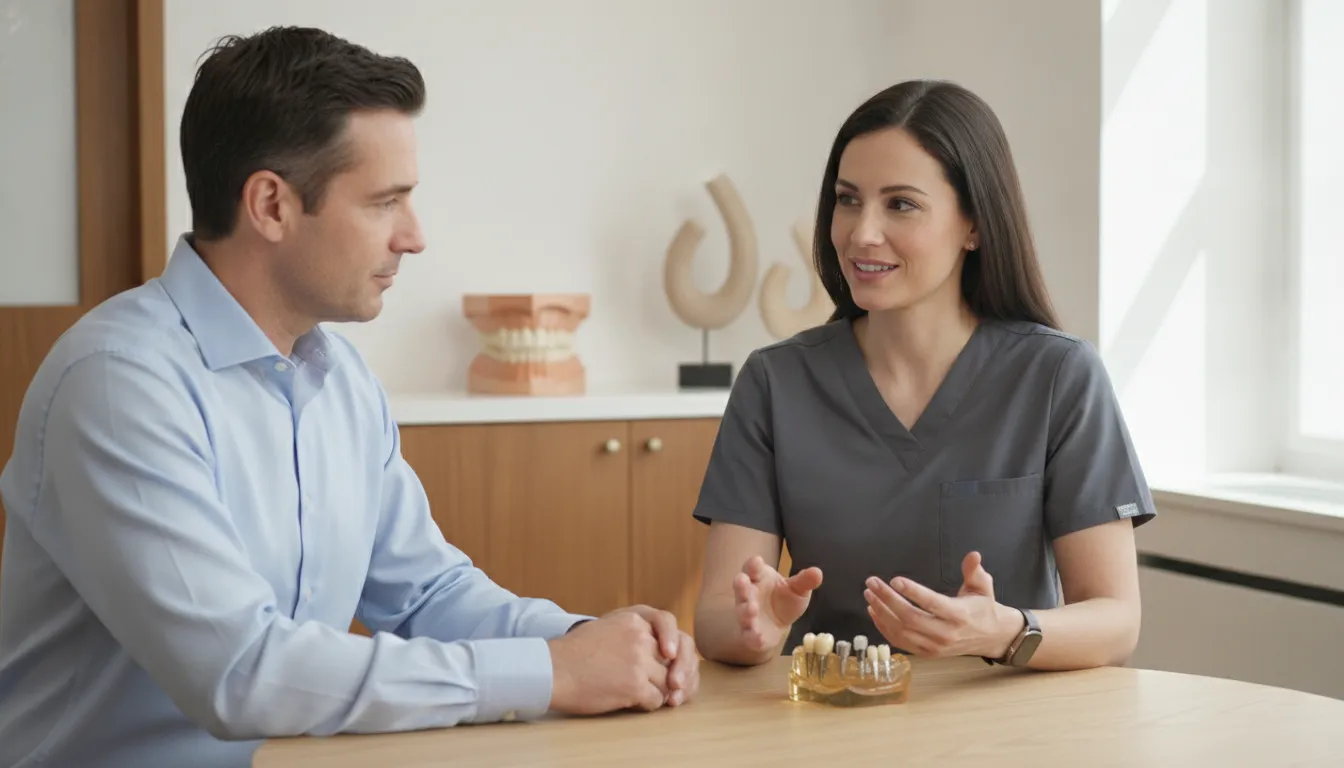
Discuss your treatment options with our practice
Implant dentures vs regular dentures come with different tradeoffs. Regular dentures rest on the gums and may move during eating or speaking, while implant-retained overdentures use implants for added support. Implant dentures still require daily care and professional monitoring, and suitability depends on an individualized evaluation.
The terms "implant denture" and "regular denture" can describe more than one type of restoration. Understanding how conventional dentures, removable implant-retained overdentures, and fixed full-arch bridges differ provides a clearer foundation for comparing stability, maintenance, treatment time, and long-term considerations.
When comparing implant dentures vs regular dentures, it helps to define what each term means. A conventional complete denture is a removable appliance that rests on the gums. It may be held in place by the shape of the denture, suction, and, when needed, denture adhesive. Because the lower jaw often provides a smaller supporting area, conventional mandibular dentures can present retention and stability challenges for some patients. Research recognizes both conventional dentures and implant overdentures as established options for completely edentulous lower jaws.
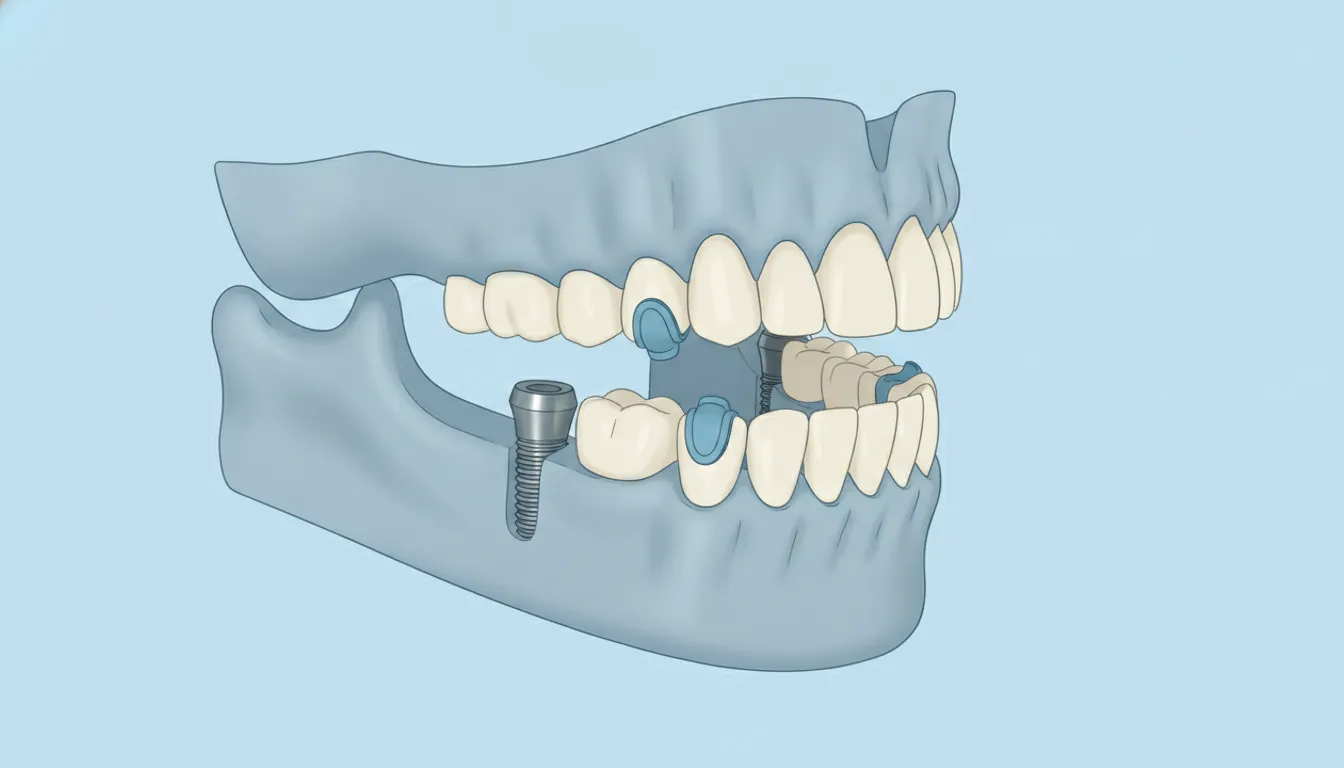
An implant denture is not one single design. The phrase may describe a removable implant-retained overdenture, which attaches to implant connectors and can be removed by the patient for cleaning. The implants provide anchorage, while the denture remains a removable prosthesis. This is different from a fixed full-arch implant bridge, which is secured to implants and is not removed by the patient as part of daily care.
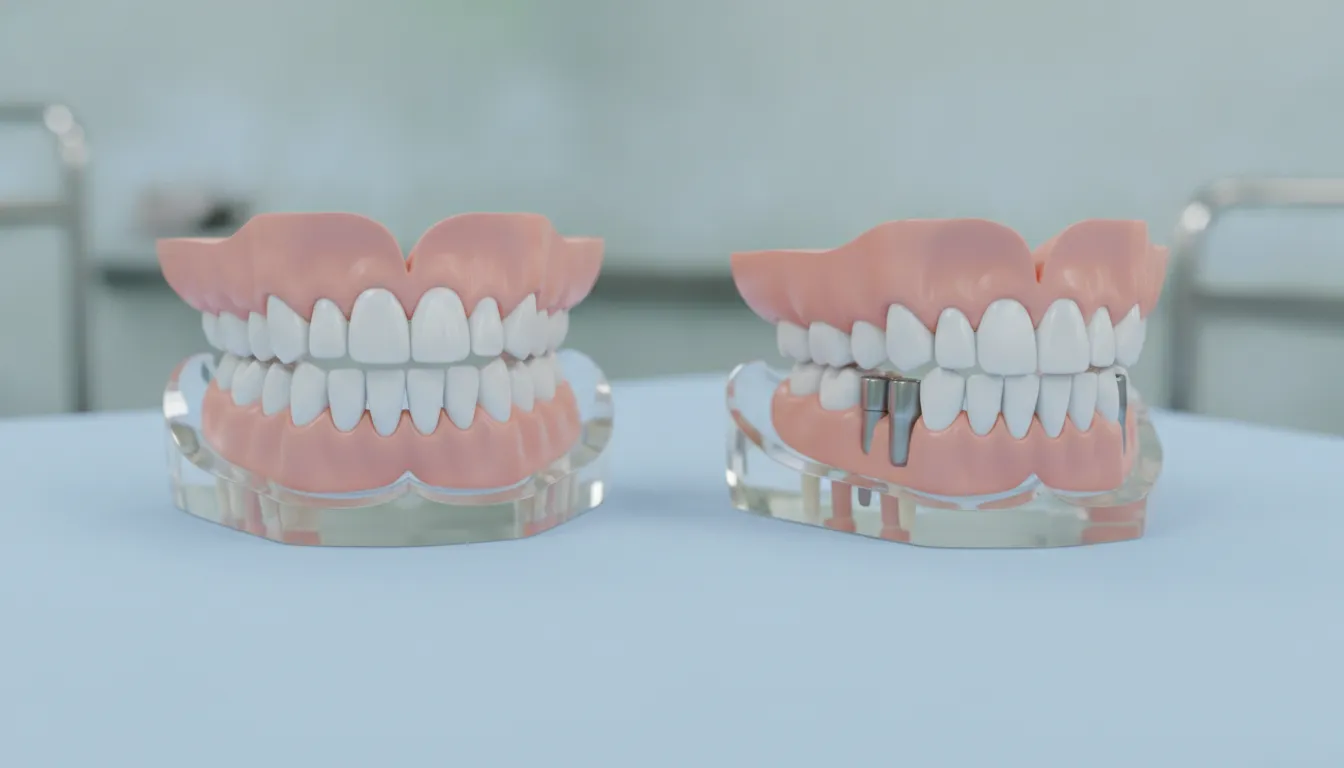
Conventional dentures transfer chewing forces primarily through the gums and underlying tissues. Implant-retained overdentures use implants in the jawbone to help limit movement, while still allowing the restoration to be removed. A fixed full-arch bridge uses a different restorative design and treatment plan. It may be considered when the clinical evaluation supports a fixed option, but it should not be treated as interchangeable with an overdenture.
At Advanced Cosmetic and Implant Dentistry, the appropriate design depends on factors such as bone anatomy, oral health, goals, and the way the restoration will be maintained. Learn more about dental implants and implant-supported dentures before comparing retention, treatment steps, and long-term care.
Day-to-day stability is often the clearest difference patients notice when comparing these options. A conventional denture rests on the gums and depends on the shape of the supporting ridge, suction, and sometimes adhesive. An implant-retained overdenture is still removable, but it attaches to implants placed in the jaw. That added support can reduce movement during ordinary activities. The experience depends on the number and position of implants, the attachment design, and the fit of the prosthesis.
How conventional and implant-retained removable dentures compare
| Consideration | Regular removable dentures | Implant-retained overdentures |
|---|---|---|
| Support | Rests on the gums and underlying tissues. | Uses attachments connected to implants in the jawbone. |
| Stability | May move as the ridge shape and fit change over time. | Usually has additional resistance to lifting and shifting, but remains removable. |
| Chewing | Function depends substantially on fit, ridge anatomy, muscle control, and adaptation. | Implant support may make chewing feel more controlled for some patients. |
| Removability | Removed for cleaning and typically taken out overnight. | Removed by the patient for cleaning when designed as an overdenture. |
| Adjustment | May need relining or other adjustments as the mouth changes. | Requires denture and attachment maintenance, along with regular clinical monitoring. |
Key takeaway: Regular dentures are removable and nonsurgical, while implant-retained overdentures add implant support but still require surgery, healing, daily care, and professional maintenance.
Speech can also feel different. A loose conventional denture may slip while speaking or eating, which can affect confidence and require conscious repositioning. Implant retention may help limit that movement, but it does not eliminate the adjustment period or guarantee a particular speech result. The restoration must still be shaped and balanced appropriately.
Evidence reviews report that two-implant mandibular overdentures are associated with better satisfaction, chewing ability, and oral-health-related quality of life than conventional dentures. The research supports implant overdentures as an established option, not as a promise that every patient will experience the same improvement. A prosthodontic evaluation can clarify whether a removable overdenture, a fixed full-arch bridge, or a conventional denture better fits your anatomy, goals, and ability to maintain the restoration. Learn more about implant-supported dentures.
Tooth loss changes the relationship between the teeth, gums, and the gum-bearing ridge beneath them. After an extraction, the alveolar bone can gradually remodel and lose volume. The amount of change varies substantially from person to person and cannot be predicted precisely at the time of extraction. Healing pattern, anatomy, existing bone, and other individual factors may all matter. A review of post-extraction bone changes describes this individual variation.
That changing ridge can affect how a conventional denture fits. A regular denture rests on the gums and depends on the shape of the supporting tissues, along with suction and, for some patients, adhesive. As the ridge changes, the fit may need professional adjustment or relining. This does not mean that conventional dentures are unhealthy or inappropriate. They remain an established option for many people, but their fit and comfort should be assessed when they begin to move, rub, or interfere with eating.
Implant-retained overdentures use implants in the jaw to provide attachment and stability for a removable prosthesis. Fixed full-arch bridges are a different design and are not removed by the patient in the same way. In the cited literature, jaws with implant-supported prostheses showed less bone loss than jaws restored with conventional dentures. That finding describes a group-level result, not a guarantee for every individual, and it does not mean implants eliminate bone change.
Oral health assessment is therefore an important part of planning. At Advanced Cosmetic and Implant Dentistry, evaluation may include an oral examination, medical-history review, digital impressions, and CBCT imaging. CBCT can help the clinical team assess available bone and plan treatment, but the scan is only one part of a broader evaluation. Hygiene, remaining teeth, gum tissues, implant sites, and the proposed prosthesis also matter.
Research should be interpreted carefully. Implant-supported dentures may improve certain patient-reported outcomes, but the evidence does not establish a universal general-health benefit. A treatment discussion should focus on your anatomy, oral-health needs, goals, and ability to maintain the restoration rather than on an absolute promise about health or longevity.
The process differs substantially when comparing conventional denture fabrication with implant treatment. Regular dentures are custom-made to rest over the gums, while implant-supported options involve surgical planning, healing, and a restoration designed around the implants. The exact sequence depends on your health, anatomy, goals, and whether the final prosthesis is removable or fixed.
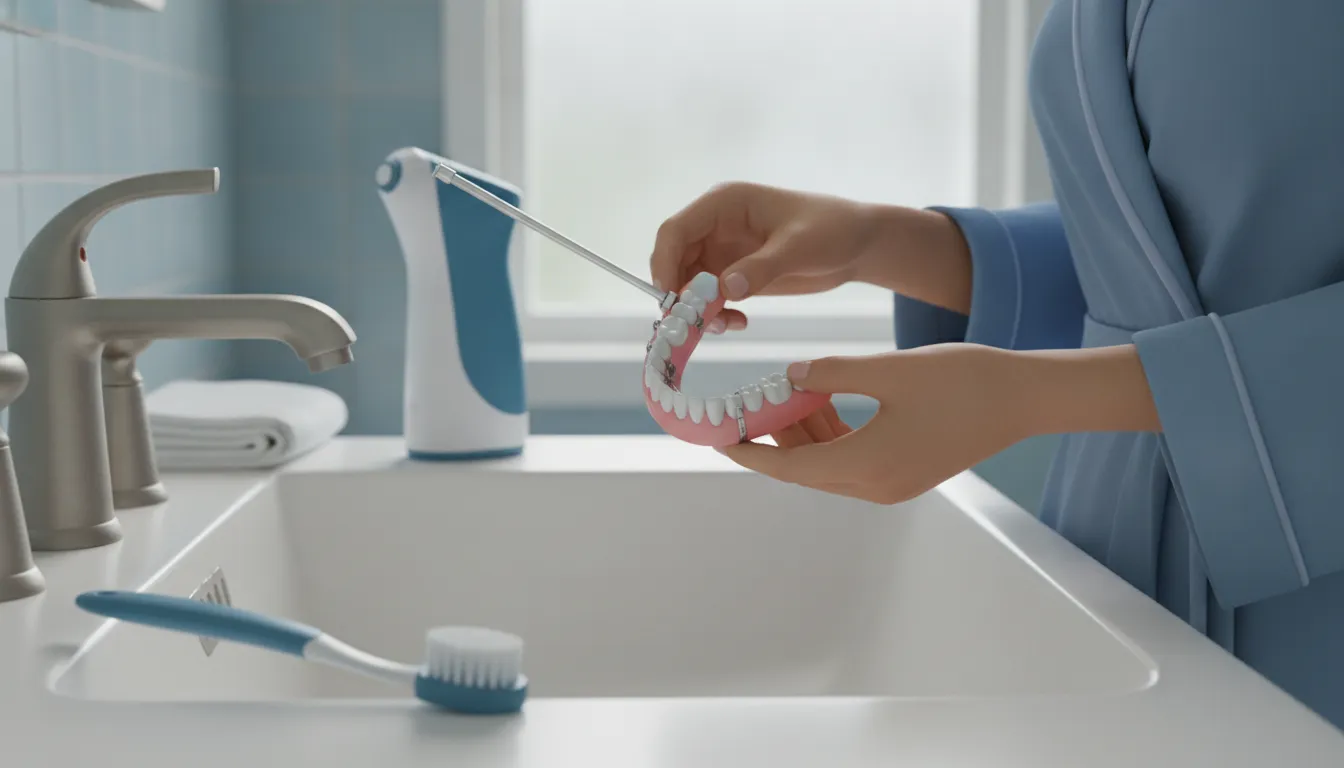
Every option requires ongoing care, but the routine looks different. Conventional dentures are removed for cleaning and are commonly soaked overnight. They also may need relining or adjustment as the shape of the supporting gums and jaw changes, which can affect comfort and fit over time.
Removable implant-retained dentures can offer more support while still allowing the patient to remove the prosthesis. A home-care routine commonly includes brushing the prosthesis and remaining teeth as directed, cleaning around attachment areas with appropriate tools, and attending follow-up visits at intervals recommended by your dental team. The exact routine depends on the attachment design, implant health, and prosthesis.
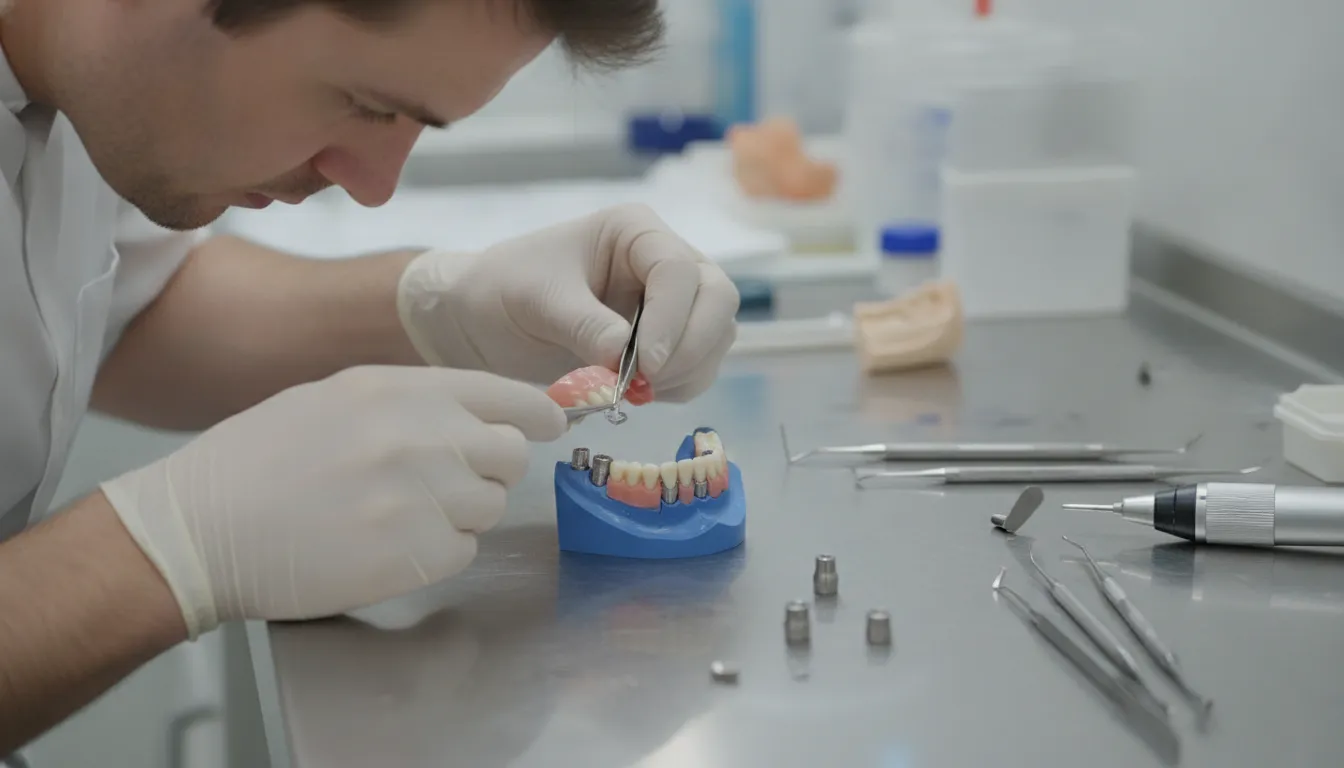
With a removable implant denture, the attachment components can wear or loosen and may need inspection, adjustment, or replacement. The denture itself may also require adjustment if the fit or bite changes. Research on implant-supported removable restorations has reported mechanical and biological complications, including loose components, attachment adjustment, bone changes, and inflammation around implants. These findings support regular monitoring rather than a set-it-and-forget-it approach.
Attachment designs can differ, and current reviews do not establish one attachment type as universally superior for every patient. Attachment choice also was not significantly associated with implant survival in one review. The appropriate design depends on factors such as anatomy, available space, implant positioning, and the prosthesis being planned.
A fixed full-arch bridge is not removed by the patient, so cleaning beneath and around the prosthesis requires specific techniques and tools. Professional examinations help the team assess the gums, implants, bite, and the condition of the bridge. This can make home care more technique-sensitive than cleaning a removable denture, even though the restoration is not taken out each night.
The long-term tradeoff is therefore not simply convenience versus inconvenience. Conventional dentures may involve simpler treatment but more frequent fit-related adjustments. Implant-retained dentures add surgical treatment and component maintenance while providing removable support. Fixed bridges offer a non-removable design but require careful daily hygiene and professional monitoring. The best maintenance plan should be based on the restoration design and an individualized evaluation.
Sources: systematic review of implant-supported removable restorations and denture cleaning guidance.
The right choice depends on more than whether someone has missing teeth. Conventional dentures may be considered when a person wants a removable replacement and their dental team determines that the gums, jaw shape, and oral tissues can support it. They may be appropriate for people who prefer a nonsurgical option, although fit and stability can change over time.
Removable implant-retained overdentures may be considered when additional retention would be helpful and the person has sufficient anatomy, or may be suitable for implant treatment after planning. Jawbone health, the number of missing teeth, oral hygiene, smoking status, and medical history all matter. These dentures attach to implants but can still be removed for cleaning, unlike a fixed full-arch bridge.
A fixed full-arch implant bridge is generally evaluated for people missing most or all teeth who want a nonremovable restoration and may be able to maintain it with the required home care. Bone volume, bite, overall health, smoking habits, and the planned number and position of implants must be reviewed. A fixed option is not automatically better or available for every patient.
An examination may include a clinical evaluation, medical-history review, CBCT imaging to assess bone, and digital impressions. A prosthodontist-led implant planning process can help connect surgical considerations with the design, cleaning needs, and function of the final restoration.
Discuss your treatment options with our prosthodontic team
If you are comparing implant dentures vs regular dentures, ask which option fits your anatomy, health history, daily habits, and goals. Smoking, uncontrolled medical concerns, inadequate hygiene, or insufficient bone may affect timing or suitability, but only an individualized evaluation can determine what alternatives may be appropriate.
The best choice depends on what you value, your oral anatomy, your health history, and the type of daily care you can realistically maintain. Conventional removable dentures may be appropriate when a removable, non-surgical solution fits your needs. They rest on the gums and can be adjusted or replaced as fit changes, although retention and stability may be concerns for some people.
Removable implant-retained overdentures offer a middle option. They can be taken out for cleaning, but attachments connect the denture to implants for added retention. Research reports better satisfaction and chewing ability with two-implant mandibular overdentures than with conventional dentures, while also noting that the size of the benefit and the long-term cost-effectiveness remain uncertain. The evidence does not support promising the same experience for every patient.
Fixed full-arch implant prostheses are different. They are designed to remain attached in the mouth and require careful planning, cleaning, and professional maintenance. They may appeal to patients who prioritize a fixed design, but candidacy, bone anatomy, restorative goals, and hygiene capacity all matter. A fixed prosthesis is not simply a more secure version of a removable overdenture.
A consultation should compare retention, removability, treatment stages, maintenance, and the condition of the jawbone rather than focus on one feature alone. A board-certified prosthodontist can evaluate these factors and explain alternatives. Learn more about dental implants and implant-supported dentures or read about prosthodontist-led implant planning.
Discuss your treatment options with our team
People missing most or all teeth may be considered, but candidacy depends on jawbone health, oral hygiene, smoking status, medical history, and the planned restoration. An examination and imaging, often including CBCT, help determine whether implants can be placed safely and whether additional treatment may be needed.
Comfort varies from person to person and depends on fit, design, healing, and daily care. Because implant-retained dentures are anchored rather than resting only on the gums, they may feel more stable during eating and speaking. Research reports better satisfaction and chewing ability with two-implant mandibular overdentures than with conventional dentures, although individual results vary.
Implant dentures involve surgery, healing time, and more complex planning than conventional dentures. They also require ongoing hygiene and professional monitoring. Possible maintenance concerns include loose components, attachment wear, inflammation around implants, or changes in supporting bone, so implants are not a maintenance-free solution. See this systematic review of implant-supported removable restorations for additional context.
Often, conversion from a traditional denture to an implant-supported removable denture can be considered, but the existing denture may need modification or replacement. The clinical team must evaluate the available bone, implant position, bite, denture design, and whether a removable overdenture or fixed full-arch bridge better fits your needs.
Both options need consistent cleaning and periodic evaluation. Conventional dentures are removed for cleaning and are commonly soaked overnight, while implant restorations require brushing, cleaning around the attachments, flossing or another recommended method, and regular checkups. Dentures may also need relining or replacement as fit changes over time.
Choosing between conventional dentures and an implant-retained option depends on your oral health, goals, and comfort with each treatment process. An individualized discussion can help clarify how removable and fixed solutions differ and which questions to bring to an evaluation.
Patients in Hartford, CT, can experience unmatched quality and value by choosing board-certified doctors Avinash Bidra and Xiao Chun Li.
We are affiliated with the following prestigious organizations: