Loose dentures can make ordinary moments, from sharing a meal to speaking with confidence, feel unexpectedly difficult. Implant-supported dentures offer a way to improve retention without making every patient choose the same type of restoration.
When people search for snap in dentures near me, they are usually looking for removable dentures that attach to dental implants instead of relying only on suction or adhesive. The implants help hold the denture in position, while the denture can still be removed for cleaning and routine care. Whether this approach is appropriate depends on your anatomy, health history, oral hygiene, and treatment goals, so an online article cannot determine candidacy.
It is also important to distinguish removable snap-in dentures from fixed full-arch bridges. Neither option is automatically right for everyone. Understanding how the attachments work, what daily care involves, and how planning affects the result can help you have a more productive conversation. Speak with an implant and prosthodontic provider in Glastonbury or elsewhere in Connecticut.
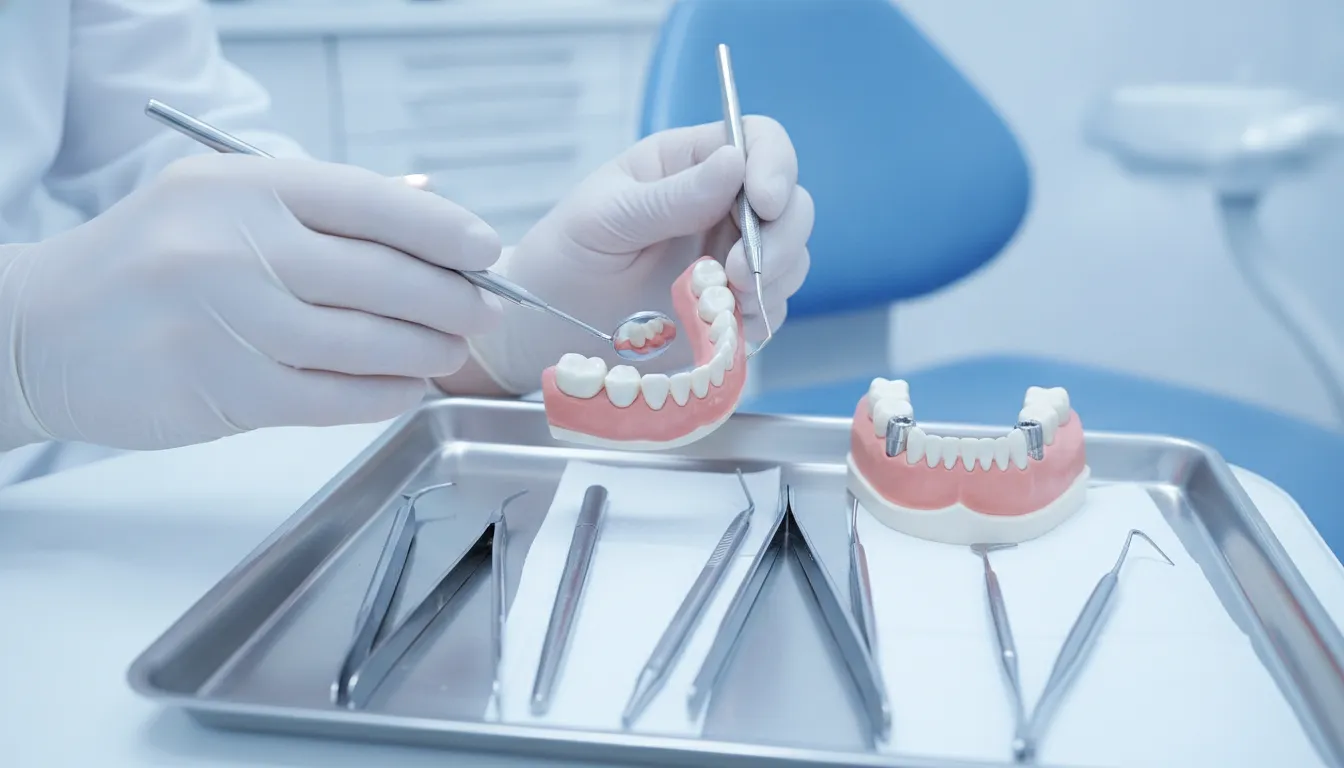
Snap-in dentures are removable dentures held in place by dental implants instead of relying only on suction or adhesive. They are often called implant-retained dentures or overdentures. Depending on the treatment plan, implants placed in the jaw support attachments that connect with the underside of the denture. One clinical description explains that implant-retained dentures are removable and may use two to four implants per arch. The appropriate number and position must be determined for each patient.
The attachments provide a more secure connection than a traditional denture can achieve on its own. Traditional dentures may shift or loosen while a person eats or speaks, particularly when the fit changes over time. Implant retention is intended to improve stability by anchoring the prosthesis to the jaw. It does not make the denture permanently fixed, and it does not eliminate the need for regular dental care.
After the implants have healed and the restorative plan is ready, the denture is designed with corresponding attachment components. The patient presses the denture into position so it engages with the implants. The connection helps resist unwanted movement during everyday activities, while still allowing the denture to be removed when needed. Attachment designs vary, so the specific system should be selected as part of an individualized examination and prosthodontic plan.
This removable design is one of the defining differences between snap-in dentures and a fixed full-arch restoration. A fixed restoration is secured to implants and is not intended for the patient to remove at home. A snap-in denture, by contrast, is taken out by the patient. Neither approach is universally right for every person. The decision depends on factors such as anatomy, oral health, treatment goals, hygiene, and the type of restoration being planned.
Because the denture can be removed, patients can clean the prosthesis and the areas around the attachments more directly. A dental education source also describes removing the denture at night for cleaning and to give the gums a break. Daily cleaning and professional maintenance remain important because implants, attachments, gums, and the denture all require attention.
If you are comparing removable and fixed choices, reviewing the practice's implant-supported denture and dental implant options can help you prepare for an individualized conversation.
Both removable implant-retained dentures and fixed full-arch teeth can be designed to replace a complete row of missing teeth, but they serve different daily preferences. A snap-in denture is supported by implants and can be removed by the patient. A fixed full-arch restoration is secured to implants and is not taken out at home. ACAID offers both fixed and removable implant-supported options, so the decision should follow a careful evaluation rather than a one-size-fits-all recommendation.
| Consideration | Snap-in denture | Fixed full-arch teeth |
|---|---|---|
| Removal | Patient removes the prosthesis for cleaning and typically at night. | Remains attached to the implants and is cleaned in place. |
| Maintenance access | Removal allows direct access to the denture, attachments, and gum tissues. | Requires careful daily cleaning around the restoration and implants, with professional maintenance. |
| Daily priorities | May suit someone who values removal, simpler access for cleaning, or a familiar denture-like routine. | May suit someone who prioritizes a non-removable feeling and does not want to take teeth out at home. |
| Design decisions | Attachment type, implant position, and the removable base are planned together. | Implant position, framework, bite, hygiene access, and prosthetic design must work as one system. |
Removability is not a sign that one option is inferior. It changes how you care for the restoration. A snap-in denture can be taken out so you can clean the prosthesis and the tissues beneath it. That access can be valuable for patients who want a straightforward home-care routine or who have difficulty cleaning around a fixed restoration. Fixed full-arch teeth stay in place, which can feel more like a continuous set of teeth. But daily hygiene requires tools and techniques that reach beneath and around the prosthesis.
The attachment system is also individualized. A systematic review of splinted and unsplinted overdenture attachments found similar results for implant survival, marginal bone loss, and prosthetic complications. The review included nine articles and analyzed 984 implants in 380 patients. Those findings help explain why attachment selection should be based on the patient's anatomy, prosthetic design, and maintenance needs, not on a single attachment being automatically best. Read the PubMed systematic review.
Your choice may depend on how you want your teeth to feel. How comfortable you are with removing a prosthesis, your ability to clean around implants, and the clinical conditions revealed during planning. A consultation should also consider the number and position of implants, the shape of the supporting tissues, bite forces, and the long-term maintenance plan. If you are comparing dental implant options, ask how each design would affect cleaning, follow-up visits, repairs, and everyday confidence. The most appropriate restoration is the one that fits your oral health, functional goals, and willingness to maintain it over time.
There is no reliable way to determine candidacy from a symptom, a photograph, or an online article. Snap-in dentures may be considered for people who are missing some or all of their teeth and want a removable denture with implant support. But the right treatment depends on the relationship between your oral health, general health, anatomy, and goals.
Important considerations include the amount and shape of available jawbone, your ability to maintain daily oral hygiene, smoking status, and relevant medical history. Existing gum disease, untreated decay, medication use, and health conditions that affect healing may all influence how treatment is planned. These factors do not automatically rule out implant-supported dentures, but they should be discussed openly during an evaluation. The goal is to identify risks early and create a plan that is appropriate for your situation.
An examination allows the clinician to assess the gums, remaining teeth, bite, jaw relationships, and the fit or condition of an existing denture. It also provides an opportunity to review your expectations. For example, some patients value the ability to remove a denture for cleaning, while others are primarily concerned about stability during meals or conversation. Those priorities can affect whether a removable implant-retained option or a fixed restoration deserves closer discussion.
Medical history is part of this process, not a formality. Tell the dental team about medications, previous treatments, smoking or nicotine use, and conditions that could affect surgery or healing. If changes are needed before implant treatment, the provider can explain them and discuss realistic alternatives.
Your evaluation may include CBCT, short for cone-beam computed tomography. This is a specialized dental scan that creates a three-dimensional model of the jaws. Unlike a flat two-dimensional image, CBCT can help the team evaluate bone anatomy and plan implant positions with more detail. ACAID describes CBCT and other advanced three-dimensional imaging as part of evaluating bone and planning implant placement in implant treatment. Another educational source describes CBCT as capturing a complete three-dimensional model of the jaw for planning implant-retained dentures.
Bone grafting is not automatically required for every patient. Whether it is useful, unnecessary, or replaced by another approach depends on the findings from the examination and imaging. Once those findings are understood, the next step is careful treatment planning, including the number and position of implants, the type of denture, and the maintenance involved.
Planning begins with understanding your oral health, goals, and the type of restoration that may fit your needs. The number and position of implants are not one-size-fits-all decisions. They are mapped from an individualized treatment plan that considers your jaw and the design of the removable prosthesis. Three-dimensional planning helps determine implant position, while ACAID uses advanced imaging, including CBCT, to evaluate bone and plan implant placement.
A careful timeline gives you space to ask questions before each phase begins. It also helps you understand which decisions are determined by your clinical findings and which can be customized around your comfort, function, and daily routine.
Implant-supported dentures are removable, but they still require a consistent home-care routine and professional follow-up. The implants, attachment components, denture, gums, and surrounding tissues all need attention. Good maintenance supports comfort and helps your dental team identify changes before they interfere with the fit or function of the restoration.
Remove the denture as instructed, including at night when appropriate, so you can clean it thoroughly and give the gums a break. Rinse away food debris, then clean the denture using the method and products recommended by your dental team. Avoid treating the prosthesis like a natural tooth by using abrasive products or making unapproved adjustments. Clean around the implant-supported attachments carefully, since trapped debris can contribute to irritation and unpleasant odors.
Even when the denture feels stable, the tissues underneath can become tender if debris remains against the gums. Pay attention to persistent soreness, bleeding, swelling, looseness, or a change in the way the denture snaps into place. These signs do not establish a diagnosis, but they are useful reasons to contact the office rather than trying to correct the problem at home.
Implant-supported dentures do not remove the need for oral hygiene. Brush the denture separately and clean the gums, tongue, and implant areas as directed. Your provider may recommend a soft brush, an interproximal cleaner, or another tool based on your anatomy and attachment design. The appropriate routine can differ from one patient to another, particularly when access around the implants is limited.
Professional maintenance is also part of the treatment, not an optional extra. Follow-up visits allow the team to assess the tissues, implants, fit, bite, and attachment function. Treatment planning at Advanced Cosmetic and Implant Dentistry includes follow-up, soft-tissue conditioning, dietary progression, and maintenance planning as part of the overall process. Learn more about implant-supported dentures and dental implants.
Attachment components can wear and may need adjustment or replacement as part of routine care. The removable denture itself can also require a reline or replacement over time because normal wear and changes in the supporting tissues can affect its fit. Maintenance needs are individual, so a provider should evaluate the restoration rather than applying a competitor's published interval as a promise for every patient.
Keeping scheduled visits and reporting changes early helps protect the fit, comfort, and function of your restoration. Ask which cleaning products are appropriate, how often you should return, how attachment wear will be monitored, and what signs should prompt an earlier visit.
When you search for snap-in dentures near me in Glastonbury, Greater Hartford, or another Connecticut community, look beyond distance and appointment availability. A removable implant-retained denture involves both surgery and prosthetic design, so the provider's training, planning process, and continuity of care deserve careful attention.
Ask about the clinician's training in prosthodontics and implant dentistry. You can also ask whether the same team coordinates the implant surgery, denture design, fitting, and follow-up, or whether those stages are divided among separate offices. ACAID is led by board-certified prosthodontists and provides consultation, implant surgery, prosthetic treatment, laboratory work, and maintenance in-house under prosthodontist supervision. Learn more about the practice and its prosthodontic care.
Ask what imaging will be used and how it will guide the plan. ACAID uses CBCT and other three-dimensional imaging to evaluate available bone and plan implant placement. Candidacy still depends on an individual examination, medical history, oral hygiene, smoking status, overall health, and other factors. No online article or symptom checklist can determine whether snap-in dentures are appropriate for you.
Ask how a removable snap-in denture compares with a fixed full-arch restoration in your situation, including how each is cleaned and maintained. Ask who will perform the surgery and restoration, how many treatment stages are anticipated, and whether healing time could affect the schedule. A typical implant-supported full-arch process may include assessment and imaging, implant placement. A healing period of about three to six months, and final prosthesis fabrication and adjustment, but your timeline may differ.
Ask how often attachments, the denture, and the supporting tissues should be checked, and what follow-up is included after delivery. Maintenance may involve hygiene visits, adjustments, soft-tissue conditioning, and dietary guidance. If dental anxiety is a concern, ask whether sedation is available, what level may be appropriate, and how screening, monitoring, and recovery are handled. Sedation requires individual assessment and appropriate safety protocols.
An on-site laboratory can support communication and customization when adjustments are needed. ACAID's laboratory and in-house care model is designed to maintain continuity from planning through restoration. Before choosing a provider serving Glastonbury, Manchester, Middletown, Wethersfield, or nearby communities, contact the office to discuss an implant-denture evaluation and bring your questions to an individualized consultation.
There is no single price that applies to every patient. The total depends on factors such as the number and position of implants, available bone, any preparatory treatment, the denture materials, and the type of attachments selected. A consultation with examination and three-dimensional imaging can clarify which steps your plan requires before an accurate treatment estimate is prepared.
Yes. Unlike a fixed full-arch bridge, a snap-in denture is designed to be removed by the patient. Removing it allows you to clean the prosthesis and the supporting tissues, while your provider can show you the routine that fits your anatomy and attachment system.
Candidacy cannot be determined from symptoms or an online article. Your provider will consider your jawbone, oral health, hygiene routine, smoking status, medical history, and restorative goals. An examination, history review, and CBCT scan help the team develop an individualized plan. Learn more about implant-supported denture planning.
The schedule varies with your health, surgical needs, healing, and restoration design. A typical implant-supported full-arch process includes assessment and imaging, implant placement, a healing period that may last about three to six months, and final prosthesis fabrication and adjustment. Follow-up visits are part of the treatment, not an optional step. Contact the office to discuss an individual evaluation.
Snap-in dentures may be worth exploring if you want to understand how removable implant support could fit your comfort, stability, and daily routine. An individual evaluation can help clarify whether this approach aligns with your oral health, anatomy. And goals, while giving you a chance to ask practical questions about planning and maintenance.
Contact Advanced Cosmetic and Implant Dentistry to discuss whether removable implant-supported dentures may be a suitable next step for you.
Patients in Hartford, CT, can experience unmatched quality and value by choosing board-certified doctors Avinash Bidra and Xiao Chun Li.
We are affiliated with the following prestigious organizations: