Choosing dentures is not only a question of what appears least expensive today. The fit of the prosthesis, how well it supports chewing and speaking, the materials used. Future adjustments, and the care required can all shape your experience and total treatment needs.
Talk with our Glastonbury team about denture options and next steps.
When comparing affordable dentures near me, look beyond the initial fee. Ask what is included: the examination, imaging, extractions if needed, denture design, follow-up adjustments, maintenance, and any implant or bone treatment required for your goals.
Patients in Glastonbury, Greater Hartford, and surrounding Connecticut communities may compare conventional full or partial dentures, implant-retained options, or a fixed full-arch solution. Each has different candidacy requirements, timelines, stability, and maintenance considerations. Define what affordability should deliver over time, not simply what it costs at the first appointment.
A search for affordable dentures near me often reflects two goals: replacing missing teeth and making a responsible financial decision. The lowest initial fee may look attractive, but it does not always show the full treatment involved. Compare fit, chewing function, stability, materials, treatment timeline, follow-up care, and possible future needs.
A conventional removable denture may meet one patient's needs. Another patient may need a partial denture, an implant-retained option, or a broader plan for failing teeth. These choices differ in support, maintenance, and preparation.
Do not ask only, "What is the cheapest denture?" Ask instead, "What treatment is appropriate for my mouth, goals. And long-term function?" A complete estimate should make clear whether it includes the evaluation, imaging, extractions, impressions, try-ins, adjustments, implants, temporary or definitive prostheses, and maintenance.
A complete estimate should make clear whether it includes the evaluation, diagnostic imaging, extractions, impressions, try-ins, adjustments, implants, temporary or definitive prostheses, and maintenance. It should also explain what may happen if your fit changes or your oral health requires additional care. This information helps you compare treatment plans fairly without assuming that two apparently similar options provide the same value.
ACAID is located in Glastonbury and serves patients throughout Greater Hartford and surrounding Connecticut communities. The practice offers partial dentures, full-arch dentures with bar or ball attachments, fixed-detachable prostheses, and pathways from traditional dentures to implant-supported treatment. Its care model coordinates consultation, diagnostics, restoration, and maintenance in-house, so the clinical and restorative stages can be considered together.
Patients comparing denture options in Glastonbury can also ask about payment pathways. ACAID identifies CareCredit, Cherry, and Proceed Finance as financing partners, although availability, approval, and current terms must be confirmed. A personalized evaluation is the best way to understand which option fits your anatomy, health history, priorities, and budget.
The right choice depends first on how many teeth are missing, the condition of the remaining teeth. Your oral tissues, and what you need your replacement teeth to do each day. Conventional full dentures replace a complete arch with prosthetic teeth set in an acrylic base. They are generally retained by suction and may also involve a mild adhesive. Partial dentures, by contrast, replace selected missing teeth while using the remaining teeth for support. Some partial designs attach with metal clasps.
Neither option is automatically the best choice for every patient searching for affordable dentures near me. Compare comfort, chewing function, appearance, cleaning, adjustment visits, and the condition of the supporting teeth and tissues. A clinical evaluation can clarify whether a removable option is appropriate now, or whether another treatment plan better supports your long-term goals.
| Consideration | Full dentures | Partial dentures |
|---|---|---|
| Designed for | Complete arch without natural teeth for support. | Selected missing teeth with natural teeth remaining. |
| Retention | Usually suction, sometimes with mild adhesive. | May use clasps attached to remaining teeth. |
| Fit | Depends on supporting tissues and may change. | Depends on teeth, tissues, and framework design. |
| Daily care | Clean daily and store as directed. | Clean the denture and maintain natural teeth. |
| Follow-up | Adjustments may be needed as fit changes. | Adjustments may be needed as support changes. |
Traditional denture fabrication may take approximately three to six weeks. The process can include impressions, a wax or plastic try-in to review comfort and appearance, final laboratory fabrication, and fit adjustments. These steps are opportunities to refine the result rather than details to skip. During an evaluation in Glastonbury or the Greater Hartford area. Ask what follow-up is included and how the plan accounts for your remaining teeth, hygiene routine, and expected changes over time.
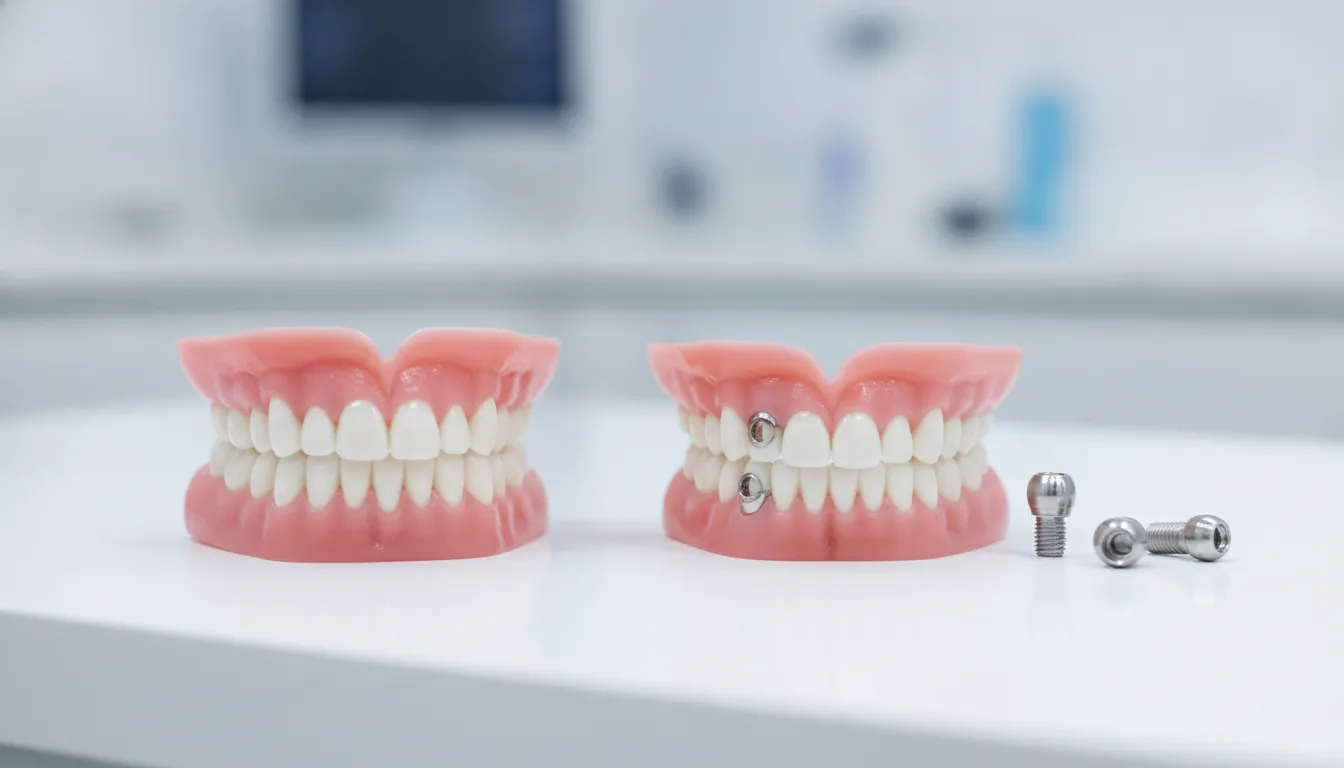
Implant-supported dentures occupy a middle ground between a traditional removable denture and a fixed full-arch prosthesis. Instead of relying only on suction, adhesive, or the shape of the gum tissues, the denture connects to dental implants placed in the jaw. Depending on the treatment design, attachments may use a bar or individual ball-type components. The denture may still be removable by the patient, or the restoration may be designed as a fixed prosthesis that the dental team removes for professional care.
A removable implant-supported denture can offer added retention while allowing the patient to take the prosthesis out for daily cleaning. That design may be useful for someone who wants more stability than a conventional denture but does not need or qualify for a fixed restoration. A fixed implant-supported prosthesis stays attached during normal use and can feel more integrated into daily function. But it requires a different hygiene routine and a more involved treatment plan. Fixed types may need periodic professional removal for thorough cleaning.
These distinctions matter when comparing implant-supported denture stability. They also come with tradeoffs involving surgery, maintenance, healing time, and the ability to remove the prosthesis at home. A separate review of implant-supported denture tradeoffs can help you prepare more focused questions for a consultation.
When healing is included, implant-supported denture treatment is described as a roughly three- to six-month process. Some patients may also need bone grafting if the available bone is not sufficient for the planned implants. The appropriate timeline depends on the examination, imaging, surgical needs, and restoration design. It should not be assumed from an advertisement or a general treatment estimate.
Implant support does not remove the need for daily care. Patients should brush the prosthesis and surrounding areas daily and rinse after eating. Attachment components can also require maintenance over time. Clinical literature has examined peri-implant maintenance for implant-supported lower dentures and the retention and durability of overdenture attachments. Reinforcing that follow-up is part of the treatment rather than an optional extra (maintenance study; attachment review).
Candidacy depends on bone quantity, the condition of the gums and remaining teeth, medical history, oral hygiene, smoking status, and personal goals. CBCT or other three-dimensional imaging can help evaluate the available bone and guide planning. A prosthodontic evaluation should compare removable and fixed choices together, including the treatment time, cleaning responsibilities, adjustments, and long-term maintenance. That fuller comparison is more useful than asking only whether implant-supported dentures are affordable.
The most useful comparison is not simply what a denture costs on the day it is delivered. It is what the treatment includes before delivery, how the prosthesis is refined, and what support is available as your mouth heals and your needs change. A careful evaluation can help distinguish a straightforward removable denture from treatment that may involve extractions, implants, temporary teeth, or a more extensive restoration.
For full-arch care, diagnostics may include CBCT or three-dimensional imaging, digital impressions, and a review of your medical history. These tools help the clinical team evaluate available bone, remaining teeth, oral tissues, and the relationship between your jaws. Planning may also account for smoking status, oral hygiene, anxiety, and sedation needs. None of these tests guarantees that a particular treatment will be appropriate, but they can reveal factors that are difficult to assess from a surface examination alone.
Digital records can also support more deliberate communication between the surgical and restorative stages. At a practice that coordinates consultation, diagnostics, restoration, and maintenance in-house, the plan can be reviewed as one connected process rather than as unrelated appointments. Ask which records are included, what additional procedures might be needed, and how changes in your bite or remaining teeth could affect the recommendation. For more complex cases, full-mouth treatment planning may be part of that broader evaluation.
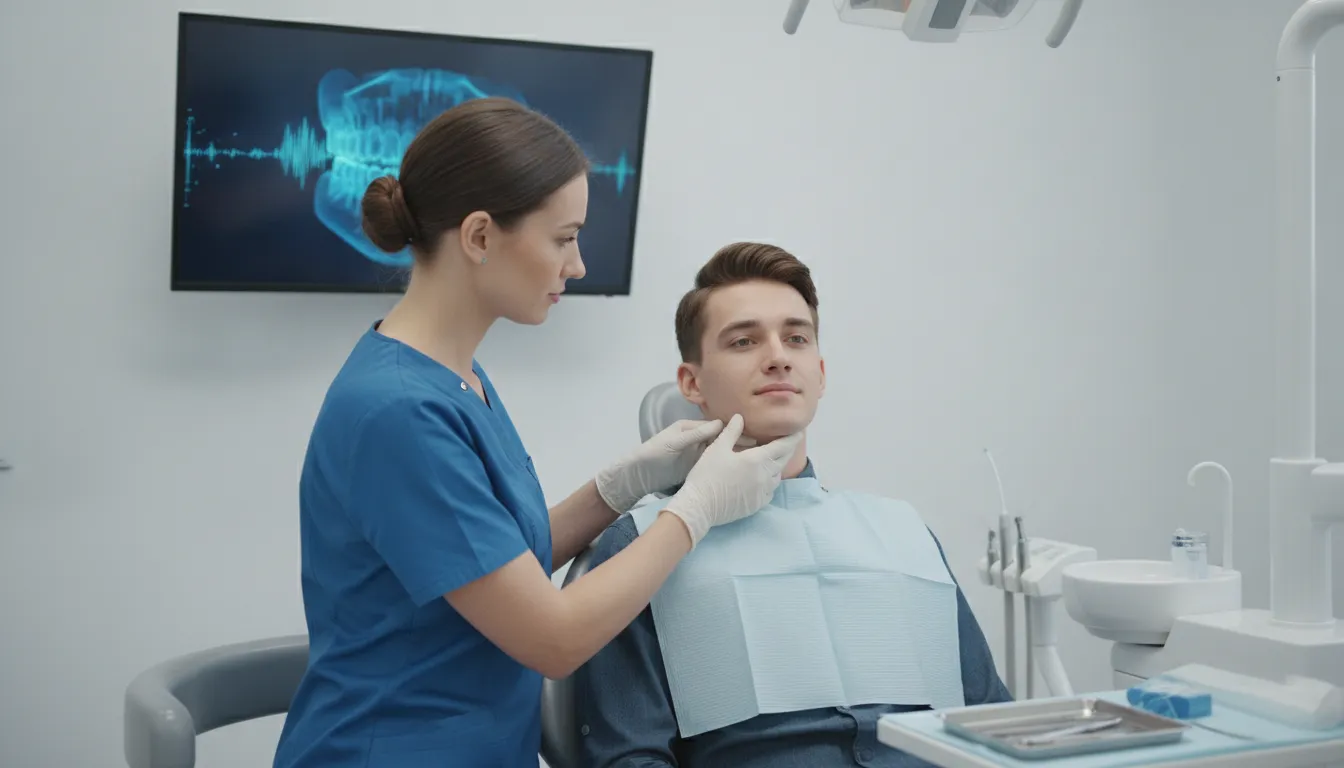
When implants are part of treatment, a temporary prosthesis may be used during a healing period that can last about three to six months. Depending on the plan and your individual healing. A temporary PMMA bridge can help restore function while the team observes healing, evaluates appearance, and identifies bite or comfort adjustments. It is not automatically interchangeable with the final restoration.
After healing, final impressions and bite registration can guide fabrication of a definitive prosthesis. Available full-arch designs may include hybrid prostheses or zirconia bridges, but the appropriate material depends on factors such as anatomy, space, function, aesthetics, maintenance, and candidacy. Zirconia is not a universal upgrade, and PMMA is not simply a lesser version of every final option. Each has a role within a carefully sequenced plan.
Final delivery may include occlusal adjustment, meaning refinement of how the upper and lower teeth meet. Follow-up also provides an opportunity to address pressure areas, review cleaning, and plan ongoing maintenance. Implant-supported and fixed prostheses still require daily care and periodic professional attention. When comparing options near Glastonbury and Greater Hartford, include these planning, adjustment, and maintenance stages in the value equation, not just the initial appliance.
A denture estimate is most useful when it describes the complete treatment plan, not just the prosthesis itself. The total may depend on whether you need a full or partial denture, extractions, diagnostic imaging. Treatment for existing oral-health concerns, implant placement, a temporary prosthesis, a definitive restoration, adjustments, or ongoing maintenance. Comparing only the lowest initial figure can make two very different plans appear equivalent.
Ask whether the estimate identifies each stage and which services are included. For example, a conventional denture plan may involve impressions, a try-in appointment, laboratory fabrication, and fit adjustments. An implant-supported plan may also involve imaging, surgery, healing visits, a temporary restoration, and final bite and prosthesis adjustments. The right comparison depends on your oral health, remaining teeth, bone, goals, and tolerance for removable care or a longer treatment timeline. A practice that coordinates consultation, diagnostics, restoration, and maintenance in one setting may also make follow-up easier. Discuss the value of that coordination in the context of your specific plan.
Financing is separate from clinical candidacy. ACAID identifies CareCredit, Cherry, and Proceed Finance as financing partnerships, but availability, approval, interest, down-payment requirements, and repayment terms must be confirmed at the time of treatment. A promotional monthly payment may apply only to qualified applicants or a particular treatment scope. Read the agreement carefully and ask what happens if the plan changes after additional findings or procedures are identified.
If you are researching denture insurance coverage, remember that insurance and financing are different questions. Bring your questions to a denture consultation in Glastonbury so the clinical recommendation and payment discussion can be evaluated together.
A useful consultation should help you understand not only which prosthesis may replace missing teeth, but also what your mouth and your daily routine will require. If you are comparing affordable dentures near me in Glastonbury or Greater Hartford. Bring a written list of questions and ask the dentist to explain the reasoning behind each recommendation.
These questions matter because a conventional full denture, partial denture, implant-retained denture, and fixed-detachable prosthesis have different requirements. A comprehensive evaluation may include medical history review, digital impressions, and imaging to assess bone and plan the restoration. If tooth loss is part of a broader bite or restorative problem, ask whether full-mouth treatment planning should be considered.
Ask what is included after delivery. Traditional dentures may need periodic adjustments as the fit changes. Implant-supported or fixed options also require daily home care and planned professional maintenance. The practice describes comprehensive care from consultation and diagnostics through restoration and maintenance, with in-house coordination between clinical and restorative stages. Review the available denture options in Glastonbury before your visit, then ask which services, adjustments, temporary appliances, and maintenance visits are included in your proposed plan.
Instead of asking only for the lowest starting price, request a written outline of diagnostics. Extractions, implants or grafting if needed, temporary and definitive prostheses, adjustments, maintenance, and any additional procedures. Ask whether financing partners such as CareCredit, Cherry, or Proceed Finance are currently available, and confirm qualification requirements and terms. Availability and approval are not guaranteed.
Schedule a consultation to review your denture options in Greater Hartford.
Compare more than the starting fee. Ask what is included in the examination, imaging, impressions, try-in, extractions if needed, adjustments, follow-up visits, and future maintenance. Fit, chewing function, stability, materials, and the condition of your remaining teeth can affect the overall value of each option.
Start with a complete evaluation so you can separate essential treatment from optional upgrades and understand the total plan. Financing partners such as CareCredit, Cherry, or Proceed Finance may be available, but approval, interest, and repayment terms vary. Confirm current terms directly with the practice before choosing a plan.
Lower traditional dentures can move because they rely primarily on suction and may need mild adhesive. Implant-supported dentures use attachments connected to implants in the jaw, which can provide a more stable design for appropriate candidates. An examination is needed to assess bone, oral health, and whether implants are suitable.
The timeline depends on your examination, any needed extractions or bone grafting, implant healing, and the type of final restoration. Some plans use a temporary prosthesis during healing before the definitive prosthesis is completed. Your treatment plan should explain each stage and the follow-up involved.
A thoughtful evaluation can help connect your goals, oral health, comfort, stability, and long-term treatment needs with the denture approach that fits you best. If you are in Glastonbury, Greater Hartford, or a nearby Connecticut community, contact our team to discuss your questions and next steps. Schedule a denture and tooth-replacement consultation through our contact page.
Patients in Hartford, CT, can experience unmatched quality and value by choosing board-certified doctors Avinash Bidra and Xiao Chun Li.
We are affiliated with the following prestigious organizations: