 All on 4 dental implants can support a fixed full-arch prosthesis with four strategically planned implants. For an eligible patient who has lost most or all teeth in one arch, this approach can provide a stable alternative to a removable denture. It is not a one-day shortcut. Treatment includes diagnosis, surgery, a temporary bridge, healing, adjustments, and a more definitive final restoration.
Schedule a conversation about your full-arch treatment options
In brief: All on 4 dental implants use four planned implants to support a fixed full-arch prosthesis. In selected cases, patients receive functional temporary teeth on the day of implant surgery. Those same-day teeth are provisional. During healing, the temporary acrylic bridge can be evaluated and adjusted for comfort, speech, bite, appearance, and cleaning. After the implants and tissues have healed, the team can design a more definitive final prosthesis, often using zirconia when appropriate.
The right plan depends on your anatomy, oral health, medical history, bite, goals, and ability to maintain the restoration. The sections below explain what the treatment means, who may be evaluated, what happens at each stage, and how to prepare for recovery.
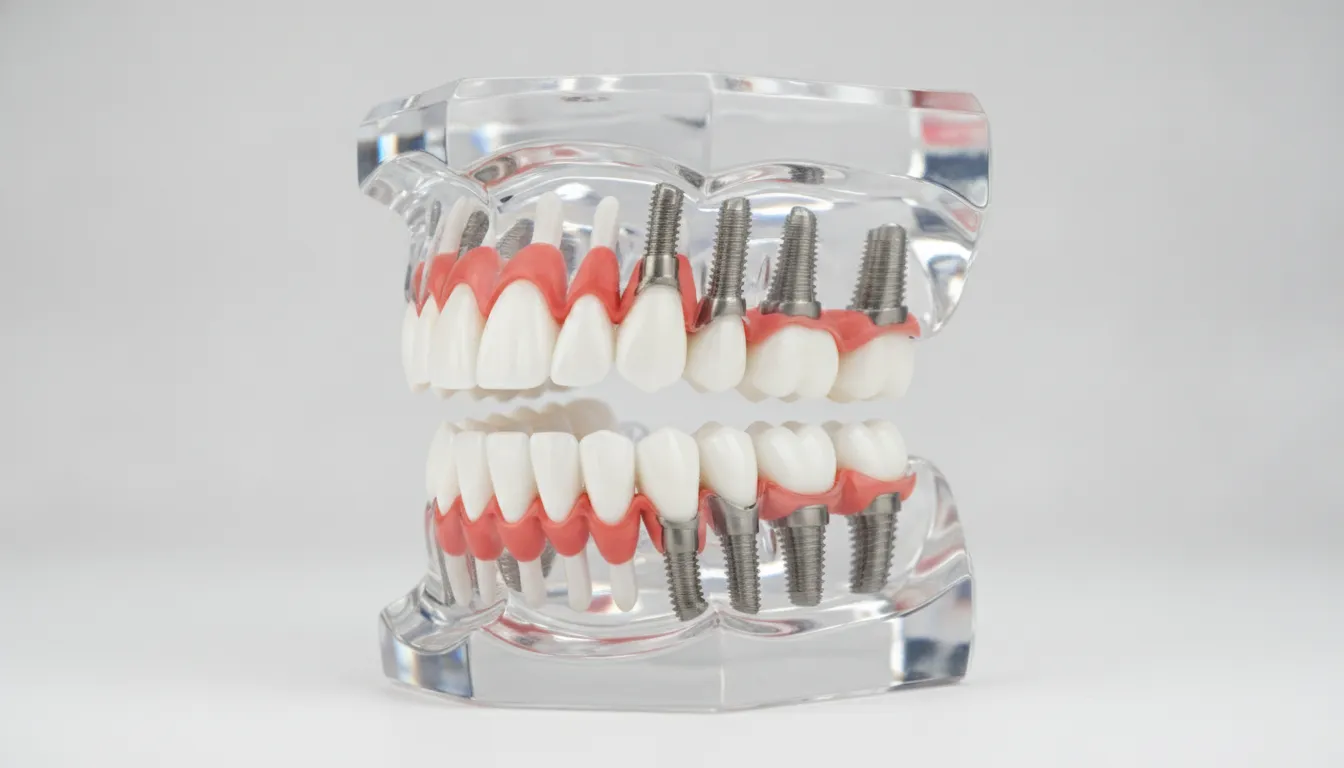
All on 4 dental implants are a full-arch implant treatment concept. Four dental implants are placed in planned locations in the jaw and connected to one prosthesis that replaces the visible teeth for the upper or lower arch. Instead of placing one implant for every missing tooth, the plan distributes support across four implants selected according to available bone, implant position, bite, and restoration design.
A dental implant replaces the root portion of a missing tooth. The implant is placed in the jawbone, while an abutment or restorative connection joins it to the visible bridge. The bridge replaces the teeth and gum-colored portions of the missing arch. Together, these components create a fixed restoration attached to implants instead of resting directly on the gums.
All on 4 dental implants differ from a conventional removable denture. A conventional denture is taken out at home and rests on the gums. A fixed full-arch prosthesis is secured to implants and is removed only by the clinical team when professional maintenance is needed. The fixed design can provide a different experience of stability, but it does not make the restoration maintenance-free or identical to natural teeth.
The implants are not simply placed at equal distances in a straight line. Their positions, angulation, length, and restorative connections are planned using a clinical examination and three-dimensional imaging when indicated. The goal is to use the patient's available anatomy while creating a stable foundation for the connected prosthesis.
A peer-reviewed review indexed by the National Library of Medicine describes the All-on-4 treatment concept as rehabilitation of an edentulous arch with a fixed implant-supported prosthesis on four implants. The concept has a defined surgical and prosthodontic rationale, but the appropriate plan still depends on the individual patient.
People who are missing most or all teeth in one arch may be evaluated for All on 4 dental implants. Tooth loss alone does not establish candidacy. A prosthodontist reviews the health of the mouth, jawbone, bite, medical history, medications, oral hygiene, smoking status, and ability to attend follow-up visits.
Active gum disease, poor plaque control, smoking, and uncontrolled medical conditions can increase treatment risks. These factors do not automatically determine the outcome for every person, but they require an honest clinical discussion. An evaluation should also identify whether an implant-supported denture, conventional denture, individual implants, or another full-mouth reconstruction plan is a better match.
The evaluation may include photographs, a clinical examination, digital scans or impressions, and three-dimensional imaging. The team assesses important anatomical structures, available bone, the relationship between the jaws, gum health, and the space needed for the temporary and final prostheses.
Planning also includes restorative design. The final teeth must look appropriate for the patient's face, function with the opposing arch, allow practical cleaning, and support speech and comfort. When surgical, prosthodontic, and laboratory resources are coordinated, these decisions can be reviewed before treatment begins. Patients can also ask how the plan would change if bone, tissue, or medical findings require a different approach.
Each treatment plan is individualized, but the process commonly follows six stages. Timing can change because of extractions, bone conditions, sedation needs, medical considerations, and the type of final prosthesis.
The temporary bridge is not an inferior shortcut. It is a clinically important phase that creates time to verify the design in the patient's mouth. Adjustments can improve the bite, speech, lip support, tooth proportions, and access for cleaning before the final restoration is made. This staged process helps protect the patient's financial investment by reducing the chance that a definitive prosthesis is fabricated before its design has been adequately tested.
Learn more about dental implant treatment and full-arch options
Same-day teeth refers to delivery of a temporary prosthesis on the day implants are placed. It does not mean that the implants have completed healing or that the first bridge is the final set of teeth. The temporary restoration is designed for the early healing stage and may have different materials, contours, and reinforcement from the definitive prosthesis.
Patients receive specific instructions about diet, cleaning, activity, and follow-up. A soft-food period is commonly part of protecting the early implant and bridge relationship, although the treating team provides instructions for the individual case. Biting hard foods, chewing on very firm objects, or ignoring a loose component can place unnecessary stress on healing treatment.
The temporary acrylic bridge serves several purposes. It provides fixed teeth during healing and helps the patient adapt to a new bite. It also gives the clinical and laboratory teams an opportunity to evaluate the design in real use. The bridge can be adjusted when speech, comfort, smile display, or cleaning access shows that refinement is needed.
The definitive restoration is made after the implants and surrounding tissues have had time to heal and the treatment team has enough information to finalize the design. For many patients, a zirconia bridge is considered for the final stage, but material and design must be selected according to the clinical plan. No material is automatically right for every patient.
Potential benefits depend on the patient's starting condition and treatment goals. A full-arch implant restoration can offer a fixed alternative to a removable denture, restore chewing surfaces across an arch, and support a coordinated smile design. It can also reduce the need to manage individual missing teeth one at a time when an entire arch requires reconstruction.
| Part of treatment | Purpose | What patients should understand |
|---|---|---|
| Four implants | Provide the foundation for the full-arch restoration. | Implants require healing and maintenance. Four does not mean risk-free or identical for every patient. |
| Temporary acrylic bridge | Provides provisional teeth during early healing. | It can be adjusted as bite, speech, appearance, and cleaning needs are evaluated. |
| Final prosthesis | Provides the more definitive long-term restoration. | Material, design, and timing are chosen after clinical review. |
| Maintenance program | Supports tissue health and restoration function. | Daily cleaning and professional follow-up remain necessary with fixed implant teeth. |
Patients should also understand the tradeoffs. Implant surgery is a real surgical procedure. Treatment can involve discomfort, swelling, dietary restrictions, maintenance needs, and possible complications. A fixed restoration is not the same as natural teeth, and it does not eliminate daily cleaning or professional examinations.
Full-mouth reconstruction may be a better framework when a patient's needs involve both arches, remaining teeth, bite changes, or several types of restorative treatment. The best option is the one that fits the clinical findings and the patient's goals, not simply the option with the fewest implants.
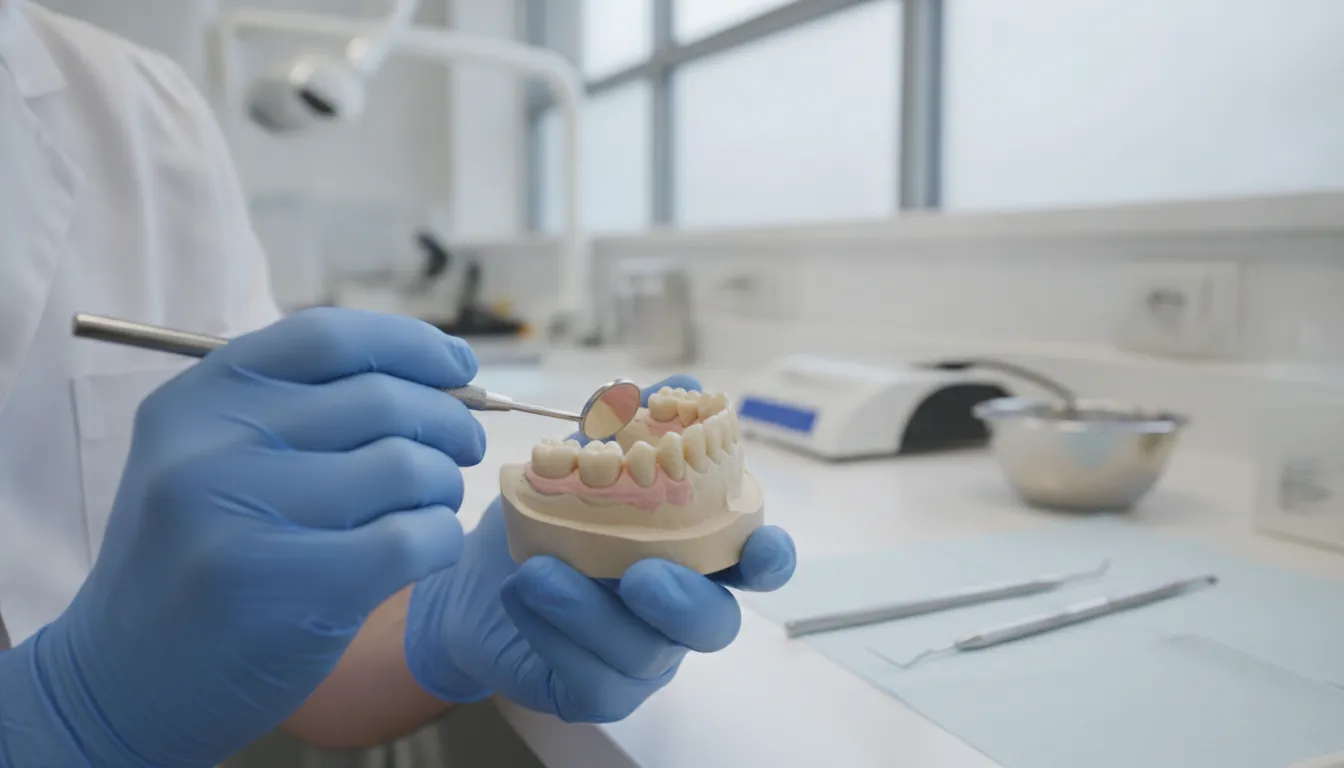
Recovery is a process rather than one appointment. The first days may include swelling, tenderness, fatigue, and changes in eating or speaking. These effects vary according to the surgery, extractions, medications, medical history, and individual response. Follow the written instructions from the treating team instead of relying on general online timelines.
Protecting the temporary bridge and healing implants is the priority at first. Patients are commonly instructed to use prescribed medications as directed, follow a soft-food plan, avoid restricted activities, and keep the mouth as clean as instructed. Do not use a water flosser, brush a surgical area, or resume a normal diet until the treating team explains that it is appropriate.
Contact the treating team promptly if you experience severe or worsening pain, persistent bleeding, fever, or swelling that is getting worse. Contact the team for difficulty breathing or swallowing, a restoration that feels loose, or another concern that differs from the instructions you were given. A loose temporary bridge or component should not be ignored.
The implants need time to integrate with the jawbone. During this period, follow-up visits are used to monitor the tissues, evaluate the temporary bridge, and make necessary adjustments. The final prosthesis is not rushed simply because same-day teeth were delivered. Waiting for appropriate clinical milestones helps the team make a better-informed final restoration.
After the final bridge is delivered, maintenance continues. Your care plan may include specific cleaning tools, periodic professional examinations, and evaluation of implant tissues and the prosthesis. The long-term result depends on both the design and the patient's daily habits.
All on 4 dental implants should be compared with other options by looking at the complete treatment plan, not only the number of implants. Ask how the provider evaluates your bone and bite. Ask who performs the surgical and restorative stages, where the temporary and final bridges are made, and how adjustments are handled. Discuss maintenance and what happens if a component needs repair.
It is also reasonable to ask how the proposed treatment addresses your priorities. Some patients care most about stability. Others want help with speech, smile design, comfort, or a predictable process for replacing a failing dentition. A board-certified prosthodontist can explain how the surgical and restorative decisions fit together. The discussion should also cover whether All-on-4, another implant-supported option, or a different reconstruction is the better match.
Patients researching providers can also review questions to ask when choosing a dental implants dentist. For people considering treatment beyond one arch, the practice's guide to full-mouth dental implants provides related background.
Advanced Cosmetic and Implant Dentistry provides implant and full-mouth reconstruction services in Glastonbury for patients from the Greater Hartford area and throughout Connecticut. A clinical consultation is the appropriate place to determine whether this approach fits your anatomy and goals.
Explore full-arch dental implant options before your consultation
All on 4 dental implants use four strategically planned implants to support one fixed full-arch prosthesis. Implant number and position can differ when clinically appropriate.
Some appropriately selected patients receive a temporary bridge on the day of surgery. Same-day teeth are provisional and require a healing diet, careful home care, and follow-up. They do not prove that implants have finished integrating or that the bridge is permanent.
The timeline varies. The final bridge is considered after implant and tissue healing and evaluation of the temporary bridge. The care team also needs time to refine the bite, appearance, speech, and cleaning access. Your clinician will provide the timeline for your case.
The temporary acrylic bridge gives the patient and treatment team a chance to evaluate and adjust the design during healing. That information can guide the more definitive final prosthesis, including zirconia when appropriate. The staged process helps protect the patient's investment in treatment.
Discuss whether all on 4 dental implants fit your needs
Patients in Hartford, CT, can experience unmatched quality and value by choosing board-certified doctors Avinash Bidra and Xiao Chun Li.
We are affiliated with the following prestigious organizations: