
A dental implant is designed to restore function long term. Yet its different parts do not all age at the same pace. The implant can stay stable for decades when it integrates with the jawbone and receives consistent care. The visible crown may eventually wear and need replacement. That does not mean the implant has failed.
Schedule a consultation with the board-certified prosthodontists at Advanced Cosmetic and Implant Dentistry. Get a clear answer about how long do dental implants last. Contact our Glastonbury, Connecticut practice today.
For patients asking how long do dental implants last, the implant can last a lifetime with proper care. The crown commonly needs replacement after about 10 to 15 years. Cleveland Clinic reports dental implant success rates above 95%. Long-term results depend on bone health, daily hygiene, risk factors, and monitoring.
Understanding which component is involved helps patients separate ordinary maintenance from a genuine complication. A closer look at the post, abutment, and crown reveals why their lifespans differ. It also shows how specialist planning can protect the restoration over time.
The most accurate answer depends on which part you mean. The implant post is designed to be a long-term replacement for a tooth root. The visible crown faces everyday chewing and may eventually need routine replacement. Cleveland Clinic reports dental implant success rates above 95%. Harvard Health explains that the post becomes stable through osseointegration, the process where bone grows around and fuses with the titanium implant.
These are planning ranges, not expiration dates. Individual longevity depends on implant position, bite forces, oral health, material, and maintenance.
| Component | Expected lifespan | Why it wears | Is replacement routine? |
|---|---|---|---|
| Implant post | About 25 years to a lifetime | It is anchored in bone and does not face direct chewing wear like the crown. | No. Replacement is not routine when integration and surrounding tissues remain healthy. |
| Abutment | About 10 to 20 years | It connects the post to the crown and may be affected by mechanical stress or damage. | Usually not. It may be replaced if damaged or if the restoration is redesigned. |
| Crown | About 10 to 15 years | Constant biting pressure, chewing, and normal wear affect the visible restoration. | Often, as a maintenance procedure. This does not mean the implant has failed. |
The distinction matters. A crown replaced after 10 to 15 years from normal wear is not the same as losing the implant post. Cleveland Clinic notes that the implant itself may remain solid even when the prosthetic crown needs replacement. A prosthodontic evaluation can determine whether the concern involves the crown, abutment, bite, or surrounding tissues.
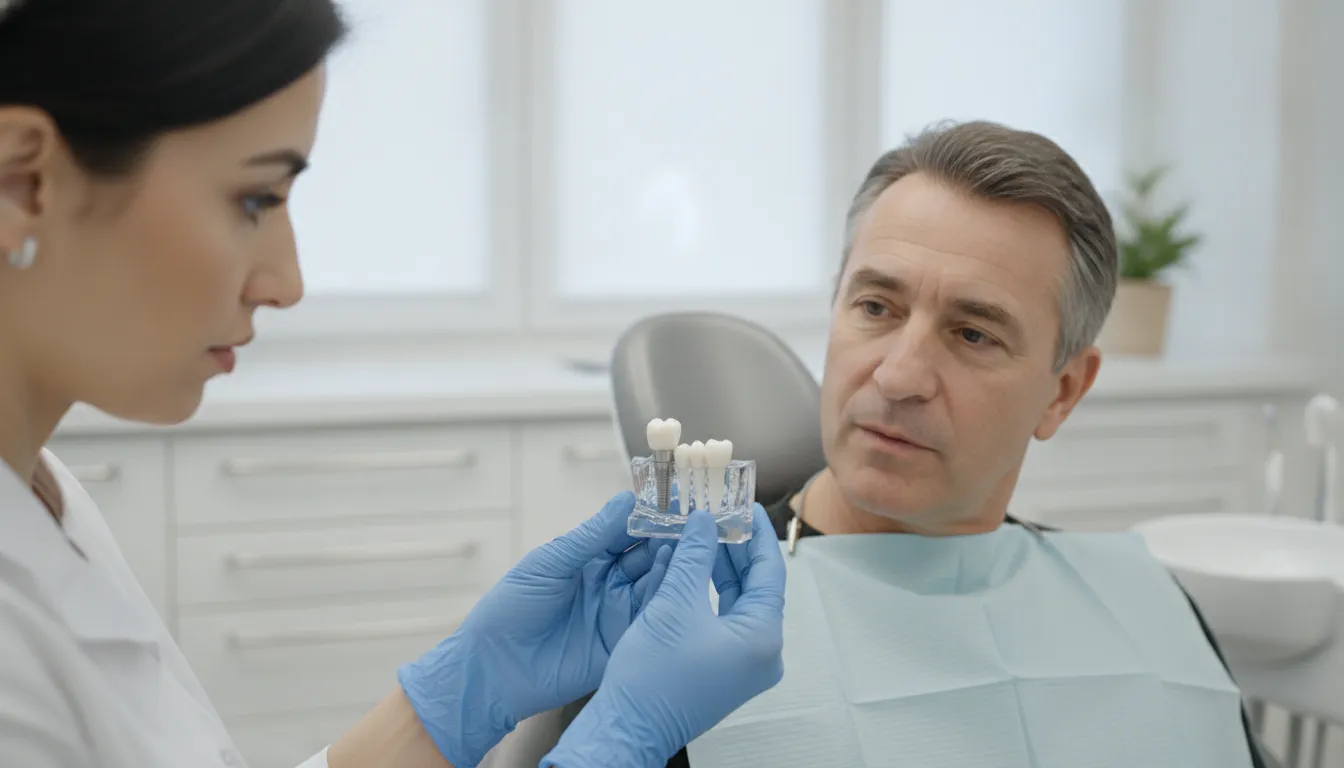
For a broader explanation of treatment planning, materials, and the surgical process, see this guide to dental implants. This article focuses on what lasts, what wears, and what replacement may mean.
Implant longevity is shaped by both patient-side habits and clinical planning. Many key factors are manageable. Others can be anticipated and addressed by a prosthodontic team before treatment begins. Understanding the difference helps patients approach implant care with practical confidence rather than worry.
Healthy gums and consistent home care protect the tissues that support an implant. Brushing and flossing limit the bacterial buildup that can contribute to inflammation. Peri-implantitis is an inflammatory condition affecting the soft and hard tissues around an implant. If it progresses untreated, it can cause bone loss and eventually compromise the implant, according to the National Institute of Dental and Craniofacial Research.
Smoking is another modifiable risk. It can interfere with healing and raise the risk of implant failure, as Cleveland Clinic explains. Patients who smoke should discuss cessation support with their providers before surgery. A history of severe periodontal disease also deserves careful attention, because uncontrolled gum disease can contribute to implant complications. The goal is a stable oral environment and an early response to change.
Daily routines matter, but consistency counts too. Patients who keep a steady home-care habit over many years tend to preserve their implants and surrounding tissues. Small steps compound over time. That is why a specialist plans care the patient can realistically maintain.
Medical history is part of implant planning, not an afterthought. Uncontrolled diabetes can interfere with healing and raise infection risk, potentially compromising integration. The Centers for Disease Control and Prevention notes that managing blood glucose supports safer care. Improving blood-glucose control with the treating physician may make treatment more predictable.
Patients should provide a complete medication list. Bisphosphonates used for osteoporosis may interfere with healing after implant surgery. The right decision depends on the drug, dose, treatment history, and overall health. Never stop a prescribed medication on your own. The prosthodontist and prescribing clinician can coordinate a plan together.
An implant depends on osseointegration, the process where bone grows around and fuses with the implant. Bone density and volume influence where and how an implant can be placed. If the jaw lacks adequate support, a clinician may recommend grafting or an adjusted sequence. This avoids forcing an unfavorable placement.
Bite forces matter after healing. Clenching and bruxism place repeated stress on the crown and implant components. A detailed bite evaluation, appropriate prosthetic design, and a protective nightguard can help manage those forces. Patients considering dental implants benefit from an evaluation that considers all these factors together. The plan is built around long-term function, not just the day of surgery.
Talk to our prosthodontic team about the factors that shape how your implant performs long term. A personalized plan addresses hygiene, medical history, bite forces, and prosthetic design together.
Longevity depends on what happens after treatment as much as on the initial restoration. Dental implants are meant to be durable. Yet the surrounding gum, bone, and prosthetic teeth still need consistent care. With appropriate maintenance, dental implants can last a lifetime, according to Cleveland Clinic.
Brush your teeth and implant-supported restoration thoroughly each day. Clean between the teeth and around the implant as directed by your prosthodontic team. Floss, use an interdental brush, or use another recommended aid where a toothbrush cannot reach. Good oral hygiene is essential for implant success.
Implant hygiene is patient-side aftercare, not a substitute for follow-up. If you have an All-on-4 restoration, the cleaning method may differ from care for a single crown. Review the practice's guide to dental implant aftercare, then follow the instructions for your restoration.
Design and material selection also support long-term maintenance. A specialty practice may use premium systems such as Nobel Biocare or Straumann. These are selected according to your anatomy and restorative needs. Advanced Cosmetic and Implant Dentistry also uses patented maintenance protocols. The Bidra Conversion Smart Polishing Cap supports the care of implant prostheses.
Regular visits let the team monitor the implant, restoration, bite, and gum tissue. Cleveland Clinic notes that ongoing visits are important for evaluating the implant and the tissues around it. These appointments can catch inflammation, changes in fit, excessive wear, or bite forces early. A small concern can be addressed before it becomes a larger problem.
Long-term follow-up is especially valuable after complex treatment, including full-arch rehabilitation. Patients deciding on full-arch options can start with a comparison of All-on-4 and FP1 prosthesis designs. A board-certified prosthodontist evaluates both the surgical result and the function of the prosthesis. This coordinated specialty care protects your investment and supports comfortable function.
Maintenance does not mean every component lasts forever. The implant may remain stable while a crown or prosthetic tooth eventually needs repair from normal wear. Consistent home care and specialist monitoring preserve the implant. Replaceable components can be addressed conservatively.
Placement quality is a major factor in longevity. A well-planned implant and crown, placed with proper bone support and bite design, is built to last. Specialist training also matters. A board-certified prosthodontist focuses on restorative dentistry that protects long-term function rather than a short-term result.
The age of the patient is less important than the health of the supporting bone and gums. Advances in planning, imaging, and materials let experienced teams treat patients well into their older years. What matters is a stable foundation, good healing, and consistent follow-up.
A dental implant can need attention without the implant itself needing replacement. The crown is built to withstand years of chewing. Normal wear, inflammation, or tissue changes can affect comfort and function. Knowing the difference helps patients seek care early, before a manageable issue becomes complex.
Contact a prosthodontist if the gum around an implant bleeds easily, looks swollen, or has receded. Other signs include a loose crown, persistent pain, a change in how the teeth meet, or difficulty chewing. These symptoms do not confirm failure, but they should not be dismissed. Peri-implantitis can cause bone loss if untreated. The National Institute of Dental and Craniofacial Research explains how gum inflammation affects supporting bone.
In many cases, the concern is the prosthetic crown rather than the implant post. Cleveland Clinic notes that a crown may need replacement after roughly 10 to 15 years from normal wear, even when the implant stays solid. Replacing a worn crown is routine maintenance, not proof of failure. The abutment may also need assessment or replacement. For a broader overview, see this guide to dental implant complications.
An evaluation includes a clinical exam and dental imaging. It assesses the crown, abutment, implant stability, gum condition, and supporting bone. If inflammation is present, early treatment may protect the implant. When the post stays stable, the fix may be a new crown, abutment, or an adjustment. With significant bone loss, the plan must address the implant itself.
Replacement decisions should account for bite forces, tissue health, appearance, and the reason the restoration failed. At Advanced Cosmetic and Implant Dentistry, dual board-certified prosthodontists assess implant and restoration concerns. They help patients understand what can be preserved and what should be replaced.
Ready to protect your long-term results? Contact Advanced Cosmetic and Implant Dentistry so a prosthodontist can review your implant, crown, and supporting tissues.
Often, yes. The titanium implant post is meant to fuse with the jawbone and can stay stable for decades. The visible crown is a separate component and may need replacement sooner. Cleveland Clinic reports success rates above 95%. It notes implants can last a lifetime with proper maintenance, according to Cleveland Clinic.
The crown typically wears out before the implant post. Chewing forces, clenching, grinding, and everyday wear can make crown replacement appropriate after roughly 10 to 15 years. The underlying implant often stays solid. Replacing the crown does not automatically mean the implant failed. This distinction matters for long-term planning.
Failure may result from problems with healing and integration, smoking, excessive bite forces, or inflammation. Peri-implantitis can affect the tissues around an implant and cause bone loss if untreated. The National Institute of Dental and Craniofacial Research describes these risks. Uncontrolled diabetes can also interfere with healing.
Brush and floss consistently and protect the implant from excessive force. Attend regular visits so the implant, crown, gums, and bone can be monitored. Tell the team about grinding, tobacco use, diabetes, or relevant medications. Early evaluation of bleeding, swelling, looseness, or bite changes protects long-term stability.
A consultation can clarify whether your implant, crown, or surrounding tissues need attention. It supports a thoughtful long-term maintenance plan. Schedule a consultation with the board-certified prosthodontists at Advanced Cosmetic and Implant Dentistry by calling (860) 659-8660 or through our online contact form. The team can discuss your implant history, recommend next steps, and help you protect your investment.
Patients in Hartford, CT, can experience unmatched quality and value by choosing board-certified doctors Avinash Bidra and Xiao Chun Li.
We are affiliated with the following prestigious organizations: