During this first phase, your body seals the surgical site. Most initial gum healing typically occurs within the first one to two weeks following your surgery. You will eat soft foods and rest to let your gums heal without stress.
This is the most critical phase where the titanium post fuses with your jawbone. Complete bone fusion typically takes between three to six months before the permanent tooth can be placed. This biological bond creates a strong, permanent foundation that works like a natural tooth root.
Once the implant is secure in your bone, we shape your gums using custom healing abutments to guide the growth of your soft tissue. This step ensures your new tooth looks natural and fits snugly against your gum line.
In the final stage, your custom crown or bridge is attached to the healed implant. The result is a fully functional tooth that allows you to chew, speak, and smile with ease. Our dual board-certified prosthodontists use the best medical grade materials and advanced tools to ensure your bone and gums heal well. If you feel anxious, we provide safe IV sedation options to keep you relaxed and pain free.
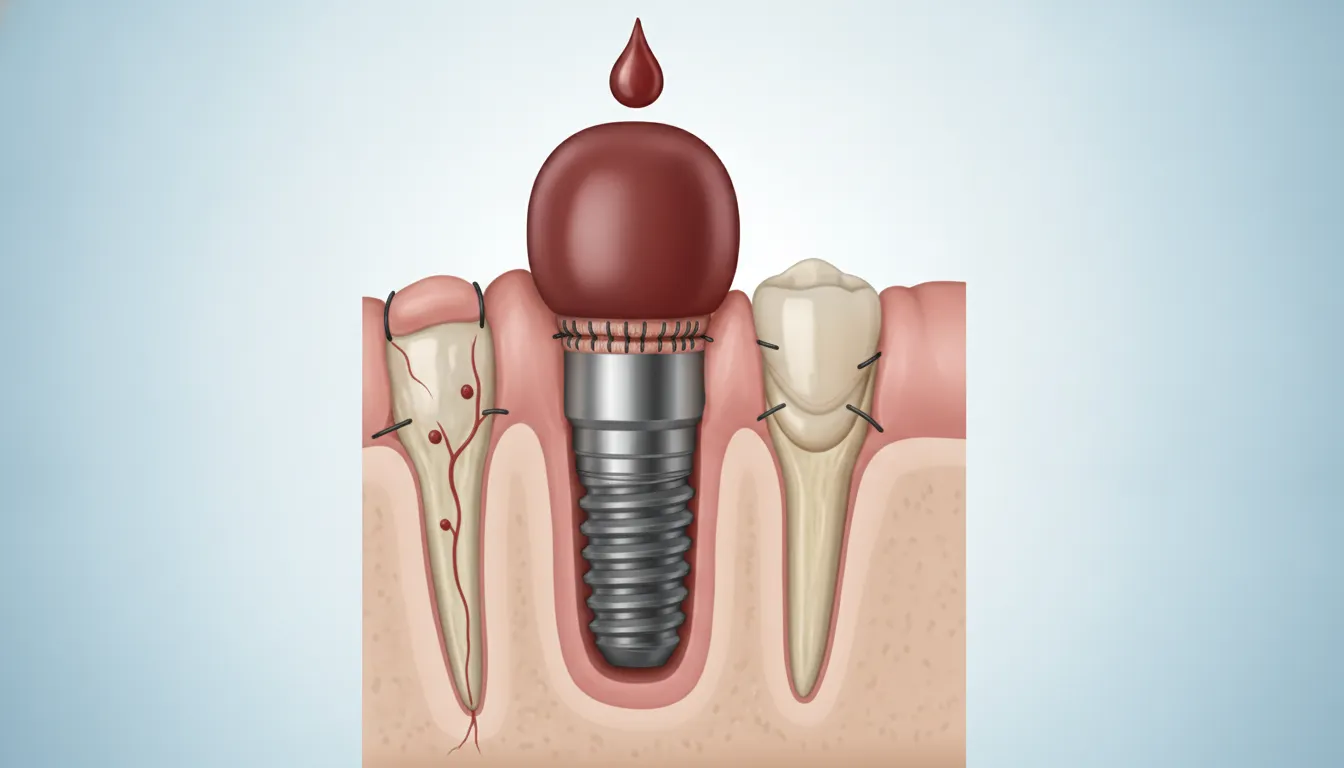
The first week after dental implant surgery focuses on protecting the surgical site and managing normal post-operative effects such as mild swelling and soreness. Swelling typically peaks on day three and subsides by day seven, while soft food intake and gentle oral care support the early stages of healing.
The first seven days are some of the most vital parts of your healing journey. During these early dental implant healing stages, your body starts to heal the soft tissues around the new implant. Our team in Glastonbury, CT, guides you through every step.
On the day of your surgery, the main goal is to let the surgical site rest. You should focus on quiet rest and gentle care at home. To manage minor bleeding, bite down gently on gauze packs for 30 to 45 minutes. Avoid spitting, using straws, or touching the surgical site to protect the early blood clot. Using cold packs on your cheek for 15 minutes at a time will keep early swelling and pain low.
Swelling and mild soreness are normal as your body heals. This swelling usually peaks on the third day after surgery. After that peak, you will start to feel much better. Patient reports show most people feel significant relief from swelling and pain after one full week. You can manage any discomfort easily with prescribed medication. Our patients in Connecticut often find that their normal routine can start to resume by day five.
During this early phase, you must eat only soft foods to protect the healing site. Choosing safe foods like yogurt, smoothies, and mashed potatoes prevents any pressure on your new implant. While you rest, your body works hard beneath the surface. Clinical studies show that rapid gene expression changes occur at the site of the implant right away. This is why careful planning and expert monitoring are so important.
Have questions about your recovery timeline? Reach out to our team for personalized guidance.
During weeks two through four, the gums seal around the implant site while early bone integration begins beneath the surface. Healing abutments may be placed to shape the gum tissue for a natural-looking final restoration.
The second and third weeks of your recovery mark a quiet but vital phase. Although you cannot see the bone fusion yet, your implant is settling beneath the surface. The tissue becomes firmer and less red as blood flow returns to normal.
During this time, your body builds a tight seal around the new post. This seal protects the bone and the implant from bacteria in your mouth. Most people return to their normal daily routines by this point. The pink color returns to the gums, and any minor bleeding or soreness should be gone. However, you must still be careful not to put too much pressure on the site.
Your surgeon may place a small metal collar called a healing abutment during or after surgery. According to research, customized healing abutments can preserve natural hard and soft tissue around the implant. This step helps the gum tissue heal in a shape that matches your natural teeth. When your final crown is placed, it will sit neatly against the shaped tissue for a seamless result.
While your gums heal, you must protect the area from damage. Stick to a soft-food diet during this phase. Good options include yogurt and smoothies, mashed potatoes, and lukewarm soups. Avoid hard, crunchy, or sharp foods that could scrape the gums. You should also stay away from very hot foods and drinks that might irritate the tissue. Gently rinse with warm salt water after meals to clear away food debris. Clean your other teeth normally, but be very soft near the surgical area.
Bone fusion during months three through six is when your jawbone grows around and locks onto the titanium implant post in a process called osseointegration. This hidden phase is the most critical period for long-term implant success, as the bone builds a permanent structural bond with the metal.
After the first few weeks, your gum pain fades. But the main work happens deep in the jaw. During this stage, the bone grows around the metal post to make a tight biological bond. This hidden phase is the key to the whole treatment. Working with a doctor who offers specialist-led dental implant care ensures this phase goes as planned.
Bone is not a static block. It is a living, active tissue that changes every day. Studies show that bone healing and osseointegration are active processes with constant cell changes. As new cells reach the post, they build tight bone walls in the small grooves of the metal. This complete fusion of bone and metal usually takes three to six months to finish. Once it ends, the implant can handle the daily pressure of chewing foods. Unlike old-style dentures that sit on top of the gums, a fused implant works just like a natural tooth root.
Not every patient heals at the same speed. How fast your jaw fuses with the post depends on your bone quality and general health. Some people have thick, dense jawbones that bond quickly. Others may have soft or thin bone that needs more time. Issues like diabetes or smoking can also slow down this vital phase. Many patients get a bone graft before or during the implant surgery to add extra support.
Because bone fusion happens deep under your gums, you cannot see or feel it. That is why you need a specialist to track your progress. At Advanced Cosmetic and Implant Dentistry, we use low-dose digital imaging to check bone growth before we place any load on the post. Our team provides comprehensive dental implant services to guide you from surgery to your final new teeth.
Your healing journey deserves expert oversight. Call (860) 659-8660 to schedule your follow-up consultation.
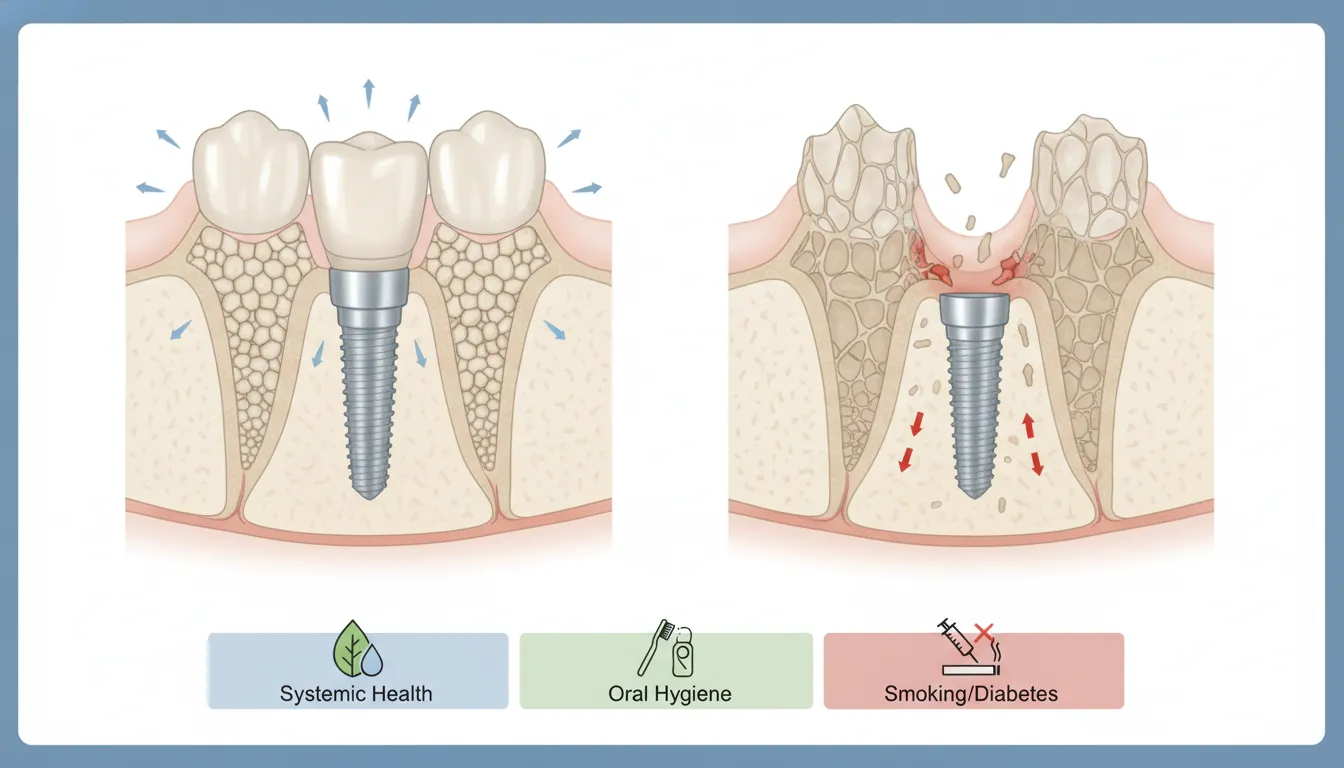
Your healing timeline depends on bone quality, overall health, daily habits, and the skill of your surgical team. Dense bone, good medical health, and non-smoking status promote faster healing, while thin bone, uncontrolled diabetes, and tobacco use can extend recovery time.
Your jawbone is the foundation. Solid bone gives the post a strong grip right away. If your bone is thin or soft, your jaw needs more time to heal. You might need a bone graft first to support your new post. Some medical issues can slow down your recovery. For example, uncontrolled diabetes or autoimmune disorders can weaken your body's defense systems. When this happens, bone cells cannot grow as fast as they should. These dynamic changes in gene expression during bone healing show why doctors must monitor each patient closely.
Smoking or using tobacco is one of the worst things for a new implant. Tobacco reduces blood flow in your gums and bone. Without good blood flow, your jaw cannot get the oxygen and nutrients it needs to heal. Some daily medications can also slow down bone growth. Clinical research shows that certain drugs like SSRIs may affect how bone cells form. Your periodontal health is just as critical. You must keep your mouth clean to prevent bacteria from causing infections around the surgical site.
| Healing Factor | Favorable Conditions | Complicating Conditions |
|---|---|---|
| Jawbone State | Dense and strong bone | Thin or soft bone structure |
| Medical Health | No major chronic illnesses | Uncontrolled diabetes |
| Tobacco Use | Non-smoker | Active smoking or vaping |
| Medications | No bone-altering drugs | Regular use of SSRI drugs |
| Surgical Care | Board-certified prosthodontist | Standard general surgery |
Surgeon skill is the final piece of the puzzle. A board-certified prosthodontist knows how to handle delicate bone and gum tissue to reduce trauma. Choosing specialist-led dental implant care helps you get a custom plan made for your unique health needs. During your consultation, your prosthodontist will review your health history, take 3D scans, and check your bone level to spot any risks before surgery starts.
A board-certified prosthodontist brings advanced training in bone biology, implant placement, and restorative techniques that goes beyond general dentistry. This expertise allows precise monitoring of your dental implant healing stages, early detection of complications, and customized recovery plans for optimal long-term results.
Your dental implant healing stages need expert care to succeed. A general dentist can place an implant, but a board-certified prosthodontist has advanced training that helps manage your recovery with great care. Dr. Avinash Bidra and Dr. Xiao Chun Li bring years of specialized training to every case. Dr. Bidra holds a U.S. patent, serves as a Clinical Professor at UConn, and directs the UConn Prosthodontics Residency program. Dr. Li is one of very few board-certified female prosthodontists in Connecticut. Together, they provide full-mouth reconstruction expertise that covers every aspect of your care.
Our dual board-certified prosthodontists plan each case with precision. Using 3D imaging and digital treatment planning, they map out the ideal implant position before surgery begins. This upfront planning reduces surgical trauma, preserves healthy bone, and creates the best conditions for rapid osseointegration. Our practice is a Nobel Biocare All-on-4 Center of Excellence, one of only two in Connecticut, reflecting our commitment to the highest standards in implant care.
Every patient heals differently, and your recovery plan should reflect that. We use low-dose digital radiography to monitor bone formation at each follow-up visit. This technology lets us see how well the implant is integrating without exposing you to unnecessary radiation. Based on these images, we adjust your timeline, dietary guidance, and activity level to match your actual healing progress.
From your initial consultation through final restoration, you see the same specialist team at every visit. This continuity of care means your prosthodontist knows your medical history, your healing patterns, and your aesthetic goals. We offer a full range of cosmetic dentistry options including porcelain veneers and crowns to complete your smile restoration. Our patients appreciate the one-doctor, one-office approach where all care happens under one roof with no referrals.
Dental implant healing typically takes four to eight months total, with most patients returning to normal routines within one to two weeks. The process varies based on bone quality, overall health, and whether additional procedures like bone grafting are needed.
Complete healing from dental implant surgery takes four to eight months on average. The first one to two weeks focus on gum healing, followed by three to six months of osseointegration where the bone fuses with the implant. Your final restoration is placed after your prosthodontist confirms the implant is stable and fully integrated. This timeline can vary based on your individual healing factors.
During the first week, you will experience normal swelling that peaks around day three and gradually subsides. Minor bleeding may occur for the first 24 hours. You will need to eat soft foods, avoid strenuous activity, and follow a gentle oral hygiene routine. Most patients return to light daily activities by day five. Your prosthodontist will provide specific post-operative instructions tailored to your procedure.
For the first two weeks, stick to soft foods that require minimal chewing, such as yogurt, smoothies, mashed potatoes, lukewarm soups, and scrambled eggs. Avoid hard, crunchy, sticky, or spicy foods that could irritate the surgical site. After the initial healing phase, you can gradually reintroduce firmer foods as tolerated. Your prosthodontist will advise you when it is safe to return to your normal diet.
Yes, smoking significantly impairs dental implant healing. Tobacco reduces blood flow to the gums and bone, depriving the surgical site of oxygen and nutrients needed for proper healing. Studies show that smokers have higher rates of implant failure and complications. If you smoke, your prosthodontist may recommend a smoking cessation plan before implant surgery to improve your chances of successful osseointegration.
Most patients can return to work within two to five days after dental implant surgery. Depending on the complexity of the procedure and the physical demands of your job. For single implant placement, many patients feel comfortable returning to desk work by day three. For multiple implants or procedures involving bone grafting, you may need up to a full week of recovery. Your prosthodontist will provide personalized guidance based on your specific treatment plan.
Your journey to a confident, functional smile begins with a thorough consultation. At Advanced Cosmetic and Implant Dentistry in Glastonbury, CT, our dual board-certified prosthodontists bring world-class expertise to every stage of your dental implant treatment. From the first incision to your final restored smile, you benefit from the same specialist team using the most advanced implant technology available. We treat each patient as an individual, not a case number, and we stay with you through every milestone of your healing journey.
Take the first step toward a lasting smile. Call (860) 659-8660 today or contact us online to schedule your consultation with Dr. Bidra or Dr. Li. We proudly serve patients throughout Connecticut including Hartford, Manchester, Middletown, Glastonbury, and Wethersfield. We accept CareCredit, Cherry, and Proceed Finance to make your treatment accessible.
A stable dental implant relies on a quiet biological process deep inside your jawbone. True success depends on how your body rebuilds bone around the titanium post in the weeks following surgery.
Call Advanced Cosmetic and Implant Dentistry today at (860) 659-8660 to schedule your dental implant consultation and learn how our board-certified prosthodontists can guide you through every stage of healing.
The dental implant healing stages begin with your first surgical visit and end months later with a strong, lasting, and custom-designed new tooth restoration. During the first two weeks, your body focuses on early soft tissue healing to safely close the gums and manage normal swelling around the site. After this phase, the critical bone fusion process begins as your natural jawbone merges directly with the titanium implant post. According to clinical studies on bone healing and osseointegration, this key fusion process usually takes about three to six months to complete. Meticulous clinical planning and tailored follow-up care with a board-certified specialist ensure that each healing stage proceeds safely and as planned.
What actually happens beneath your gums during treatment, and how can you prepare for each phase? Understanding the timeline helps you approach recovery with confidence and realistic expectations.
Osseointegration is the biological process where your jawbone grows around and fuses with a titanium implant post, creating a permanent bond that mimics a natural tooth root. This fusion is the foundation of every successful dental implant and typically takes three to six months to complete.
When you get a dental implant, the body goes through a set of steps to heal. The most vital part of these dental implant healing stages is osseointegration. This term comes from Greek and Latin words that mean bone and making whole. In simple terms, it is the process where your jawbone grows around the titanium post and fuses with it. Making an implant feel and function like a real tooth root.
Your jawbone does not view titanium as a foreign object. Instead, the bone sees the metal post as a compatible surface, allowing bone cells to migrate to the post and attach to it. Over time, these cells lay down new bone tissue directly onto the metal. This strong biological bond is why dental implants are the gold standard for tooth replacement. At Advanced Cosmetic and Implant Dentistry, we use premium brands like Nobel Biocare to ensure the best possible fit. Dr. Bidra and our team use this biology to give you comprehensive dental implant services that last for decades.
The fusion of bone and titanium is not a static event. Research shows that gene expression dynamics during bone healing change day by day to guide this growth. In the first few days, your body sends signals to clear out damaged cells. Next, genes turn on to tell cells to build new bone. These microscopic changes drive your recovery and build a strong foundation for your new teeth.
Because bone healing is complex, you need an expert to watch over your progress. A general dentist can place implants, but a board-certified prosthodontist has advanced training. Dr. Bidra and Dr. Li focus on the science of bone fusion. Choosing specialist-led dental implant care helps you avoid common pitfalls and ensures your bone and implant fuse properly.
Ready to take the first step? Contact our Glastonbury office to schedule your consultation.
The dental implant healing timeline moves through four stages: initial recovery (1-2 weeks) where gums seal around the site. Osseointegration (3-6 months) where bone fuses with the titanium post. Soft tissue shaping (2-4 weeks) where healing abutments guide natural gum contours, and final restoration (1-2 weeks) where your custom crown or bridge is placed.
It is common to feel anxious about the healing process. Knowing what to expect can help ease your mind. Each phase has its own timeline and goals to ensure your long-term comfort. Your healing journey benefits from specialist-led dental implant care, which ensures close tracking and expert support at every stage.
Patients in Hartford, CT, can experience unmatched quality and value by choosing board-certified doctors Avinash Bidra and Xiao Chun Li.
We are affiliated with the following prestigious organizations: