Let’s be direct: the price of dental implants can cause some initial sticker shock. It’s a higher number than what you’d see for dentures or a bridge, and it’s natural to wonder why. The surgical dental implants cost reflects the advanced technology, premium materials, and specialized skill required for a successful, lifelong result. From the initial 3D scans that map out your procedure to the custom-crafted final tooth, every step is tailored to you. This guide will walk you through the specific factors that influence the final price, helping you understand the value behind every part of the process.
If you’re exploring options for missing teeth, you’ve likely heard about dental implants. So, what exactly are they? Think of a surgical dental implant as a man-made tooth root. It’s a small, screw-like post, typically made from biocompatible titanium, that is surgically placed into your jawbone where a tooth is missing. This tiny post acts as a strong and permanent anchor for a replacement tooth. The term "surgical" simply refers to the precise and careful process of placing this new root, which is a routine procedure for a specialist.
Once the implant is in place, your body begins a natural process called osseointegration, where the jawbone fuses directly with the titanium post. This creates an incredibly stable foundation, something that removable options like dentures can't replicate. This fusion is what makes the implant a permanent part of your smile. It allows your dentist to attach a custom-made restoration, such as a crown, bridge, or a full set of new teeth. The end result is a solution that doesn’t just fill a gap; it restores the look, feel, and function of a natural tooth. Unlike other options, dental implants are designed to be a permanent part of your smile, helping to preserve jawbone health by providing the stimulation it needs to stay strong and preventing the shifting of surrounding teeth. It’s the closest you can get to growing a new tooth.
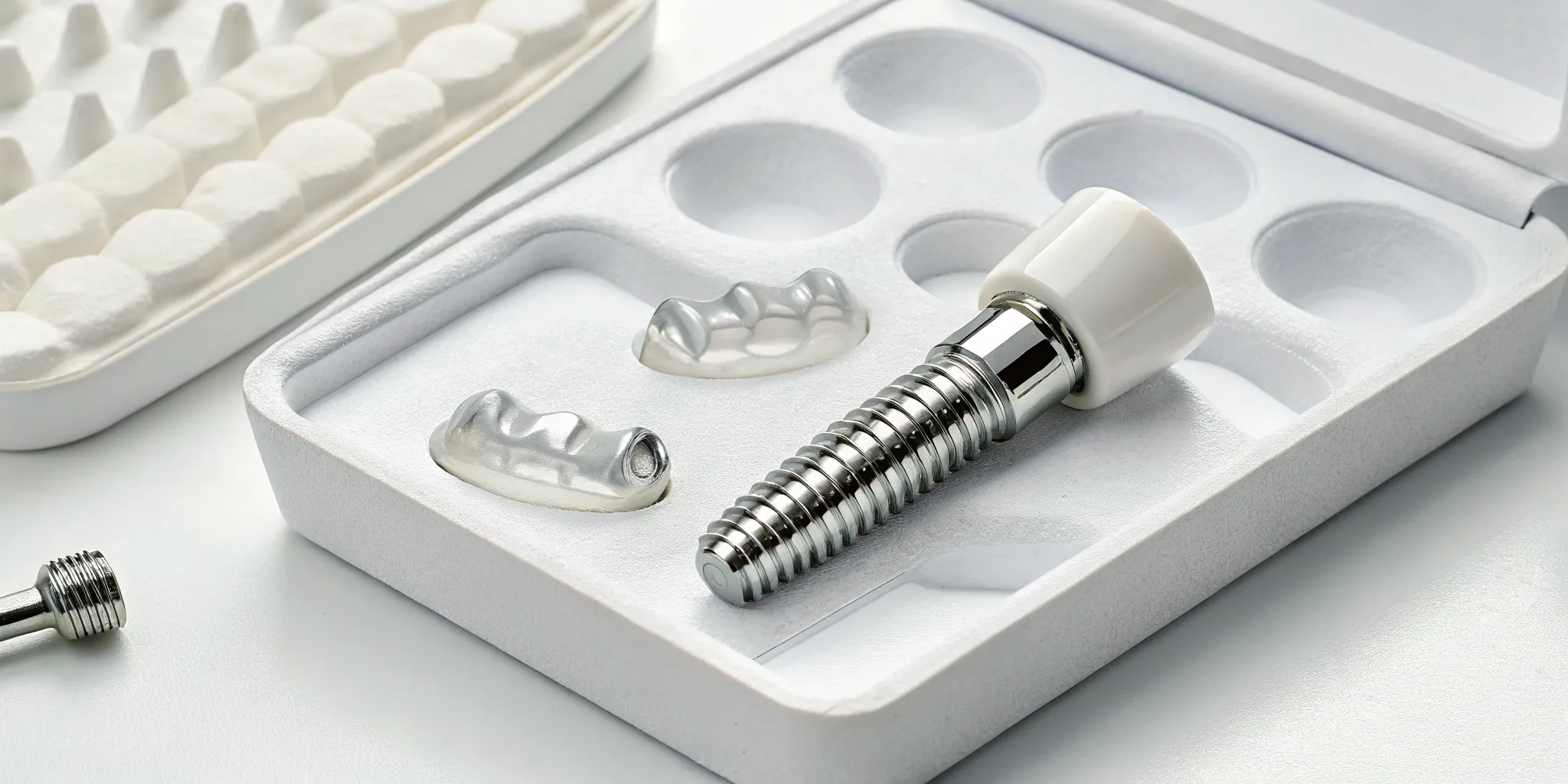
A complete dental implant is a system of three parts working together to replace your tooth from root to crown. First is the implant post itself, the titanium screw that is placed in your jawbone and serves as the new root. It’s the unseen hero of the system, providing all the strength and stability. Next is the abutment, a small connector piece that is attached to the top of the implant post once it has fully integrated with your bone. The abutment sits right at the gum line and acts as the bridge between the implant and your new tooth. Finally, there’s the restoration, which is the part everyone sees. This is the custom-crafted, tooth-colored crown that is secured to the abutment. Each component is essential for creating a seamless, functional, and beautiful replacement that blends in perfectly with your natural teeth.
Dental implants are not a one-size-fits-all solution. The best type for you depends entirely on your unique situation, including your jawbone health, the number of teeth you need to replace, and your overall goals. For a single missing tooth, a standard implant with a crown is the most common and effective approach. If you’re missing several teeth in a row, an implant-supported bridge can fill the space without needing to alter adjacent healthy teeth. For those missing all of their upper or lower teeth, a full-mouth reconstruction may involve an option like the All-on-4 treatment concept, which uses just a few strategically placed implants to support a full arch of beautiful, functional teeth. There are even specialized solutions, like zygomatic implants, for patients who have experienced significant bone loss. A thorough consultation will determine the ideal treatment plan for restoring your smile.
Understanding the cost of dental implants is a crucial step in planning your smile restoration. While it’s true that implants represent a significant investment, they are also the most durable and lifelike solution for missing teeth. The total price isn't a one-size-fits-all number; it varies based on your specific needs, the complexity of your case, and the number of teeth you need to replace. It's helpful to think of it less as a simple purchase and more as a long-term investment in your health, confidence, and quality of life. Unlike other options that may need frequent replacement or repair, dental implants are designed to last for decades, often a lifetime, with proper care. The final cost reflects the expertise of the specialist, the quality of the materials used, and the advanced technology required for a precise and successful outcome. At a practice like ours, where board-certified specialists handle every stage of your treatment in-house, the price includes a level of care and predictability that is hard to find elsewhere. We believe in transparency, so we want to help you understand what goes into the cost. To give you a clearer picture, let's break down the typical costs based on common treatment scenarios.
If you need to replace a single missing tooth, a dental implant is the gold standard. The total cost for one implant, which includes the surgical placement of the titanium post, the abutment (the connector piece), and the final custom-made crown, typically ranges from $3,000 to $6,000. This range accounts for the entire process from start to finish for a straightforward case. While this may seem higher than other options like a dental bridge, an implant stands on its own without affecting the adjacent healthy teeth. It’s a permanent, self-sufficient solution that preserves your jawbone and mimics the function of a natural tooth.
When you're missing several teeth in a row, the cost per tooth often becomes more efficient. Instead of placing an individual implant for every single missing tooth, your dentist may recommend an implant-supported bridge. This involves placing two or more implants to anchor a bridge that fills the entire gap. This approach provides the same stability and bone-preserving benefits without the expense of an implant for each tooth. The total cost for replacing multiple teeth varies widely depending on how many implants are needed and the size of the bridge, but it offers a more economical path to a complete smile makeover.
For those needing to replace an entire upper or lower set of teeth, a full-arch restoration like the All-on-4 treatment is a life-changing solution. This procedure uses just four to six strategically placed implants to support a full, permanent denture. The cost for a single arch typically falls between $18,000 and $35,000, while a full-mouth restoration (both arches) can range from $60,000 to over $100,000. As a Nobel Biocare All-on-4 Center of Excellence, we specialize in this advanced protocol, which provides a complete set of beautiful, functional teeth that look and feel completely natural. It’s a comprehensive solution that restores your ability to eat, speak, and smile with total confidence.
When you start researching dental implants, you’ll quickly find that there isn’t a single, fixed price. The total investment depends on your unique situation, and several key factors come into play. Think of it less like buying a product off the shelf and more like a custom solution designed just for you. Understanding what goes into the final cost helps you see the full picture and appreciate the value of a personalized treatment plan. From the materials used to the expertise of your dental team, each element plays a role in creating a healthy, long-lasting smile.
Where you live and the type of dental office you choose can have a big impact on the cost. It’s common for dental care to be more expensive in major metropolitan areas compared to smaller towns. Beyond geography, the practice itself matters. A general dentist's office might offer a lower price, but a specialized practice focuses exclusively on complex procedures like implants. At a non-corporate, family-owned practice, the focus is on patient care rather than shareholder profits, ensuring you receive personalized attention and a treatment plan tailored to your specific needs, not a one-size-fits-all approach.
Not all dental implants are created equal. The quality of the materials used is a major factor in both the initial cost and the long-term success of your treatment. Premium implant brands are backed by decades of scientific research and clinical studies, proving their durability and high success rates. While generic or cheaper implants might seem like a good way to save money upfront, they can carry a higher risk of complications like implant failure or breakage. Investing in high-quality materials from the start means you’re choosing a reliable, lasting solution that can prevent the need for costly repairs or replacements down the road.
Your final cost also depends on your oral health foundation. Before an implant can be placed, you need to have sufficient jawbone density to support it. If you’ve had a missing tooth for a while, you may have experienced some bone loss. In these cases, a preparatory procedure like a bone graft or a sinus lift might be necessary to build up the bone structure. These additional treatments are crucial for ensuring the implant has a stable base for success, but they will add to the overall cost of your full-mouth reconstruction. A thorough initial evaluation will determine if you need any of these supporting procedures.
The skill and training of your dentist are perhaps the most critical factors. A board-certified specialist, like a prosthodontist, has years of advanced education dedicated to complex tooth replacement. While specialists may have higher fees, their expertise significantly increases the chances of a successful outcome, especially in complicated cases or when correcting previous failed treatments. Choosing an experienced implant dentist means you’re paying for precision, predictability, and peace of mind. This expertise is invaluable for procedures like All-on-4 dental implants, which require a high level of surgical and restorative skill to get just right.
When you see a price for a dental implant, it's often just for the implant post itself, which is the part that acts like a tooth root. But a complete tooth replacement involves several steps, and each has its own associated cost. Think of it like building a house: the foundation is just one part of the total project. A comprehensive treatment plan from a qualified specialist will outline every expense, so you have a clear picture of the total investment from start to finish.
Understanding these additional costs is key to planning your budget and avoiding surprises down the road. These fees cover everything from the initial planning stages to the final tooth and follow-up care. They ensure your new tooth is not only beautiful but also built on a healthy, stable foundation for long-term success. At our practice, we believe in full transparency, which is why we walk you through every component of your full-mouth reconstruction plan. This way, you can feel confident and prepared as you move forward with restoring your smile.
Your journey begins with an initial consultation and detailed diagnostic imaging. This first appointment is more than just a meet-and-greet; it’s where we create the blueprint for your new smile. A thorough dental exam and advanced 3D CBCT scans give us a precise, multi-dimensional view of your jawbone, nerves, and surrounding teeth. This technology is essential for planning the exact placement of the implant for the best possible outcome. While there is a fee for this diagnostic step, it’s a critical investment in the safety and success of your procedure.
Before an implant can be placed, we need to make sure the site is perfectly prepared. If a damaged or failing tooth is still present, it will need to be removed. In other cases, the jawbone may not be dense or wide enough to securely hold an implant, especially if a tooth has been missing for a while. When this happens, a bone grafting procedure is necessary to build up the area and create a solid foundation. These preparatory steps are vital for the long-term stability of your implant and are factored into your overall treatment plan.
If you need to replace a missing upper back tooth, a sinus lift might be part of your treatment plan. The maxillary sinuses are air-filled spaces located just above your upper molars. Sometimes, there isn't enough bone height in this area to place an implant without it protruding into the sinus cavity. A sinus lift is a specialized type of bone graft that gently raises the sinus floor and adds bone to the area. This creates the necessary height and density to securely anchor a dental implant, ensuring a stable and lasting result for your new tooth.
The dental implant itself is the titanium post that fuses with your jawbone. But to complete your new tooth, two other key components are needed: the abutment and the crown. The abutment is a small connector piece that attaches to the top of the implant, sitting just above the gumline. It serves as the base for your final restoration. The crown is the custom-made, tooth-shaped cap that fits over the abutment, giving you a natural-looking and fully functional tooth. The cost of these pieces depends on the materials used, but they are essential for finishing your beautiful smile makeover.
Your care doesn’t end the moment your new crown is placed. Follow-up appointments are scheduled to monitor your healing and ensure the implant is integrating properly with your jawbone. We’ll check your bite and make sure everything feels comfortable and looks great. Long-term maintenance for an implant is similar to caring for your natural teeth: daily brushing, flossing, and regular dental check-ups are a must. These routine visits are key to keeping your gums healthy and ensuring your implant lasts a lifetime. Proper aftercare protects your investment and keeps your entire smile in top shape.
It’s one of the most common questions we hear, and the answer isn't always a simple yes or no. Figuring out insurance benefits can feel like a puzzle, especially when it comes to advanced procedures like dental implants. While many insurance companies are beginning to recognize implants as the gold standard for tooth replacement, coverage still varies widely from one plan to another.
The key is to understand that your insurance plan might not view the treatment as a single procedure. Instead, it sees a series of steps, and some of those steps may be covered while others are not. Think of it less as an all-or-nothing situation and more about finding where your specific benefits can apply. By breaking down the process and knowing what to look for in your policy, you can get a much clearer picture of your out-of-pocket costs and plan your investment in a healthy, permanent smile. Our team is here to help you with this process, ensuring you have all the information you need before starting treatment.
Understanding the difference between your medical and dental insurance is the first step. Most dental insurance plans are designed to cover routine maintenance and basic restorative procedures. They often classify dental implants as a "major" or sometimes even "cosmetic" procedure, which can lead to limited or no coverage for the implant itself.
Medical insurance, on the other hand, typically only gets involved if your tooth loss is a direct result of a medical condition or an accident. For example, if you lost teeth due to a traumatic injury or as a complication from a medical treatment, there might be a case for medical coverage. However, for most patients, this is the exception, not the rule. Your dental plan will be your primary resource.
Even if your dental plan doesn't cover the surgical placement of the implant post, it doesn't mean you're completely on your own. Many plans offer partial coverage for other essential parts of the treatment process. For instance, your insurance might cover a percentage of a necessary tooth extraction or a bone graft required to prepare your jaw for the implant.
Furthermore, the final restoration, which is the porcelain crown that attaches to the implant, is often covered at the same rate as a traditional crown. Some PPO plans might cover these related procedures at around 50%, but it’s crucial to check the specifics of your policy. We can help you get a detailed breakdown from your provider to see exactly which parts of your full-mouth reconstruction are eligible for benefits.
To make the most of your insurance, the best strategy is to be proactive. Before you commit to treatment, ask our office to submit a pre-treatment estimate to your insurance company. This formal request outlines the entire treatment plan and associated codes, prompting your insurer to send back a detailed statement of what they anticipate covering. This document removes the guesswork and gives you a reliable estimate of your financial responsibility.
Additionally, consider using tax-free funds from a Health Savings Account (HSA) or Flexible Spending Account (FSA). These accounts are designed for healthcare expenses and can be an excellent way to pay for any out-of-pocket costs associated with your dental implants. Our financial coordinator can walk you through the options and help you create a clear financial plan.
Investing in your smile is a significant decision, and understanding your payment options is a key part of the process. The good news is that you don't have to pay for everything at once. There are several flexible and straightforward ways to finance your dental implants, making a healthy, confident smile accessible and manageable for your budget. Let's walk through the most common paths patients take to cover the cost of their treatment.
Many dental practices, including ours, offer in-house financing to help you spread the cost of your treatment over several months. This is often the simplest way to create a payment schedule that fits your budget without involving an outside lender. It’s a direct arrangement between you and the dental office, designed to make your care more affordable. During your consultation, we can discuss a payment plan that works for you, ensuring there are no financial surprises along the way.
Specialized financing options are available specifically for healthcare expenses. A popular choice is CareCredit, a healthcare credit card that often includes promotional periods with 0% interest. This allows you to pay for your procedure over time without extra fees, as long as you pay the balance within the promotional window. For more extensive treatments, like a full-mouth reconstruction, medical loans from companies like LendingClub can provide longer payment terms to keep monthly payments low.
If you have a Health Savings Account (HSA) or Flexible Spending Account (FSA) through your employer, you can use these funds to pay for your dental implants. The major benefit here is that you’re using pre-tax dollars, which essentially gives you a discount on the total cost of your treatment. It’s a financially smart way to use money you’ve already set aside for health expenses to invest in a permanent solution for your smile.
Beyond healthcare-specific lenders, you can also explore personal loans from your bank or a local credit union. These can sometimes offer competitive interest rates, especially if you have a good relationship with your financial institution. While these options provide another layer of flexibility, it’s always a good idea to read the fine print. Pay close attention to the interest rates that will apply after any introductory offers expire to ensure it’s the right choice for your financial plan.
When you're missing one or more teeth, you have a few different paths you can take to restore your smile. While dental implants are widely considered the gold standard, it’s helpful to see how they stack up against other common solutions like dentures and bridges. Each option comes with its own set of considerations regarding cost, daily care, and long-term impact on your oral health. Making an informed choice means looking beyond the initial price tag and thinking about what will give you the best function, comfort, and value for years to come.
Dentures are often seen as the most budget-friendly option upfront, costing significantly less than an implant. However, this lower initial cost comes with trade-offs. Dentures are removable, requiring daily cleaning, and can sometimes slip or cause sore spots. They don't stimulate the jawbone, which can lead to bone loss over time. While they typically last between 7 to 10 years before needing replacement, implants are a fixed solution that you care for just like your natural teeth, without the daily hassle of removal and adhesives.
A dental bridge is another alternative that generally costs less than an implant. The procedure is also less invasive with a quicker healing time. A bridge "bridges" the gap left by a missing tooth by anchoring a false tooth to the healthy teeth on either side. The main drawback is that creating a bridge requires permanently altering these adjacent teeth by removing some of their enamel to fit crowns. This can make perfectly healthy teeth more vulnerable down the road. Bridges also need to be replaced every 5 to 15 years, adding to the long-term cost.
While implants have a higher initial cost, they are often the most economical choice over a lifetime. Think of it as an investment in your health. Implants can last for decades, sometimes for the rest of your life, while dentures and bridges require replacement every 5 to 15 years. More importantly, implants are the only solution that preserves your jawbone. By fusing with the bone, they prevent deterioration, which helps maintain your facial structure. This makes them a key part of a comprehensive full-mouth reconstruction and a lasting foundation for a healthy smile.
When you receive a quote for dental implants, it can feel like you're trying to decipher a different language. The numbers and terms might seem overwhelming, but understanding what’s included is the key to planning your investment in your smile. A clear, detailed quote is a sign of a transparent practice that puts your needs first. It allows you to compare your options accurately and avoid surprises down the road.
At ACAID, we believe in complete transparency. Our treatment plans are comprehensive because we want you to feel confident and informed every step of the way. We walk you through each part of the process, from the initial consultation to the final placement of your new tooth. This ensures you have a full understanding of the procedure and the associated costs, allowing you to focus on the exciting result: a healthy, beautiful smile you can be proud of. Let’s break down how to read your quote so you can make the best decision for your health and budget.
When comparing quotes, an "all-inclusive" price is your best friend. A surprisingly low estimate often only covers one part of the procedure, like the implant post itself. A complete dental implant actually has three components: the titanium post that acts as the root, the abutment that connects the post to the crown, and the final crown that looks and functions like a natural tooth.
Be cautious of any quote that doesn’t clearly list all three parts. Asking for an all-inclusive price ensures you’re seeing the full picture. This helps you avoid unexpected bills and accurately compare what different providers are offering. A transparent quote should cover every stage of your treatment, giving you peace of mind.
A low initial quote can be tempting, but it might not include necessary preparatory steps. The final cost of your implant procedure can be influenced by several factors that may be billed separately. For example, your initial consultation, detailed 3D CBCT scans, and any necessary tooth extractions are often additional costs. If you require a bone graft to strengthen your jawbone or a sinus lift to create space for the implant, these procedures will also add to the total.
A trustworthy provider will discuss these potential needs with you from the start. During your consultation for a smile makeover, we map out every step, ensuring your quote reflects the full scope of your personalized treatment plan.
Navigating dental insurance can be tricky, so it’s best to confirm your benefits before committing to treatment. Call your insurance provider directly and ask specific questions about your coverage for dental implants. Some plans may not cover implants if they are considered a cosmetic procedure, while others might cover certain parts, like the crown, but not the surgical placement.
Ask your provider for the specific procedure codes your dentist will use and share them with your insurance company. This will help you get the most accurate information about your out-of-pocket costs. Understanding what your plan will and won’t cover is a critical step in planning your budget and avoiding financial surprises.
Thinking about the cost of dental implants can feel overwhelming, but creating a clear budget makes the entire process much more manageable. When you have a solid financial plan, you can move forward with confidence, knowing you’re making a smart investment in your long-term health and happiness. Breaking it down into a few simple steps will help you see the full picture and find a path that works for you.
Your first step is to understand exactly what you’re paying for. A reputable dental practice will provide a comprehensive treatment estimate that breaks down every cost. The total price for dental implants isn’t just for the implant itself; it includes several key stages. Your quote should clearly list the fees for the initial exam and 3D scans, the surgical placement of the implant post, the abutment (the connector piece), and the final crown or bridge. If you need any preparatory work, like a tooth extraction or bone graft, those costs should be itemized too. Don’t hesitate to ask for this detailed breakdown, as it prevents any surprises and ensures you’re comparing apples to apples if you seek a second opinion.
Once you have your treatment estimate, you can figure out the best way to pay. Start by confirming what your dental insurance will cover, as many plans contribute to parts of the procedure, like the crown. From there, explore other options. Many dental offices offer in-house payment plans that let you spread the cost over several months without interest. You can also look into healthcare financing through companies like CareCredit, which often have promotional periods with 0% interest. For more extensive treatments like a full-mouth reconstruction, a medical loan might be a good fit. Finally, remember to use any funds you have in a Health Savings Account (HSA) or Flexible Spending Account (FSA), since these are tax-free dollars set aside for medical expenses.
While it’s tempting to shop for the lowest price, dental implants are not a commodity. The experience of your surgeon and the quality of the materials used have a huge impact on your final result. Investing more upfront for a board-certified specialist can save you from costly complications and revisions down the road. Think of it in terms of long-term value. While implants may cost more initially than dentures or bridges, they are designed to last a lifetime with proper care, making them a more cost-effective solution over time. Ultimately, you are investing in a permanent solution that protects your oral health, restores your ability to eat comfortably, and gives you a smile you can see in our smile gallery.
When you’re looking at the cost of replacing a tooth, it’s easy to focus on the number at the bottom of the estimate. But thinking about dental implants as a one-time expense misses the bigger picture. A better way to look at it is as a long-term investment in your health, confidence, and overall quality of life. While other options like bridges and dentures might seem more affordable at first glance, they often come with recurring costs for replacements, repairs, and adjustments down the road. These temporary fixes can become a cycle of dental visits and expenses.
Choosing dental implants is about breaking that cycle. It’s about investing in a permanent, stable solution that protects your oral health for decades. Implants are designed to function just like your natural teeth, which means they do more than just look good. They preserve your jawbone, support your facial structure, and allow you to eat, speak, and smile without a second thought. When you consider the lasting benefits and the avoidance of future costs, the initial investment starts to look like a very smart financial and personal decision.
One of the biggest advantages of dental implants is their incredible durability. With proper care, implants can last for 20 to 30 years, and many people have them for a lifetime. Compare that to traditional bridges, which typically need to be replaced every 5 to 15 years, or dentures, which have a lifespan of about 5 to 8 years. While implants have a higher upfront cost, they often prove to be the more economical choice over time. The costs of replacing and refitting other options can add up quickly. By choosing a solution that is built to last, you are making a one-time investment that pays off by saving you time, money, and future dental visits.
Beyond their longevity, dental implants offer health benefits that no other tooth replacement can match. Because an implant fuses with your jawbone, it provides the stimulation needed to prevent bone loss. This is crucial for maintaining your facial structure and preventing the sunken look that can occur with missing teeth. Implants are the only solution that actively preserves your jaw. This stability translates directly into a better quality of life. You can eat your favorite foods without worrying about dentures slipping or avoiding certain meals altogether. You can speak and laugh with confidence, knowing your teeth are secure. For many people, this freedom is priceless, and you can see the results for yourself in our smile gallery.
Why is there such a wide price range for dental implants? The cost of dental implants is tailored to your specific situation, which is why you won't find a single fixed price. The final investment depends on several factors, including the number of teeth being replaced, the quality of the materials chosen, and whether you need any preparatory procedures like a bone graft to ensure a stable foundation. The expertise of a board-certified specialist also plays a role, as you are investing in a predictable, successful outcome for a permanent part of your smile.
How long does the entire dental implant process take? The timeline for dental implants varies from person to person, but it is a multi-stage process. After the implant post is placed, it needs a few months to fully integrate with your jawbone in a process called osseointegration. This healing period is essential for creating a strong anchor. Once that's complete, we can attach the final abutment and custom-made crown. While it requires patience, this careful process is what ensures your new tooth will last for decades.
Is the dental implant procedure painful? It’s completely understandable to be concerned about discomfort, but the procedure itself is not painful. We use effective local anesthesia to make sure you are comfortable throughout the surgical placement. Afterward, it’s normal to experience some mild soreness and swelling, similar to what you might feel after other dental work. This is typically managed easily with over-the-counter pain medication and resolves within a few days.
Will my new implant tooth look and feel natural? Absolutely. The goal of a dental implant is to create a replacement that is indistinguishable from your natural teeth. The final crown is custom-crafted to match the exact shade, shape, and size of your surrounding teeth for a seamless blend. Because the implant post fuses with your jawbone, it feels incredibly strong and stable, allowing you to eat, speak, and smile with complete confidence, just as you would with a natural tooth.
Am I too old to get dental implants? Age is generally not a deciding factor when it comes to being a candidate for dental implants. Your overall health and the amount of healthy jawbone you have are much more important considerations. Many patients in their 70s, 80s, and even 90s have successfully received dental implants and experienced a wonderful improvement in their quality of life. A thorough consultation will determine if implants are the right solution for you.
Patients in Hartford, CT, can experience unmatched quality and value by choosing board-certified doctors Avinash Bidra and Xiao Chun Li.
We are affiliated with the following prestigious organizations: